On April 12, 1955, a polio-ridden America received welcome news: A massive field trial had shown Jonas Salk’s polio vaccine to be safe, effective, and potent. The United States had experienced recurring seasonal polio outbreaks for half a century, including a 1916 outbreak that left 6,000 Americans dead and another 27,000 paralyzed. Polio was so widely feared that parents had reportedly queued to enroll their healthy children in the experimental vaccine trials in 1953 and 1954. Uptake of the vaccine was fast and enthusiastic. Within two years, cases of polio in the United States dropped by approximately 90%. By 1979, the disease was all but eradicated, with just one case of wild poliovirus reported. Salk’s research and the resulting vaccine saved and improved the lives of millions in the United States and around the world. Yet despite its enormous success, the vaccine was never patented, and neither Salk, his employer, nor the funder of his research made money selling the invention. When journalist Edward R. Murrow asked Salk who owned the patent on the polio vaccine, Salk famously responded: “Well, the people, I would say. There is no patent. Could you patent the sun?”
“Well, the people, I would say. There is no patent. Could you patent the sun?”
From a legal perspective, Salk’s reasoning is a little off. The sun, an existing and naturally occurring (not to mention celestial) entity, is not the type of thing that can be owned. But vaccines easily meet patentability criteria in the United States and many other countries; like any new medicine or genetic intervention, they are novel, nonobvious (requiring skill and inventiveness to create), and have a clear and valuable use. Salk, though, wasn’t stating a legal fact—he was making an ethical argument. He could have patented the polio vaccine but chose not to, because he believed that an intervention capable of saving millions of lives should be treated not as a commodity to be monetized but as a public good available to everyone.
Today, few inventors of potentially revolutionary technologies would follow Salk’s logic or his ethic. The patent system is designed to incentivize both innovation and openness: In exchange for a time-limited monopoly on a new technique, device, or “composition of matter,” inventors must submit a detailed public description of their work, thereby enriching shared technical knowledge. By selling the patent or, more often, granting licenses to use and manufacture the invention, inventors and their employers can recoup their research and development costs. Some inventions are so successful that they earn a huge profit, as is the case with the semaglutide patents, which sit at the heart of the multi-billion-dollar GLP-1 industry.
Related Reading

When the invention in question is a new kind of mousetrap, method for sugarcoating candies, or variety of rose bush, the tradeoff is a good deal for innovators and society alike. Even if the new technology is priced fairly high, consumers can always choose whether to pay a premium for the newest gadget or stick with the old model until the price comes down. But when lifesaving new medicines, novel medical devices, or cutting-edge gene-editing interventions are the innovations in question, the societal tradeoff at the heart of the patent system comes under some strain. Perhaps a 20-year monopoly is too high a price to pay when it means people suffer or die who might otherwise be saved. Because approval of a drug by the US Food and Drug Administration typically comes with temporary (but often extended) exclusivity rights even beyond existing patent protections, a new drug for Alzheimer’s, cystic fibrosis, or colon cancer might cost hundreds or thousands of dollars per dose for several decades, placing it effectively out of reach for generations of patients. It’s one thing to watch your sister—or child—die of an incurable cancer. It’s quite another to watch her die knowing that the cure is out there but priced well beyond your reach.
In the medical literature, the pain or harm caused by the financial cost of a cure or treatment is sometimes termed “financial toxicity.” Much as chemotherapy can cause physical toxicity, copays, deductibles, and other out-of-pocket costs come with their own harms. Medical debt, which can lead to bankruptcy, is a common form of financial toxicity. When patients forgo treatment due to cost, financial toxicity can lead to death.
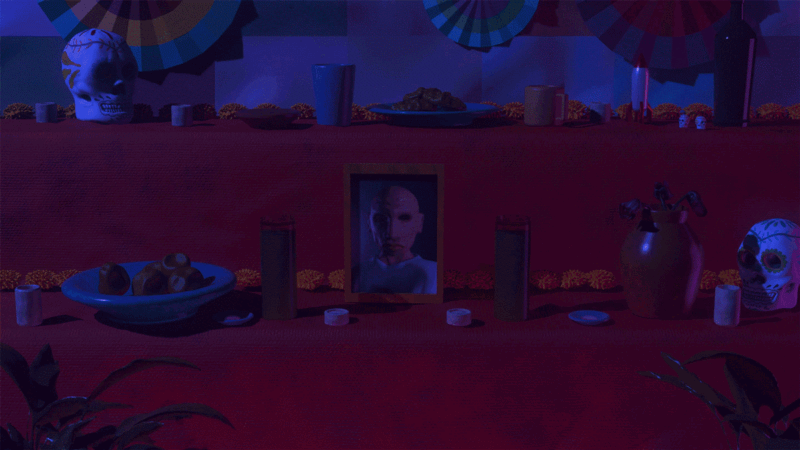
This is one of the challenges facing private detective Carmina Marquéz-Johnson, the hero of Sarena Ulibarri’s short story “Vitalidad.” The blueprints for a series of genetic treatments that “slow aging, prevent or reverse mutations, and make the human immune system a fortress” have been stolen from Vitalidad Biotech in Mexico, presumably to be sold to a rival firm in the United States. Carmina is hired to track down the thief, whom she quickly discovers is her archnemesis, a politically motivated hacker who uses the Shakespearean moniker Mercutio. Carmina chases Mercutio across the US-Mexico border, which in this imagined future has transformed from a militarized boundary to a civilized “stripe of paint across the middle of a bustling train station.” In Ulibarri’s story, Border Patrol and detention centers have become a distant memory and a person can change their face, fingerprints, and eye color at will, but the US healthcare system is still costly enough that Americans cross the border for half-price root canals and stem cell therapy. As Carmina tracks Mercutio first to a hospital and then onto a train, she confronts the irony that her work defending the property rights of a biotech company will ensure that the stolen breakthrough treatments remain inaccessible to her sister, who is dying of cancer.
When lifesaving new medicines, novel medical devices, or cutting-edge gene-editing interventions are the innovations in question, the societal tradeoff at the heart of the patent system comes under some strain.
Vitalidad has argued that returning the blueprints is necessary to “prevent dangerous, low-quality imitations.” Another company or DIY biohackers using the technology could hurt people, leading the media to stir up panic and governments to tighten regulations, chilling further development. The company seems to intend to treat its innovation as a trade secret—like the formula for Coca-Cola or KFC Original Recipe—perhaps not even filing for patent protection. For a moment, Carmina wonders whether a grateful Vitalidad would agree to a discounted rate for her sister if she catches the thief, just as some companies today agree to lower their price or waive their intellectual property rights for novel medicines in developing countries. But as the chase continues, Carmina confronts the reality that Vitalidad will likely offer the miracle cure first to the ultrawealthy at a very high price, thereby recouping its R&D investment and a lot more besides. By the time the price comes down, it will be too late for Carmina’s sister.
This is the tradeoff that society often accepts. Inventors patent their discoveries—letting them out into the open—in exchange for decades-long monopolies that can result in huge access inequalities. Inside one nation, a new treatment may only be affordable for the rich. At the global scale, wealthy nations or health insurers may opt to provide a pricey proprietary treatment to all their citizens or subscribers, while others miss out. Some patent holders, especially those with a public-good mission such as universities and public research institutions, seek to ameliorate the access challenges of intellectual property by patenting their biomedical inventions but then issuing humanitarian or other types of licenses to provide broader access. Big pharmaceutical companies can sometimes be persuaded to prioritize access over profit, allowing generic manufacture of their patented drugs in specific markets, as GSK did for its HIV drug in middle- and low-income countries and Pfizer did with Paxlovid in some jurisdictions during the COVID-19 pandemic. But there are few legal mechanisms to force an innovation out into the open or to compel a patent holder to make a novel medicine accessible. Which may be why Mercutio, Carmina’s target, has a different strategy in mind.
There are few legal mechanisms to force an innovation out into the open or to compel a patent holder to make a novel medicine accessible.
Financial toxicity is likely to be a widely felt side effect if the current wave of longevity research yields significant advances. This research seeks to reach well beyond the 85 to 90 years that many human beings now consider a long lifespan and to increase the human healthspan along the way—that is, the number of years people live free from chronic disease or severe disability. Moving away from addressing particular diseases associated with aging, longevity research seeks to understand and stop, slow, or even reverse the physiological causes of aging itself.
Much of this longevity research is privately funded. The US government has long supported research into disease, including age-related conditions like cancer, dementia, and arthritis, as well as basic research on the ways that cells change over time. But aside from some technology projects within the Defense Advanced Research Projects Agency, or DARPA, the federal government has shied away from pursuing the improvement of health or capacities beyond typical human limits, in part because it believes that taxpayer money should be spent on more urgent health problems.
But billionaires like Peter Thiel, Larry Ellison, Sam Altman, and Jeff Bezos have been aggressively investing in biotech companies focused on slowing or reversing the aging process. Altos Labs, a biotech company reportedly backed by Bezos among other wealthy investors, raised $3 billion for its launch in 2022 and is now reportedly worth over $6 billion. Its focus, partial epigenetic reprogramming, draws on stem cell research and epigenetics to send older human cells back to more youthful states. This manipulation has the potential to improve both healthspan and lifespan, offering human beings more years of life in bodies reminiscent of the ones we enjoyed as teenagers.
In the bioethics literature, one of the arguments against radical life extension, aside from the concern that a significantly longer life could become boring or eventually lack purpose, is that technologically powered longevity will be available only to the ultrawealthy, leading to even more inequality. One counterargument is that eventually the price may come down, with expensive life-extension technology becoming as ubiquitous as cell phones are today. This price drop may or may not occur, however, depending on the complexity of the intervention and the raw materials involved. Organ transplants remain costly more than 70 years after the first successful kidney transplant.
Motives other than money can drive human beings to innovate.
Another counterargument is that without significant financial incentives, sophisticated treatments are simply not feasible to develop. What this claim misses is that motives other than money can drive human beings to innovate. Jonas Salk and the National Foundation for Infantile Paralysis, or NFIP, which funded the polio vaccine research, were not focused on developing a proprietary product. Nor were their “investors,” the millions of ordinary Americans who mailed coins to the NFIP, now known as the March of Dimes. Their shared goal was eradication of polio, which could only be achieved through universal access to the vaccine.
Today, some funders, like the Gates Foundation, build global access requirements into their research grants to ensure that knowledge is shared and that grantees make any eventual treatments available at an affordable price. Other approaches focus on the pricing of essential medicines, so that countries don’t have to choose between biotech robber barons like Vitalidad or extralegal Robin Hoods like Ulibarri’s thief Mercutio. These equity-driven imperatives likely have little sway over the private sector. We will have to hope that if today’s longevity start-ups reach a breakthrough, they will choose to offer it to humanity in a way that keeps all of us and the Jonas Salk ethic alive.
Sign up for the free Future Tense Fiction newsletter! Our monthly email will let you know when we publish a new story, and we share discussion questions, related reading, Q&As with authors, and much more.