
From Kolam to Cosmos: Symmetry in Art and Physics
Symmetries & Broken Symmetries brings together the work of artist Shanthi Chandrasekar and physicist-writer Michael Albrow in a richly layered exploration of how order and chaos shape both the universe and human understanding. Now on view at the National Academy of Sciences, the exhibition reveals how the same principles that govern galaxies and particles also echo through cultural tradition and creative practice.
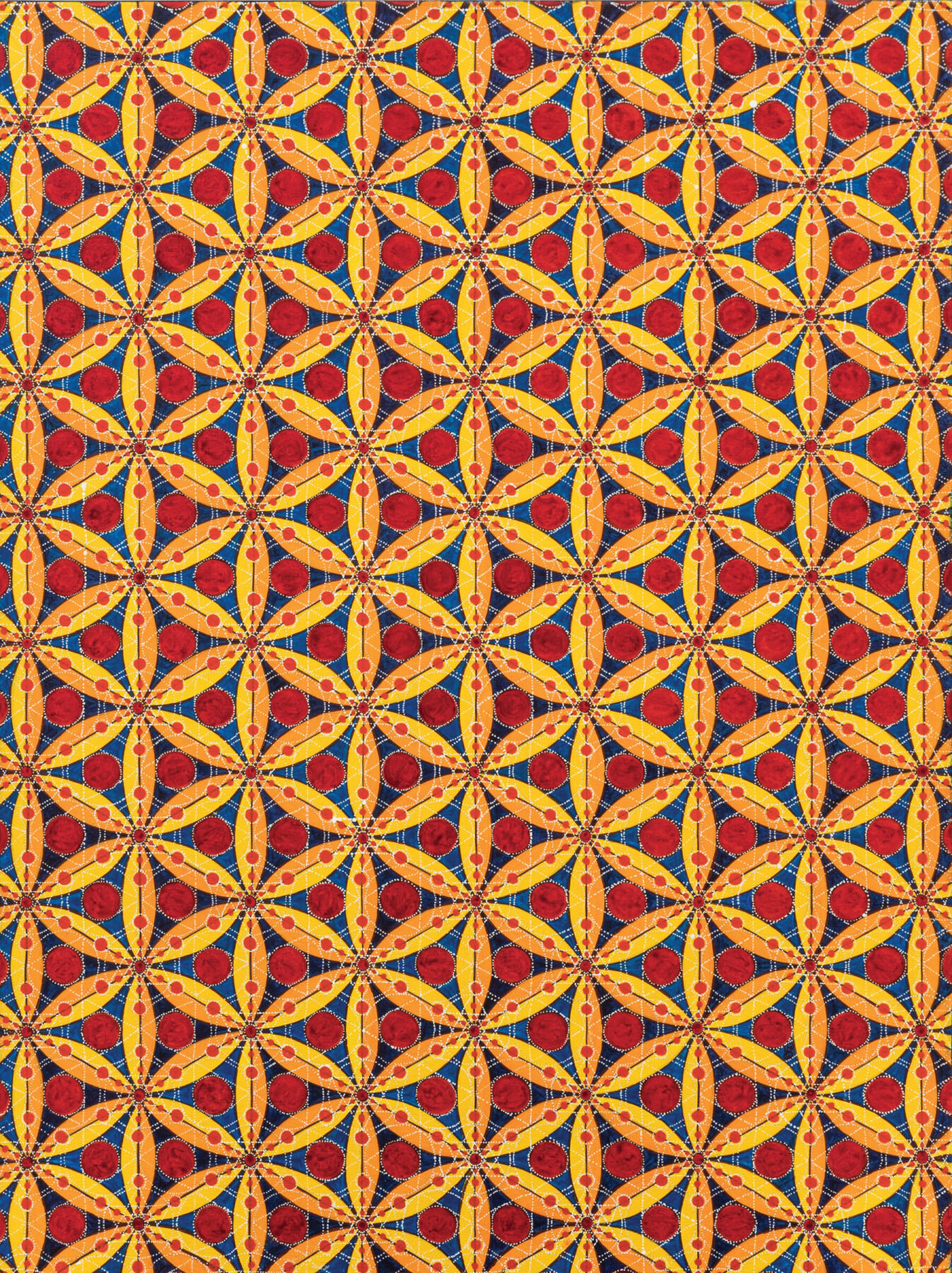
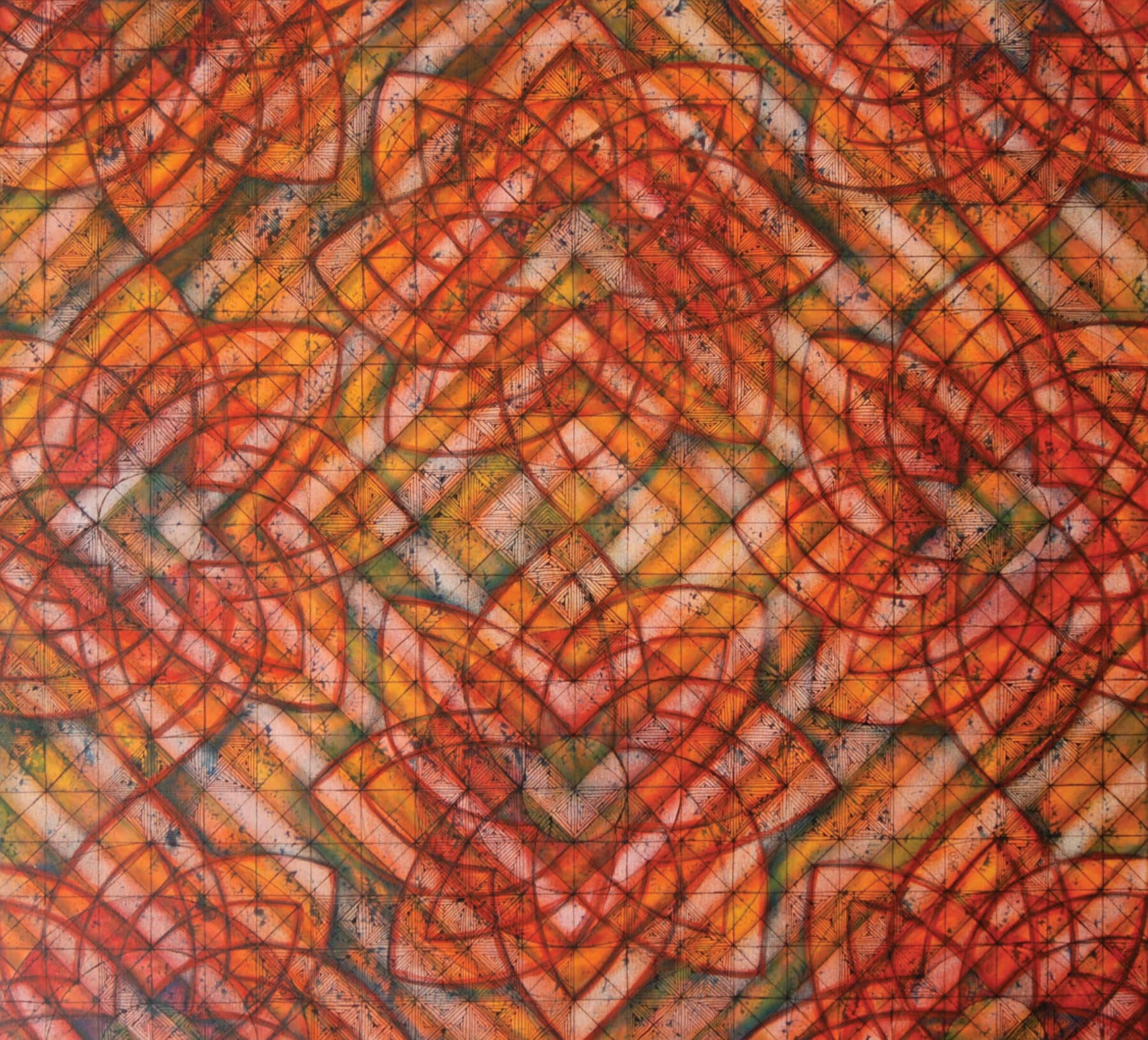
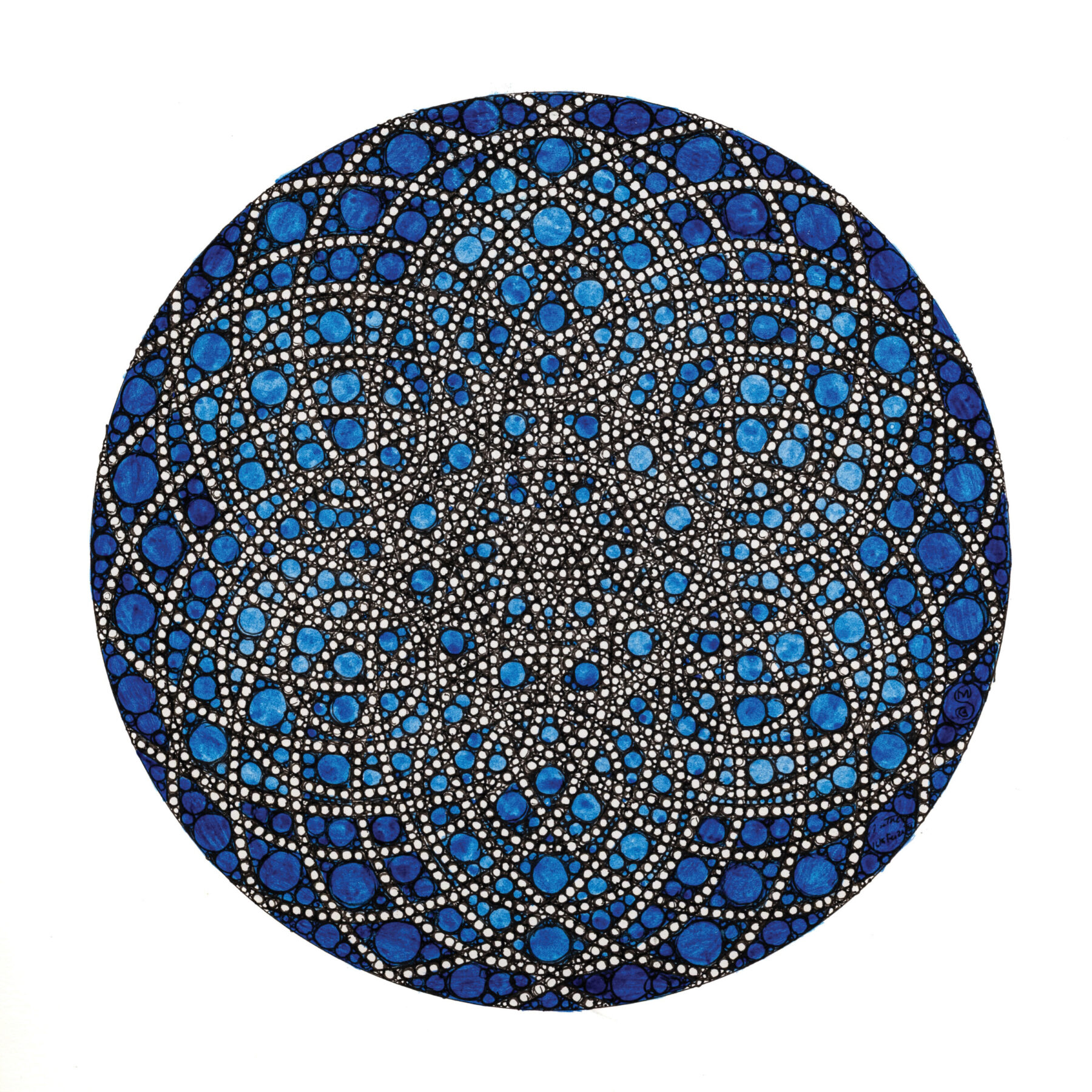
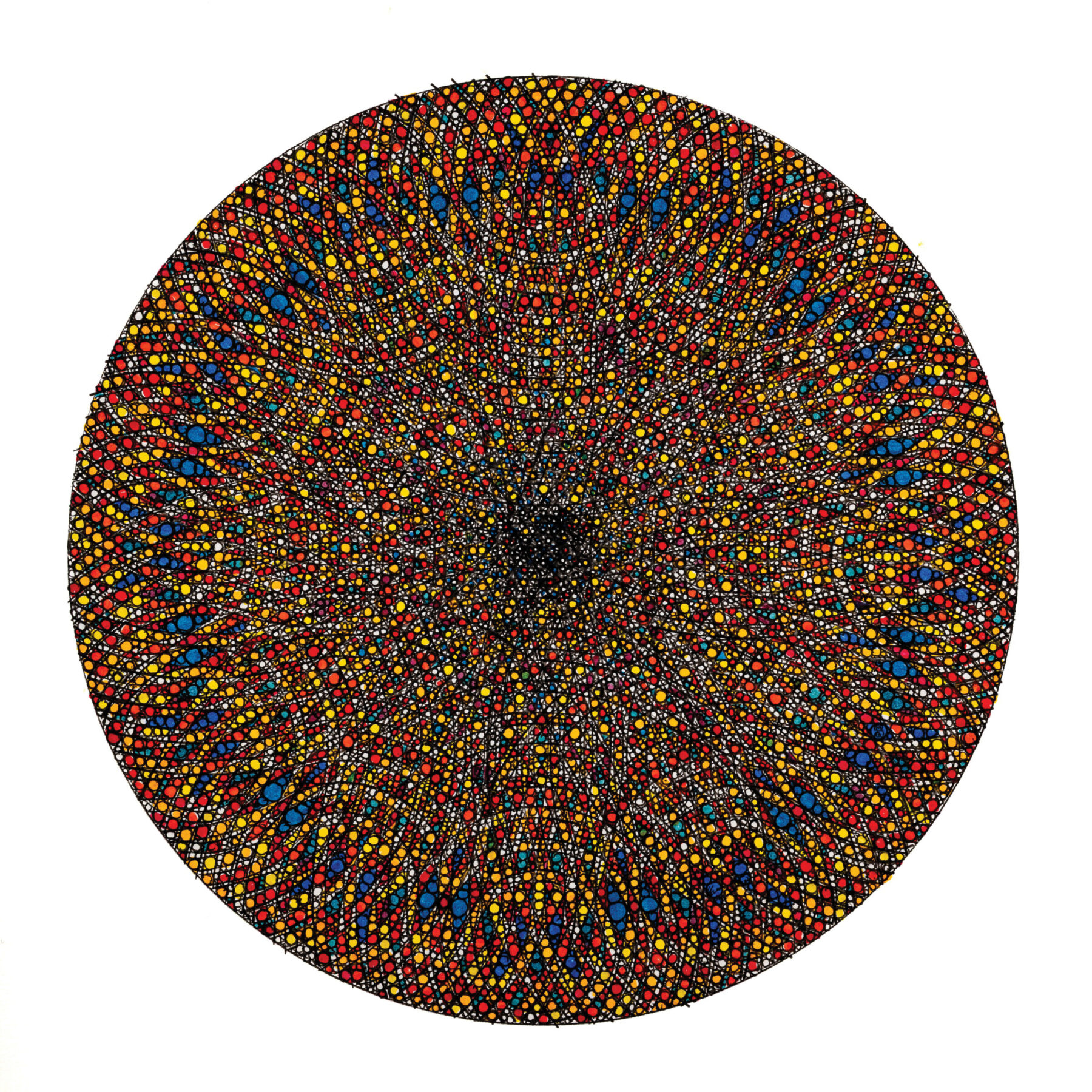
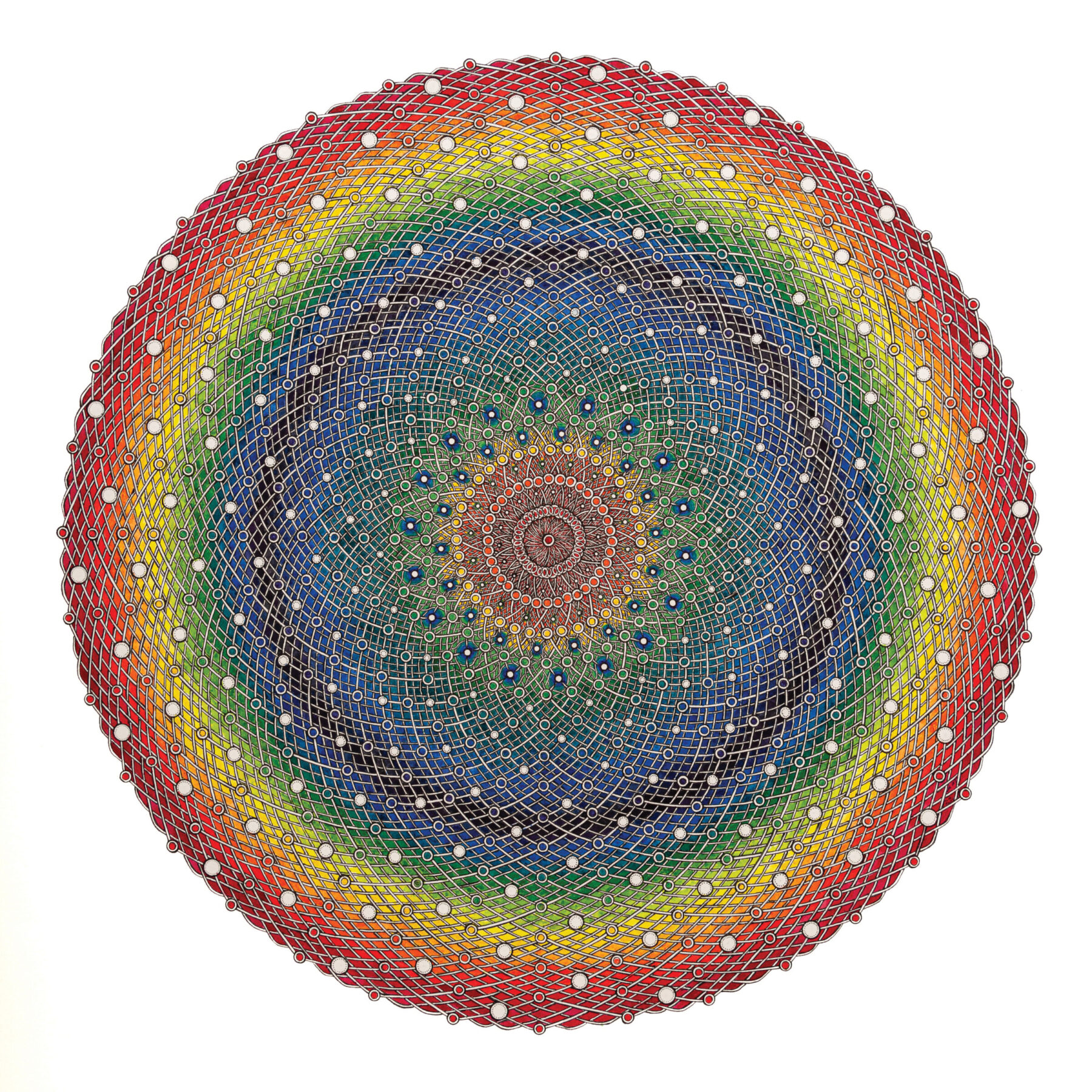
The show pairs eighteen drawings and paintings by Chandrasekar, created between 2010 and 2025, with selected writings by Albrow. Together, their works offer parallel ways of seeing the cosmos—one through line, form, and color; the other through language informed by a career in particle physics.
Their collaboration began in 2019, when Albrow encountered Chandrasekar’s work at an exhibition at Fermilab Art Gallery in Chicago and attended a colloquium she gave there. Recognizing a resonance between her visual language and his scientific reflections, Albrow proposed a joint project. Some of his existing writing paired naturally with Chandrasekar’s compositions; since then, he has written new poetry and prose specifically in response to her work.
Chandrasekar grew up in an Indian atomic energy research community—Kalpakkam in Tamil Nadu, home to the Madras Atomic Power Plant and the Indira Gandhi Centre for Atomic Research—where advanced science coexisted with deep-rooted cultural traditions. Her work draws inspiration from kolam, a South Indian art form in which intricate geometric patterns are created with rice flour on home thresholds. Both ephemeral and precise, kolam designs symbolize resilience, renewal, and cosmic order. In Chandrasekar’s hands, these structured grids and symmetries slowly shift, fracture, and dissolve, revealing hidden layers and unexpected possibilities. Her evolving compositions mirror ideas from physics and cosmology, where symmetry—and its breaking—plays a fundamental role in shaping reality, from subatomic particles to the large-scale structure of the universe.
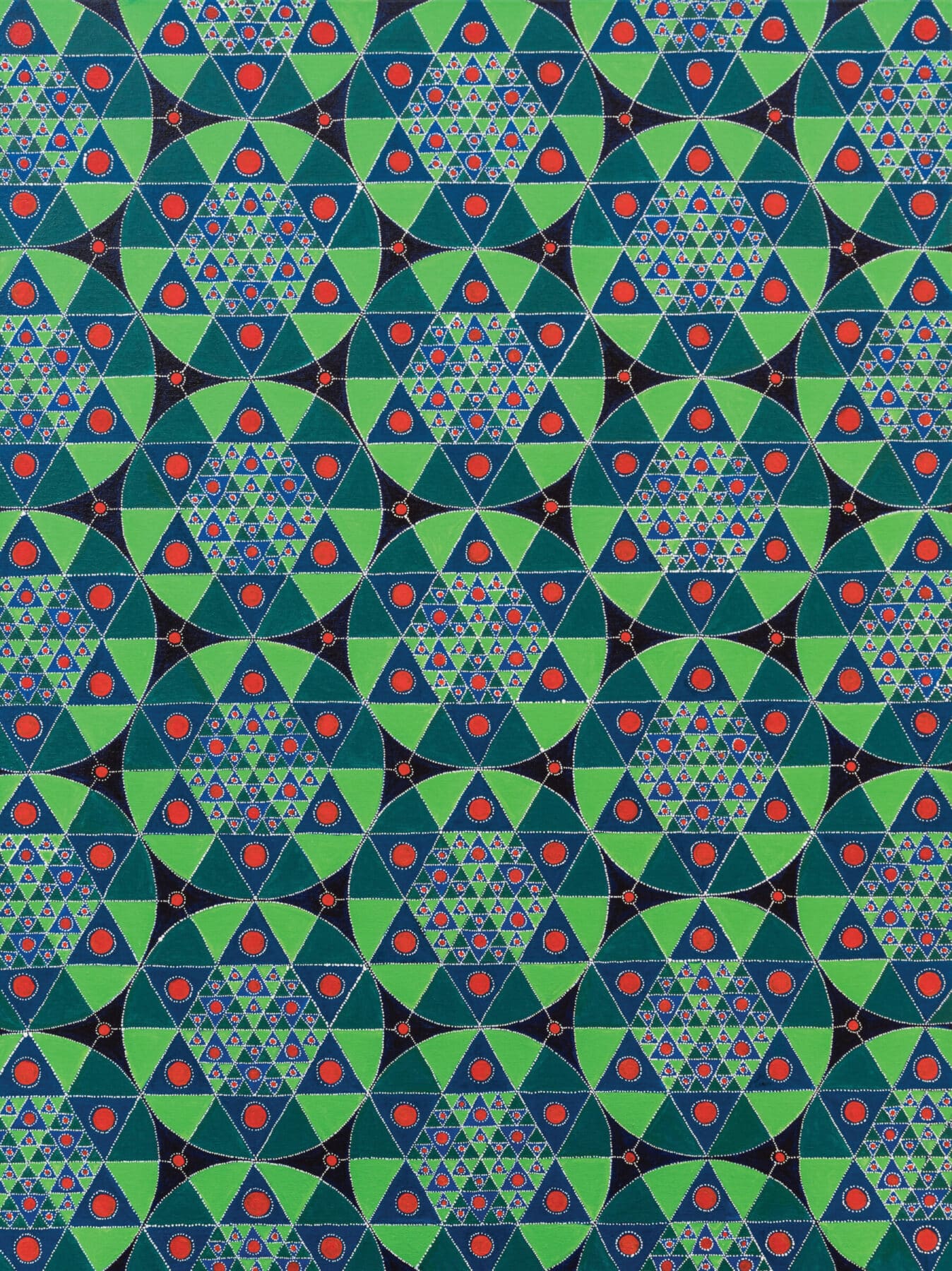
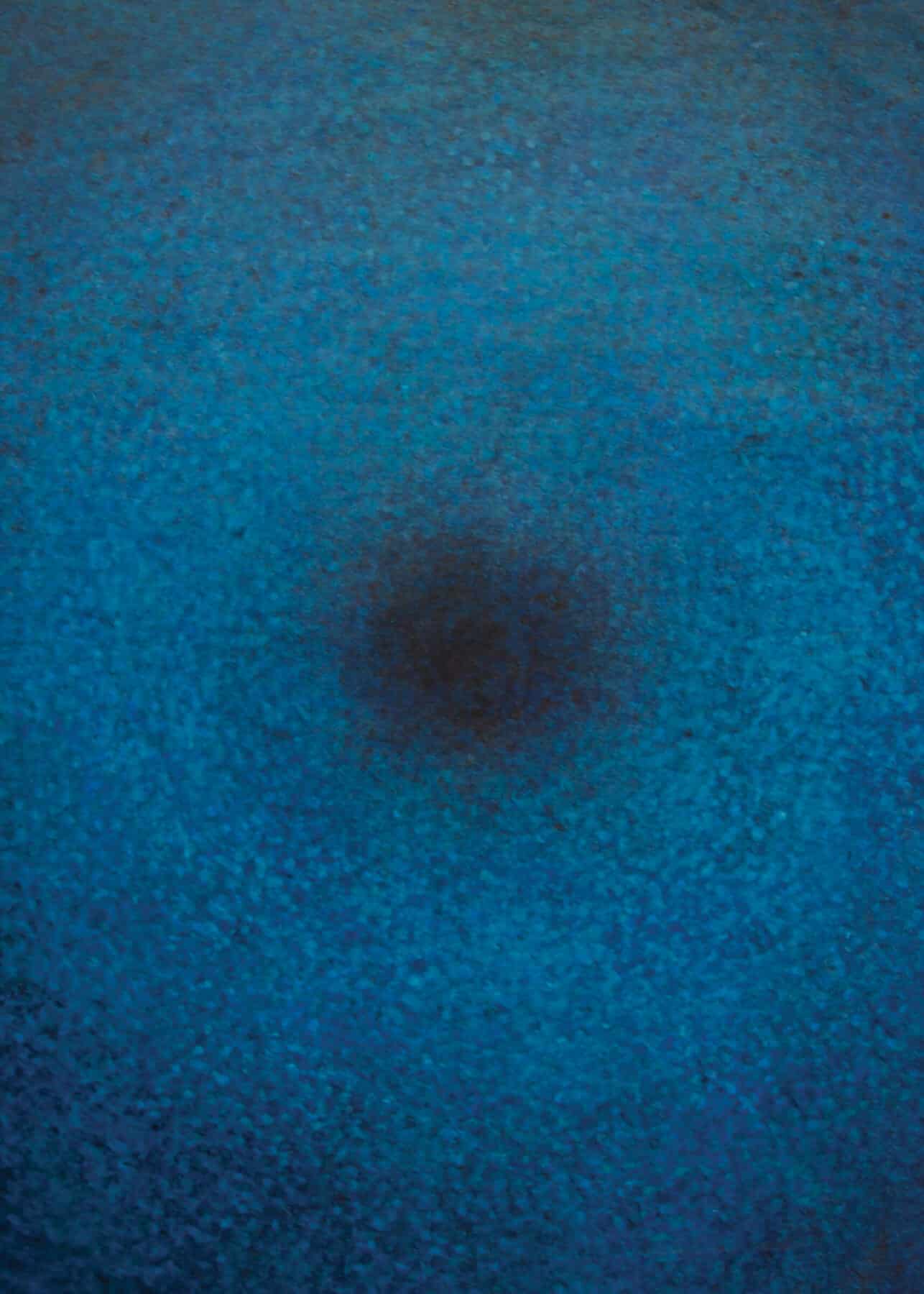
Albrow’s accompanying texts reflect on symmetry as a cornerstone of modern physics and on symmetry-breaking as the source of complexity, diversity, and life itself. A longtime experimental particle physicist, Albrow brings a poetic sensibility to scientific thought, inviting visitors to consider how the universe’s earliest imbalances made stars, planets, and people possible.
Together, Chandrasekar and Albrow ask viewers to look more closely at pattern, balance, and rupture—not only as scientific concepts, but as forces that shape perception, culture, and consciousness.
Symmetries & Broken Symmetries is on view through July 3, 2026, at the National Academy of Sciences, 2101 Constitution Avenue NW, Washington, DC. The exhibition is viewable during NAS building tours and special events.