
Mohole Moments
One windy evening in 1961, sensing a “restless inertia” among the scientists and roughnecks on board the drilling ship CUSS I, John Steinbeck climbed up to the catwalk to catch the breeze and craft a bit of scicomm. “The first importance of Project Mohole is that it is being done at all. We spend treasures daily on fantastical sky rockets aimed feebly toward space. Our lustful eyes turn to the moon, not as the Queen of the Night but as real estate.… And meanwhile we know practically nothing of far the greater part of our home planet covered by the sea,” he wrote in LIFE.
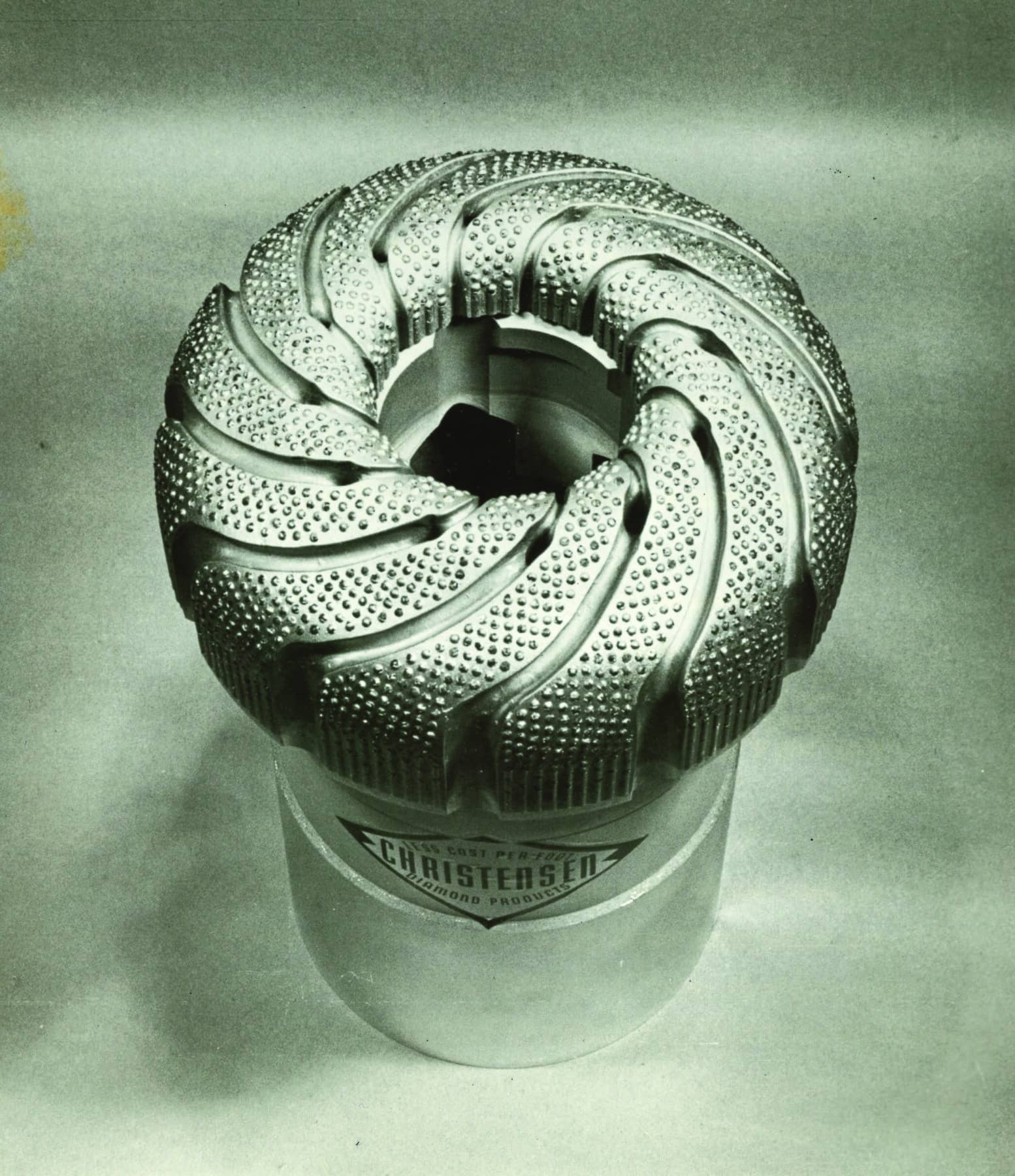
Project Mohole, the infamous effort to drill to the Earth’s mantle, launched during the space race. It was canceled in 1966 when its projected cost, well, skyrocketed from $5 million to over $100 million. Today I’d bet money that more people are aware of the phrase “Mohole is no hole,” than the details (and unsung successes) of the project Steinbeck described as “surely an adventure toward the discovery of a new world.”
Would-be science boosters frequently invoke the Sputnik moment: That brief, glorious time when the possibility of the United States losing the race to the moon inspired policymakers to lavish money, attention, and hope on science and science education. The Sputnik moment evokes nostalgia for bygone funding, prestige, and pride that the US research community rallied to reach the Queen of the Night.
But Sputnik moments have an evil twin, what might be called Mohole moments, when some focal point for distrust closes windows, rolls back funding, cuts support, and craters trust. Today, we’d be wise to pay closer attention to these inversions of opportunity and how suspicion mobilized by scandals can chaotically constrict some options while subtly unleashing others.
Mohole moments reveal the tacit premise of science’s social contract—both what the agreement is and what counts as a breach. And, early in 2026, with science navigating multiple scandals or rumors of scandals, revisiting Mohole’s original mess—and the structure of science scandals generally—could give some useful insights into the way they affect the physics of policy.
Wine breakfasts, Mad Men–era gags, and a troubled project
The idea of drilling to the mantle bubbled up in a 1957 meeting at the National Science Foundation (NSF) when members of the Earth sciences reviewer panel found themselves disappointed by research proposals they’d been given. Walter Munk, a geophysicist-oceanographer at Scripps Institution of Oceanography, wanted some sort of groundbreaking research to catalyze progress in the Earth sciences. Drilling into the Mohorovičić discontinuity, where the Earth’s mantle was thought to start, captured the reviewers’ imaginations. One reportedly described it as “the perfect anti-analogue of a space probe,” adding, “Think of the attention it would attract to the Earth sciences.”
Sputnik moments have an evil twin, what might be called Mohole moments, when some focal point for distrust closes windows, rolls back funding, cuts support, and craters trust.
Munk invited an informal group of prominent geophysicists, many of whom belonged to a group that called themselves the American Miscellaneous Society, to a “wine breakfast” at his house in La Jolla, California. Writing about the idea in Scientific American, some members of the group exhorted, “The ocean’s bottom is at least as important to us as the moon’s behind!” These Mad Men–era gags were science policy performance art, but they show that the culture of prominent scientists—all men—was then uninhibited by thoughts of how the public might judge them.
In its early stages, Project Mohole was a success. As Steinbeck chronicled, the expedition off the Mexican island of Guadalupe, which was overseen by the National Academy of Sciences and funded with just $1.5 million from NSF, managed to drill far deeper than ever before—183 meters below the seafloor, in 3,570 meters of water. It also pioneered a dynamic positioning system to keep the drillship stationary above the drill site, using four outboard motors to counteract wind and currents, instead of drilling from stationary structures attached to the sea floor.
In its next phase—an attempt to drill an even deeper hole—Mohole’s reputation unraveled. Cost estimates ballooned from as low as $5 million to more than $110 million, and the project floundered amid shifting scientific goals, discombobulated management, and suspicions about the industry contractor chosen to drill. Even so, it had just enough champions to survive until the final stab was delivered in the summer of 1966, by a Republican congressman from Illinois named Donald Rumsfeld, who claimed that the contractor’s family had inappropriately donated to a political fund for President Lyndon B. Johnson. A week later, the Senate joined the House in cancelling the project.
As Science reporter Dan Greenberg wrote shortly afterward, Congress drew lessons from the fiasco: “To state it simply, a lot of science’s money troubles grow out of the public’s belief that science is careless with taxpayer’s money.” The scandal spurred policymakers and the public to ask a broader question: “In a world plagued by misery is it decent for fine minds and great wealth to be dedicated to the interior of the atom and the mysteries of the planets?”
These Mad Men–era gags were science policy performance art, but they show that the culture of prominent scientists—all men—was then uninhibited by thoughts of how the public might judge them.
The story of Mohole’s no hole permanently reshaped the way the scientific community approaches big projects. In her 2005 testimony to the House Science Committee, Marcia McNutt, then president and CEO of the Monterey Bay Aquarium Research Institute, invoked the lessons of Mohole as she explained that a successor program set “much more modest and achievable goals that kept the scientific community excited and engaged.” The experience of the scandal also made at least one of its scientific champions more wary. Recalling Mohole in a 2010 interview, Walter Munk said he learned that “it was foolish to expect that we could go home and do our favorite science and expect the project to proceed according to our plans.”
As it turned out, drilling into the mantle and grabbing a sample was a very difficult problem—and it was not accomplished until 2023.
The power of scandals
The Mohole fiasco also helped cement a public impression of scientific overspending. By 1975, Senator William Proxmire immortalized congressional distrust of scientists with his Golden Fleece Awards for frivolous government spending, including one ridiculing NSF for a study on love. In 2012, Tennessee senator Jim Cooper established that prize’s anti-analogue: the pro-science Golden Goose Awards.
In a 2025 special issue of the Journal of Responsible Innovation, Joy Y. Zhang, Kathleen Vogel, and Sonia Ben Ouagrham-Gormley describe scandals as a lens on science’s social contract. Scandals “offer powerful insights into how science and society negotiate responsibility, for they expose not only individual wrongdoing but also the structural and cultural tensions within modern research systems.” In particular, these situations reveal the “organized irresponsibility” built into bureaucratic systems, legal frameworks, institutional incentives, and daily practices in knowledge-making. “Epistemically, scandals uncover the hidden power structures and vested interests underpinning research and innovation,” they argue.
Recalling Mohole in a 2010 interview, Walter Munk said he learned that “it was foolish to expect that we could go home and do our favorite science and expect the project to proceed according to our plans.”
Scandals also have the power to change the social contract. In the same special issue, science and technology studies scholar Bart Penders excavates the history of the “scientific reform movement,” which he says started about 15 years ago around concern that many biomedical studies could not be reproduced. Scandals, Penders writes, “have to be made.” A first step is that the scandal is “narrativized.” For scandals around reproducibility, a story arose that “science was broken, contaminated, or rotten” and in need of a specialized field of study—metascience—to alleviate its problems.
You can see this process of narrativization in the history of Mohole. Years before the project became a scandal, it was viewed as “some kind of a wild-eyed scientist’s dream,” as one Navy Reserve captain put it—even by proponents. After problems with the contractor ultimately killed the project, the story attaching careless spending to the scientists stuck.
Once a scandal is made, it starts to morph. Penders quotes scholars Angela McRobbie and Sarah L. Thornton, who “report that scandals ‘act as a form of ideological cohesion which draws on a complex language of nostalgia.’” Today, this process can be seen in the executive order on “Restoring Gold Standard Science,” with its call to “restore the American people’s faith in the scientific enterprise and institutions.”
Justifying reform often requires pulling together an engaging scandal narrative. Penders describes this as a cycle where “the breaking and remaking of science and the scandalization of broken science continue to sustain and shape each other.” This process is visible in discussions of research security, the return on investments from federal science funding, and across all of science policy. It appears in executive orders and many essays in this magazine.
Notably, some problems are narrativized into scandals while others are not. The Epstein files, for example, contained disturbing communications with many powerful male scientists. Some of these were narrativized along the lines of the #MeToo movement. A related, more complex scandal concerns early-career scientists in vulnerable positions and scientists cut out from Epstein’s circle and funding because they were women. Emblematic of the hidden power structures that the files have exposed, this scandal still hasn’t yet been narrativized in a way that points toward reforms.
Justifying reform often requires pulling together an engaging scandal narrative.
Across federal science agencies, recent narratives of politicized science or administrative failure have been used to justify reforms that are themselves causing new collapses: measles outbreaks, delayed treatments for patients with rare diseases, and a potentially diminishing capacity to monitor climate change. It’s not hard to imagine how these will eventually be narrativized into scandals themselves, complete with a sense of nostalgia for former norms and practices and new efforts at creating ideological cohesion around reforms.
Opportunity in the whorls of scandal and reaction
If Sputnik moments align actors, aspirations, and capacity, their antithetical Mohole moments can unravel that alignment in a haze of nostalgia and aversion. They also introduce chaos in the form of negative reactions, reactions to reactions, and unstable ideological affinities.
In the early 1970s, sociologists Michael D. Cohen, James G. March, and Johan P. Olsen studied how organizations that lack clear goals make decisions. The trio formulated the evocatively named “garbage can model” to describe “organized anarchy,” where goals are vague or contested, means to results are not clear, and decisionmakers’ attention is inconsistent. By the mid-1980s, when this magazine was founded, political scientist John Kingdon was building on the garbage can model by showing how policy entrepreneurs harness “streams” of problems and politics to move toward policy changes.
Although the late 2020s may feel more like a dumpster fire than a garbage can, there are still many opportunities for policy innovation in today’s turbulent streams and whorls of scandal and reaction. These opportunities reveal themselves in the many pitches we review and articles we publish.
Although the late 2020s may feel more like a dumpster fire than a garbage can, there are still many opportunities for policy innovation in today’s turbulent streams and whorls of scandal and reaction.
In this issue, for example, we have two authors who advocate for government agencies to use lotteries to make funding choices. One argues for lotteries for NSF basic research grants, and the other for lotteries for Small Business Innovation Research awards. Each author is responding to different perceived failures, but both advocate that lotteries could make funding decisions less conservative, potentially leading to greater discovery and innovation.
Another convergence can be found in three very different articles about how to move data stewardship away from federal agencies and into communities formed by location or expertise. This movement is framed variously as a way to help communities define their own priorities, to gain power in efforts to protect their environment, or to build capacity to preserve data and manage it across states. These articles are responding, in part, to the removal of an estimated 3,000 government datasets in the past year. But they are also building upon decades of work on open science, engaged science, and citizen science, which has new salience today. Long in the shadows, these grassroots projects bring their own norms, internal institutions, and visions for reform.
Today’s Moholistic world is loud, angry, and disorganized, but new boundaries and expectations are being negotiated in this very public struggle. Policy entrepreneurs will break and remake narratives, interest groups will coalesce, and the scientific enterprise will gradually take a new form. Even a Sputnik moment cannot restore the old order. But there may be consolation in the story of Mohole: Even though the scientists came to realize that they could not “go home and do their favorite science,” the community did eventually drill to the Mohorovičić discontinuity.