
The International Geophysical Year
The International Geophysical Year (IGY), which actually spanned eighteen months from July 1957 to December 1958, was one of the most ambitious scientific collaborations in human history. Amid Cold War tensions that severely restricted exchanges between East and West, nearly 300,000 scientists from 67 countries came together in a rare moment of unity to study the Earth as a single, dynamic system.
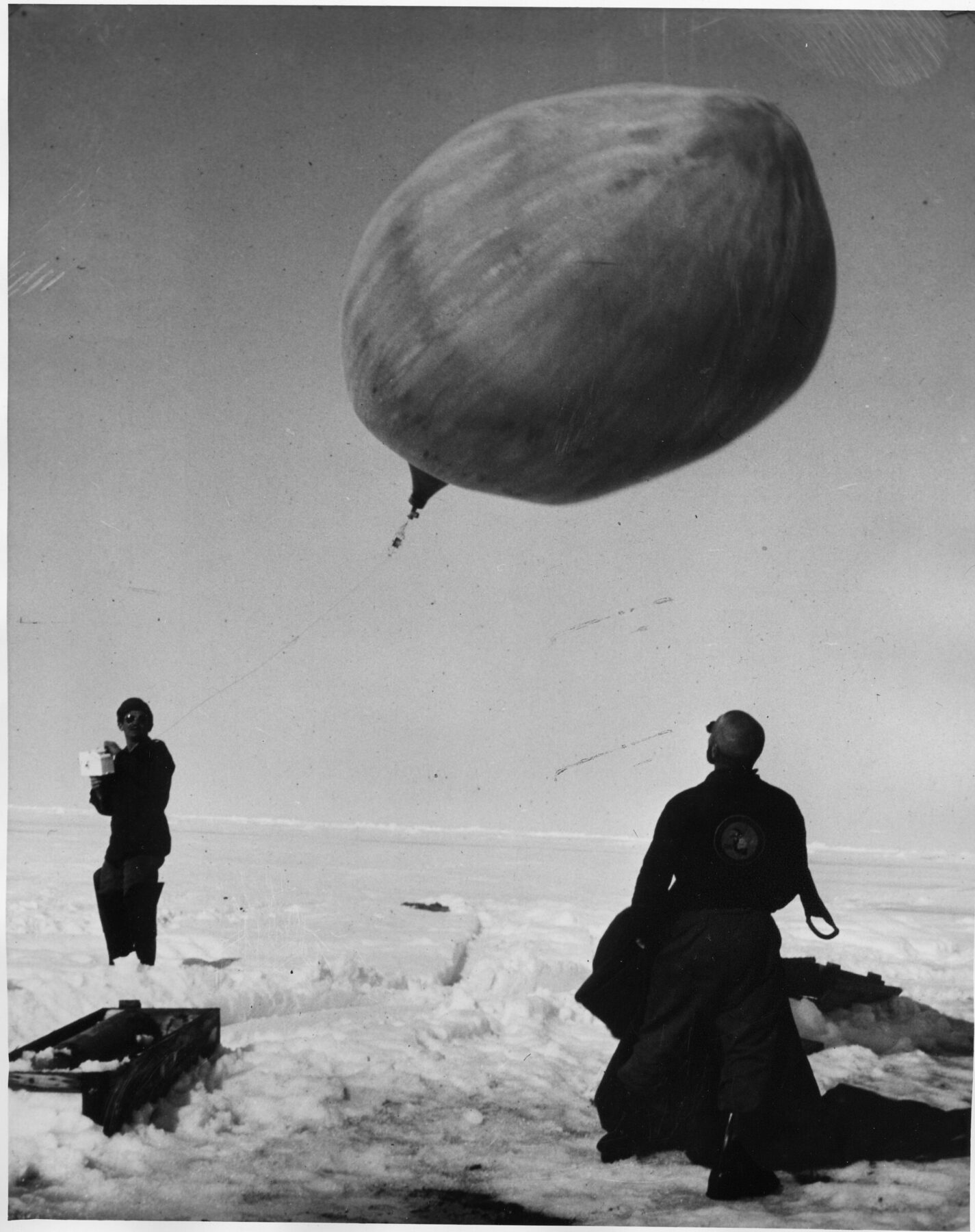
In the United States, a National Academy of Sciences committee partnered with the National Science Foundation to orchestrate a research effort of staggering scale. More than 1,100 grants totaling over $43 million supported observational campaigns, data analysis, and new technologies. These included radar, electronic computers, telemetry, and radio telescopes, which gave researchers new ways to observe the planet—and beyond—with unprecedented precision. With the IGY timed to coincide with peak solar activity, research areas spanned auroral studies, ionospheric physics, geomagnetism, cosmic rays, meteorology, oceanography, glaciology, seismology, and gravity measurements across the United States, polar regions, and the world’s oceans.
The program’s most famous achievement was launching the space age, with both the United States and the Soviet Union sending satellites into orbit during this period. The IGY also led directly to the Antarctic Treaty of 1959, which established the continent as dedicated to peaceful scientific research, and the World Data Center system, which standardized international data sharing.
The IGY marked a turning point in science, fostering international cooperation in an era of global rivalry. It laid the groundwork for modern Earth system science and the global monitoring networks we rely on today.