
Who Will Build It?
Restoring US manufacturing leadership requires a culture shift in how engineers, technologists, and technicians translate ideas into production.
“Do you have any information about welders?” The question came from a young man standing across the table at a STEM outreach event for students exploring engineering and manufacturing careers, where I was representing the engineering research center where my graduate research is embedded. I looked up, surrounded by brochures about university programs and engineering degrees, and offered him information about welding engineering tracks. He politely clarified: He wanted to become a welder—not an engineer. At an event meant to promote educational pathways and career opportunities in US manufacturing, I had nothing to offer someone whose goal was a hands-on technical career.
This was not the first time I’d noticed opportunities for engineers being prioritized over those for the professionals who turn designs into reality and keep systems running. After graduating with a bachelor’s degree in engineering, my first job as an HVAC technician’s assistant immersed me in the world of facilities management and maintenance. I worked alongside seasoned technicians who taught me how to use my hands—to use a drill, change out motors, and organize my truck of supplies. This role exposed me to forms of knowledge and expertise beyond my engineering textbooks, and it helped me feel closer to what I thought being an engineer meant. But I quickly realized another aspect of the training involved navigating occupational hierarchies.
Related Reading
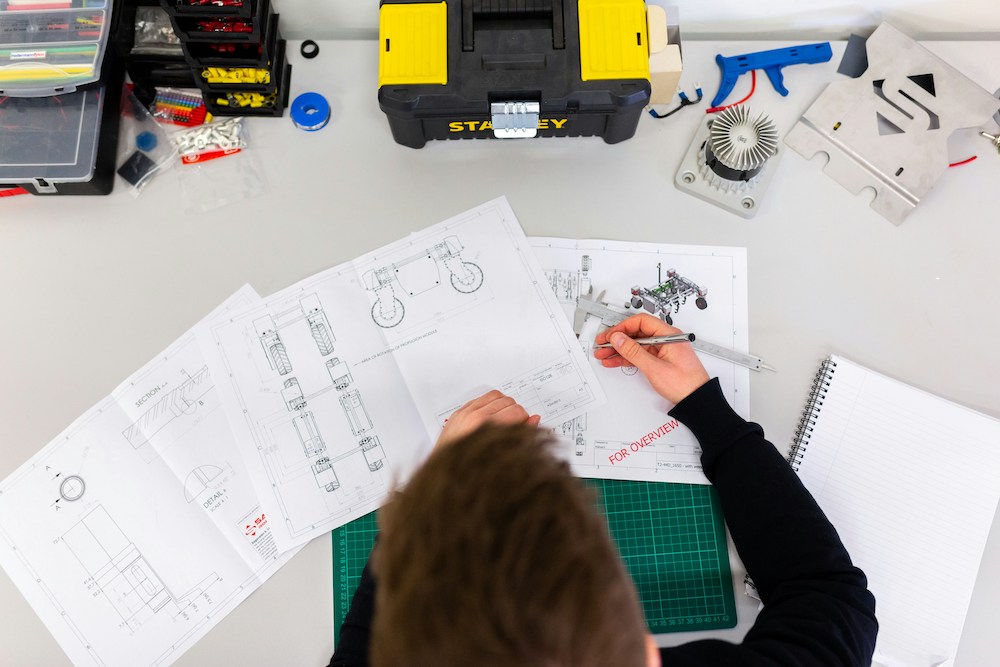
Division between the technicians and engineers was evident. As skilled trades professionals and machinists, the technicians often voiced frustrations about working with engineers. During the design phase of projects, their practical suggestions and input were often disregarded, an omission that led to avoidable downstream maintenance challenges. Even though every role was essential to the work, the day-to-day dynamic reflected an unspoken hierarchy that structured whose expertise was deemed authoritative.
Scholars have been making similar observations since the late 1950s. In his 1964 book, The Technical Institute, University of Dayton’s then dean of engineering Maurice R. Graney observed that despite their “almost incalculable contribution to industrial enterprise,” technicians’ work was poorly understood both by employers and by the engineers and scientists they supported. He noted that engineers were often “slow to adjust their own activities to utilize technician assistance efficiently,” while industry blurred boundaries further by giving technicians titles like junior engineer or technical engineer—labels that obscured their distinct professional identity and hindered recognition of their expertise.
I have come to understand this tension as an element embedded in the culture of engineering, reflecting a long-standing hierarchy that privileges theoretical knowledge and academic credentials over applied expertise and reinforcing an unspoken boundary about whose knowledge counts and what kinds of expertise are most essential. This culture creates inefficiencies for firms on the factory floor—but what is less recognized is the way it also hinders the effectiveness of the entire workforce education system in the United States.
Later in my career, as a design engineer for an HVAC firm, I repeatedly heard industry leaders lament a lack of workers. Over time I understood the shortage they were complaining about was not of engineers, but of technicians. Indeed, a majority of surveyed leaders in manufacturing indicate that some of the most difficult positions to fill are high-skill technical roles that bridge theory and practice, integrate new equipment and systems, and connect digital tools with production processes. Engineering technologists, whose training centers on applied engineering, systems integration, and troubleshooting automated equipment, also fall within this category of digitally capable, automation-oriented talent. When this type of applied expertise is devalued, fewer people pursue these careers, vacancies persist, projects slip, commissions are delayed, and diffusion of innovation slows.
Some of the most difficult positions to fill are high-skill technical roles that bridge theory and practice, integrate new equipment and systems, and connect digital tools with production processes.
In an era of high demand for resilient supply chains, faster commercialization, and durable manufacturing capacity to support US competitiveness, a distorted idea of “legitimate” engineering work acts as a limiting factor for workforce development in skilled technical careers. Addressing this shortfall will require more than just investments in training, policy reform, and workforce initiatives. It demands a shift away from entrenched cultural values that privilege abstract, academic, and individual cognitive ability over practical, applied, and collective forms of knowledge and toward embrace of an interdependent engineering workforce ecosystem in which engineers, technologists, and technicians together translate ideas into production.
A constraint on competitiveness
Across the nation, a patchwork of federal, industry, and educational initiatives support the US engineering and technical workforce. These efforts reflect a recognition that the United States’ competitiveness depends not only on research breakthroughs but also on the skilled technical professionals who make those breakthroughs usable.
But significant workforce gaps remain. By some estimates, 1.9 million US manufacturing jobs could be unfilled by 2033. Manufacturers cite an aging workforce, limited training capacity, skills mismatch, and low public interest in technical careers. National and industry reports increasingly emphasize that manufacturing’s acute and persistent workforce needs are for skilled technicians—those who can operate, maintain, and integrate advanced technologies on the production floor. The shortage of such workers has been described as a first-order constraint on advanced manufacturing competitiveness, particularly in sectors such as semiconductors and defense manufacturing.
Recent research extends this discussion to include engineering technologists: workers who understand both design principles and real-world production systems. Engineering technologists and technicians form the connective tissue between innovation and implementation. Focus groups conducted by the Ohio Manufacturing Institute in 2019 identified technologists and technicians—not engineers—as the hardest positions to fill. As one manufacturer put it, “We don’t need anyone to design a machine; we need them to say why the machine is not working.”
Despite agreement that these workers are essential, the jobs themselves are held in low regard. Occupational roles such as programmers in CNC (computer-controlled manufacturing), electro-mechanical technicians, and industrial machinery mechanics require high levels of engineering and technology knowledge but are dismissed by many stakeholders as middle-skill roles. Surveys show that many students and parents continue to view manufacturing, technician, and technologist roles as “less than” traditional professional paths. This perception feeds a self-reinforcing cycle: low enrollment, declining prestige, and persistent shortage.
A substantial pay gap between engineers and technicians also perpetuates this cycle. For example, mechanical engineers earn a median of $102,320 per year, while mechanical engineering technologists and technicians earn a median of $68,730. Lower salaries for applied technical roles contribute to the perception that these roles are lesser in status or are more precarious positions within the industry, an attitude that undercuts efforts to attract new entrants.
These challenges are further exacerbated by demographics. The engineering technologist and technician workforce has steadily aged over the past four decades, with few younger workers entering the field. Despite overall reductions in workforce size, the proportion of workers over 50 has grown significantly, indicating an aging and shrinking technical labor base.
Addressing the manufacturing workforce challenge requires a broader lens. Even during relatively bright spots in the history of US support for manufacturing workforce training and technical education—such as the War Manpower Commission during World War II or the Cold War era’s National Defense Education Act—policies have tended to elevate academic credentials, theoretical knowledge, and symbolic notions of “smartness” in educational and workforce development systems. Examining the ways these cultural values contribute to a hierarchy separating engineers and technicians offers an opportunity to reimagine how the United States defines and values technical work.
Cultural production of hierarchy
Occupational hierarchies are not accidents or inevitabilities—they reflect deeply held narratives about what is considered important, desirable, or legitimate. Value systems shape what people do and how they perceive others’ roles and worth in shared social systems, and are made visible through individual behaviors as well as in institutional arrangements and organizations’ everyday practices. Values are dynamic: They evolve over time as individuals and institutions adapt to new circumstances, economic shifts, and political pressures.
Examining the ways these cultural values contribute to a hierarchy separating engineers and technicians offers an opportunity to reimagine how the United States defines and values technical work.
Studies of value systems within the engineering and technical workforce have considered professional identity formation, occupational stratification, and the symbolic boundaries that mark certain roles. Three interconnected value systems in particular have shaped who and what are considered important: elitism, rationalism, and individualism. These deeply rooted values manifest in the way educational programs are organized, how curricula are designed, how federal funding is distributed, and the way occupational roles are portrayed. Together, they contribute to the cultural production of hierarchy across the engineering and technical workforce.
First, an orientation toward academic elitism prioritizes formal credentialing and institutionally conferred status (e.g., four-year degrees from research universities) over nontraditional or applied educational pathways that develop hands-on or technical expertise. Even after decades of reform, the practice of sorting students into either academic or vocational tracks as early as middle school continues to stigmatize career and technical education as second-tier. Recent college-for-all ideals frame four-year degrees as the only legitimate route to success—though fewer than half of students who plan to earn a bachelor’s degree finish in the standard four years. Research shows that parental perceptions of prestige strongly influence career choices; when parents perceive technical work as “less than,” students are steered away from it. In a society that prioritizes social mobility through credentialing, alternatives to the four-year degree are perceived as occupying a lower rung in the social order.
Second, today’s educational systems and workplaces value theoretical rationalism, which holds that reason is the primary source of knowledge and understanding, rather than practical, experiential, or context-specific forms of knowing. A recent qualitative interview study of undergraduate engineering majors at a large public university shows how “smartness” culture continues to sort students by their capacity for abstract mastery rather than practical skill. The students themselves described “being smart” as working efficiently with minimal effort—an ideal that equates “ease” with intelligence and reinforces prestige around theoretical work by prizing abstraction. In this culture, applied competence often counts for less.
Today’s educational systems and workplaces value theoretical rationalism, which holds that reason is the primary source of knowledge and understanding, rather than practical, experiential, or context-specific forms of knowing.
This value became institutionalized within engineering education culture after World War II, when engineering colleges “reengineered” curricula to emphasize the analytical mode of engineering science, as described by historian of technology Bruce E. Seely. Practical skills such as drafting, surveying, and shop work were replaced by advanced mathematics, physics, and engineering science. Accreditation bodies reinforced this shift: Under the Grinter Report in 1955 and later ABET standards for engineering accreditation, theoretical fundamentals became the benchmark for program quality. Even the EC2000 reforms—intended to reintroduce teamwork and design outcomes—left the underlying structure intact, maintaining heavy math and science content as the default measure of rigor.
Finally, today’s programs place a high premium on cognitive individualism, which is reflected in their emphasis on individual intellectual ability, personal achievement, and competition over collective competence or practical contributions. As historian of education David Labaree has argued, over time US schooling has increasingly prioritized individual advancement—particularly the pursuit of credentials for social mobility—over collective aims such as civic development. Likewise, effective workforce development also benefits from a communal approach. The process of career exploration leverages the knowledge and connections of students’ teachers, counselors, families, community members, and other key adults who influence them, to build greater awareness and understanding of possible career opportunities and paths.
Reengineering cultural values
To build a competitive manufacturing sector, the United States must take a new approach to workforce development that dismantles hidden hierarchies by treating all tiers of the engineering workforce as vital. Doing so will require coordinated action across universities, community colleges, federal agencies, K–12 systems, and professional societies. By aligning institutions, updating policies, reshaping educational messaging, and broadening professional recognition, the United States can build a workforce development system that mirrors its most successful innovation ecosystems: diverse, interdependent, and capable of turning ideas into impact.
For too long, community colleges have been treated as second-tier institutions in the US educational system.
A first step in realigning value systems would be to centercommunity colleges as equal or lead partners in engineering and technical workforce development collaborations. For too long, community colleges have been treated as second-tier institutions in the US educational system. Their degrees are often perceived as less rigorous than university credentials, even though community colleges award just under half of all degrees in career and technical fields and serve as the primary access point into applied STEM fields. This devaluation has weakened these institutions’ ability to shape national workforce strategy, despite their unmatched proximity to regional industry needs. Community college–centered partnerships enable industry-aligned co-development of curricula; embed work-based learning such as labs, internships, and apprenticeships directly into degree and certificate programs; and bring faculty together with industry practitioners so that students encounter both classroom theory and shop floor expertise. Instead of being used as credentialing pipelines, community colleges should be recognized for their roles as strategic translators of emerging technologies, industry needs, and applied research into workforce programs. Their proximity to regional industries positions them to connect academic knowledge with workforce implementation.
Community colleges are also well positioned to scale partnerships that deliberately integrate discovery and application, similar to innovation teams in which scientists and technicians collaborate to design, test, and refine emerging technologies. Programs like America’s Cutting Edge, a national CNC machining training program managed by the Institute for Advanced Composites Manufacturing Innovation and supported by the US Department of Defense, already demonstrate how community colleges can lead large-scale national workforce initiatives when they are empowered rather than peripheral.
Elevating community colleges is only one step in approaching the challenge of developing a powerful national workforce. What is needed is an ecosystem approach linking education, training, innovation, and employment across an entire regional and national landscape. No single school district, community college, university, employer, or federal agency can, on its own, cultivate the breadth of technical talent the nation now requires. Ecosystems must be intentionally built to connect learning pathways, align standards, share resources, and create continuity from early exposure through advanced technical training and lifelong skill renewal.
What is needed is an ecosystem approach linking education, training, innovation, and employment across an entire regional and national landscape.
The evolution of the National Science Foundation’s Engineering Research Centers (ERC) Program reflects this shift in thinking at the national level. When the ERCs were first launched in 1984, engineering excellence was largely defined by university-based research programs focused on fundamental science. Workforce preparation, industry partnerships, and applied problem-solving were often treated as secondary or outside the scope of research. But as the demands on America’s innovation system grew more complex, so did the understanding of what engineering advancement requires.
Today’s ERCs, including the multi-institutional HAMMER (Hybrid Autonomous Manufacturing, Moving from Evolution to Revolution) center, operate as innovation and workforce development hubs that integrate discovery, technical practice, industry collaboration, and education across institutional boundaries. They embody a recognition that research breakthroughs cannot scale without the technicians, technologists, and engineers who apply, maintain, and advance new technologies. In these spaces, workforce development is no longer adjacent to innovation. It is a core pillar of it. Building more of these integrated hubs will strengthen the nation’s innovation capacity and provide a model for coordinated cradle-to-career workforce development.
Like gears in a machine, the system only works if each tier turns together—engineers, technologists, and technicians moving in concert. Without that interdependence, manufacturers will continue to face bottlenecks, production delays, and lost competitiveness. Legitimizing technical career pathways is not a one-time achievement but a cultural commitment that must be constantly renewed.