
Beware the Funhouse Mirror
Social media is distorting our sense of public opinion.
Over 5.5 billion people are now on social media, with the average user spending nearly two and a half hours per day scrolling through 300 feet of content—the height of the Statue of Liberty (including its pedestal). Social media has become the main source for news in the United States, making it crucial to understand what we are consuming and how this information diet is affecting personal and collective well-being.
Related Reading
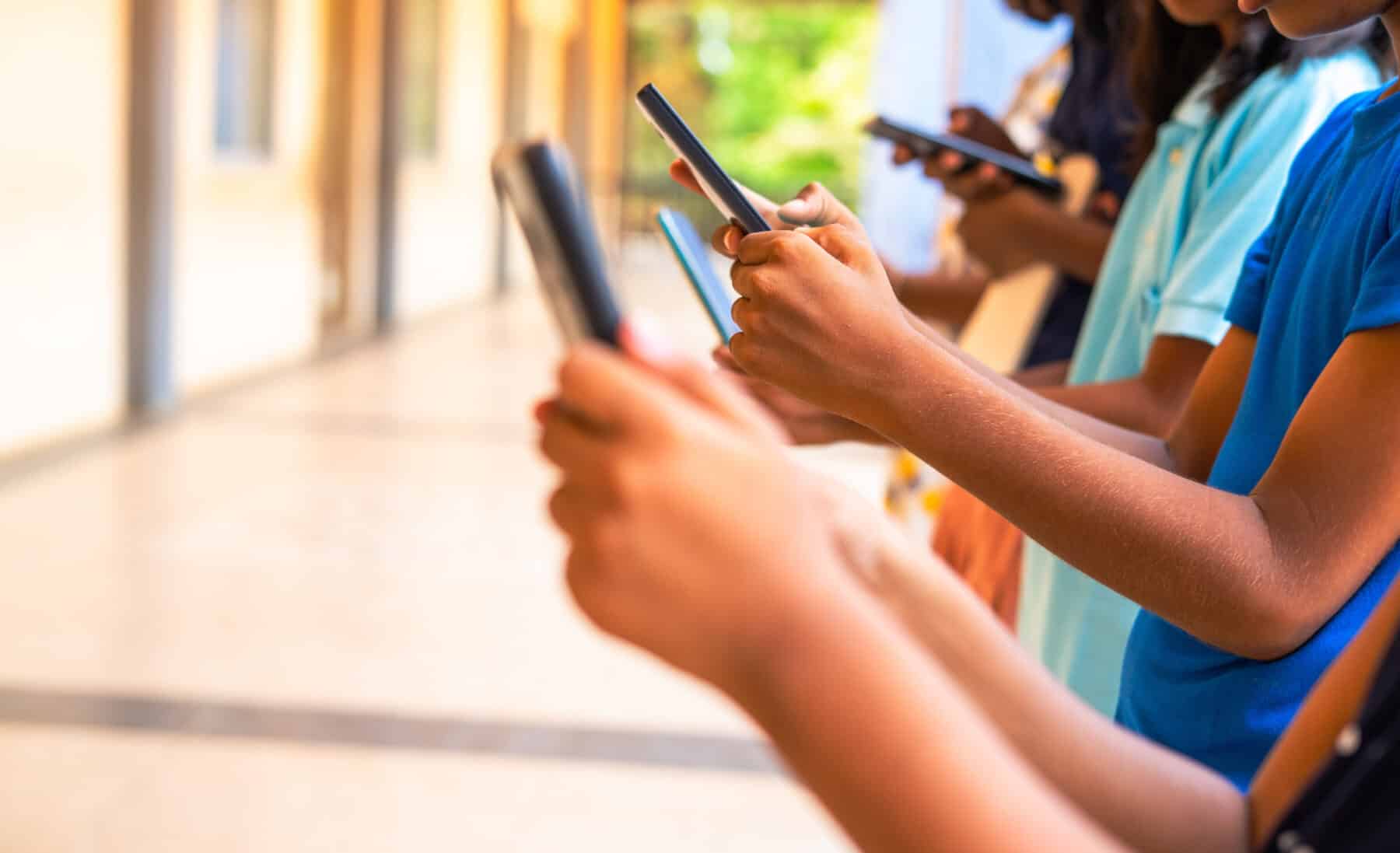
In the early days of social media, many were optimistic about the impact of this new technology. From the Arab Spring to the ice bucket challenge, there was a hope that social media would empower citizens, facilitate social connection, and democratize debate. Social media platforms were frequently described as “digital town squares,” where anyone could join the conversation. Without traditional media gatekeepers in charge, a diversity of perspectives could finally flourish.
This vision was reflected in the declarations of tech executives. In 2020, the vice president of global affairs at Facebook declared that their site held a mirror up to society: “Everything that is good, bad and ugly in our societies will find expression on our platform.” When I started using social media, I had the same hopes and beliefs. But after studying the topic for years, I’ve come to a very different conclusion.
Instead of opening debate to the masses and reflecting public opinion, social media platforms have amplified a small subset of extreme voices who dominate discussion, poison public discourse, and mislead the public. Tech expert Renée DiResta described this modern class of influencers as “invisible rulers,” because they leverage social media algorithms and crowd psychology to push fringe perspectives and unpopular narratives.
Social media platforms were frequently described as “digital town squares,” where anyone could join the conversation.
As the rest of us doomscroll through a mix of hot takes, misinformation, and moral outrage, we are only seeing the tip of the iceberg in terms of what most people believe. It might not be a problem if this tip reflected what most people truly believe—like a public opinion poll drawn from a representative sample of citizens—but unfortunately, it is far from representative. Our research at New York University suggests that social media acts more like a funhouse mirror that creates a distorted reflection of society. It oversamples an aggressive minority at the expense of everyone else.
I became interested in studying social media over a decade ago. To share my research, connect with colleagues, and promote my graduate students, I joined the academic Twitter community. Within weeks I became mesmerized by the rapid flow of information and the capacity to connect with leading thinkers around the world. I encouraged my students and colleagues to create their own accounts and join the conversation. I even gave workshops and wrote a column for Science magazine on how academics could leverage social media.
The first time I noticed a serious problem with social media was when psychology scientists turned on one another. In 2013, my field became the epicenter of a series of fierce debates about replication, open science, and online bullying. I had seen many scientific disagreements play out in scientific journals, academic lectures, and conference hotel bars after a few drinks. But nothing prepared me for the vitriol I saw online.
Nuanced perspectives are typically the coin of the realm in science. We love to nitpick subtle details, and I know colleagues who will happily filibuster a large meeting over methodological minutia. But on social media, academics seemed to adopt black-and-white thinking instead of hedging every sentence like they did in their peer-reviewed papers. The conversation about replication quickly became polarized.
Social media acts more like a funhouse mirror that creates a distorted reflection of society. It oversamples an aggressive minority at the expense of everyone else.
I watched mild-mannered academics describe their colleagues as not merely wrong, but evil. Graduate students piled on Ivy League professors, tenured faculty wrote demeaning diatribes about their peers, and prominent figures in the field created “sock puppet” accounts to troll their enemies on a Facebook discussion board. A lot of ink was spilled over debates about bullying, which even led to a lawsuit about online harassment. People printed T-shirts with terms like “methodological terrorist” and wore them with pride to academic events. It turned what could have been an extremely boring discussion about scientific journal policies into an intractable conflict.
The most vocal people on social media were extremely passionate about their issues and outraged by any disagreement. Conversations became fraught as people entrenched themselves in two camps. Some academics formed an emotional support group after they were shamed online. This online conflict eventually spilled over into the national media.
Yet when I spoke to colleagues in person about these issues, they seemed far less hostile and more nuanced. Most psychologists could see the value of open science practices and new journal policies while balancing these concerns against other scientific values. And most academics were either sick of the online hostility or downright terrified of it. People retreated from the discourse, and some closed their social media accounts. Several women in my lab confessed to me that they were no longer comfortable sharing their research online.
I started to wonder if there was something about social media that was throwing the field into an unnecessary turmoil. I wasn’t alone. One colleague said the conversation on social media felt like a bunch of people jammed into a phone booth screaming at one another through megaphones. Around the same time, I noticed that political debates on social media had reached a similar fever pitch with online vitriol, vicious pile-ons, and viral conspiracy theories.
This experience led me down a rabbit hole to understand why debate goes awry online. If social media makes mobs out of mild-mannered academics, what is it doing to the rest of society where the stakes are far higher?
It has become clear that social media is amplifying the most extreme voices, due to a combination of aggressive influencers and powerful recommendation algorithms. Extreme partisans tend to dominate almost every conversation and people with the strongest views post relentlessly, often portraying their opponents as either idiots or evildoers. While only 3% of active accounts are toxic, they produce 33% of all content; 74% of all online conflicts are started in just 1% of communities, and 0.1% of users shared 80% of fake news. These hostile accounts intimidate and silence the voices of people who are moderate, ambivalent, or simply conflict-averse.
If social media makes mobs out of mild-mannered academics, what is it doing to the rest of society?
This silent majority is left to either passively doomscroll or leave the conversation entirely. Without these voices, the online public sphere grows smaller, sharper, and more extreme. This vicious cycle makes the online environment even more aversive, misleads people into thinking that groups are far more extreme than they really are, and fuels “mean world” syndrome, in which people perceive the world as significantly more dangerous and hostile than it is.
One of the main lessons from the literature I reviewed is that people are consuming a lot of moralized information online, which includes a constant stream of polarizing content. In fact, social media is now the primary source of moral—and especially immoral—content. This dwarfs our exposure to similar content from print media, TV, and radio combined, as well as the real world. Seeing countless acts of immorality triggers a high degree of moral outrage. And our diet of immoral content from social media only seems to be increasing.
One of the reasons our online diet is loaded with morality is because of the incentive structures of the attention economy. Arousing and extreme content is more likely to go viral because it drives engagement. The CEOs in Silicon Valley profit handsomely every time a violent video goes viral, or people decide to sanction a norm violator. For instance, when Justine Sacco made an offensive joke on social media in 2013, she was not only publicly shamed and fired from her job, but Google earned an estimated $120,000 to $456,000 from the surge in ad impressions. As one user wryly observed, “Each day on Twitter there is one main character. The goal is to never be it.”
These patterns inspired my colleagues and me at NYU’s Center for Conflict & Cooperation to study the topic. To find out why certain messages go viral—but also why they are divisive—we analyzed 563,312 social media posts in 2017. We found extensive evidence that moral emotional language—whether hateful or uplifting—was particularly likely to go viral. For each moral emotional word people included in a post, the message was roughly 15% more likely to be shared by someone else. This pattern, which we describe as moral contagion, has now been found around the world on multiple social media platforms and seems to generalize to dozens of political topics.
Other scholars have documented that outrageous content is amplified by social media algorithms. This incentivizes people, politicians, and news outlets to spread the most outrageous content they can find, or exaggerate their own expressions of moral outrage simply to fit in. We have found that politicians often use the same moralized language as regular people, which provides an effective tool for spreading their message and mobilizing their followers.
While most people find this aversive, people at the extreme thrive in such an environment. They already see the world through a Manichean lens, in which good is pitted against evil. In the service of justice, they feel compelled to advocate for their own worldview or pet issue. We have found in issue after issue, from marijuana legalization to gun control, people who have extreme opinions about the issue are the most likely to weigh in online. And their comments are often hostile, painting their opponents as sinister.
In issue after issue, from marijuana legalization to gun control, people who have extreme opinions about the issue are the most likely to weigh in online.
This dynamic spills over into the offline world. While opinions about most issues are often normally distributed, with a small number of people at the fringe and most people somewhere in the middle, the distribution is distorted through social media. When people at the extremes relentlessly post hostile content, it distorts what people perceive. When an information diet becomes dominated by aggressive posts from the edges, the middle disappears, creating a funhouse mirror effect—a false reflection of public opinion and community norms.
This was no doubt the same dynamic I experienced during the overheated open science debates in psychology. People who were passionate about the issue felt compelled to aggressively advocate for their agenda, shoot down critics from the other side, and fiercely defend anyone who agreed with them from criticism. Meanwhile, bystanders felt compelled to take sides and either express outrage in solidarity or shut up to avoid getting caught in the crossfire. Moderates find these types of debates aversive because they tend to face criticism and harassment from both sides.
The fierce intergroup dynamic turns out to be a powerful tool for active social media users and influencers. In 2021, we analyzed 2,730,215 social media posts from news media accounts and US politicians on Facebook and Twitter. Each individual term referring to a political out-group increased the odds of a social media post being shared by 67%—and these were dominated by out-group derogation. This harsh rhetoric was observed across the political spectrum and was linked to outrage, which we measured by the number of Facebook users who clicked the “angry” emoji. Out-group animosity is not the only way to drive engagement on social media, but our research suggests that it is one of the most effective.
One major problem with this dynamic is that outrage fuels the spread of misinformation. Fake news often spreads faster than true news on social media. For instance, one study found that social media posts containing falsehoods were 70% more likely to be shared than truthful posts. By exploiting human emotions, these messages shortcut the human capacity for reason and lead people to spread content that is not only wrong but designed to fuel hatred and conflict.
This cartoon version of social media discourse ultimately affects political reality. While affective polarization is certainly real—and increasing—people who spend a lot of time online see a much more exaggerated version of partisan animosity than we experience in the real world. This helps explain why Democratic voters falsely believe that a good chunk of Republicans supports heinous acts such as child pornography, embezzlement, and animal abuse. And the feelings are mutual: Republicans harbor these same false beliefs about Democrats. Alas, almost no one supports these actions—they are universally reviled by the vast majority of both parties.
This is a place where social media might be having its most malign effects: It is leading people to see their coworkers and neighbors as sinister nemeses. And despite genuine disagreements over real issues, people now see evil where it doesn’t exist. Political foes may be many things, but they almost never support severe moral transgressions. The same dynamic is distorting views of people from different ethnicities, religious beliefs, and even genders—Gen Z and boomers are not as far apart on many issues as influencers on social media claim. Understanding how we come to hold such extreme beliefs is critical to debunking stereotypes and strengthening our society.
Another effect of the current social media environment is that the news media often treats it as though it reflects the “true” feelings of Americans. For example, after the 2024 election, the media reported a “vibe shift” toward a set of values perceived to be in line with President Trump. However, we found that the so-called vibe shift around content moderation and free speech was vastly overstated. Any shift in social norms was largely illusory, and Democrats became even more concerned about misinformation after the election, not less.
The public has a strong desire for a more prosocial—and accurate—version of social media. When we surveyed a representative sample of Americans, we found far more agreement about social media than disagreement. People are tired of hateful, false, and outrageous content going viral. Instead, they want to see a lot more uplifting, accurate, and positive content in their information diet. They also want greater transparency and control over the algorithms that control their newsfeed—a rare case of political consensus. The people and algorithms driving these divides are out of step with the majority.
The public has a strong desire for a more prosocial—and accurate—version of social media.
Another area of growing consensus is the need to regulate social media use among teens. Nearly 6 in 10 Americans now support a social media ban for kids under 16 years old, and support for limits is growing rapidly. Even teens themselves are begging for change. A recent article in The New York Times reported that “nearly every one of the Gen Z-ers we spoke to explicitly asked for systemic, top-down change to social media platforms.”
Americans are entering a rare moment of political consensus where our political leaders are finally willing to change course on social media. There was a long period where the giant tech firms seemed invincible. But recent court rulings and national bans have opened a conversation about how social media can—and should—serve the public interest. Building online spaces that reflect a diversity of opinions and make space for constructive dissent without fueling division and spreading conspiracy theories could renew hope for this technology.