
How I Learned to Conduct Research That Makes a Difference in the Lives of Arizona’s Kids
I’m trained to gather evidence about diabetes prevention. To have an impact, I learned to gather partners.
When I first started as a faculty member at Arizona State University (ASU), I intended to study the effects of exercise on children’s risk of developing type 2 diabetes. But when I submitted my very first grant application to the National Institutes of Health (NIH), it was called out as “pedantic.” I’d proposed a comparison of how different exercises, such as running or weightlifting, affected a suite of measures for type 2 diabetes risk in adolescents with obesity. The grant reviewers suggested that the principal investigator (meaning me) “should reevaluate ways to have a greater impact on the health of youth at high-risk for type 2 diabetes.” After rereading the proposal, I realized I agreed. The bigger question was not how different exercises modulate diabetes risk in kids, but how to implement programs that actually prevent it.
That feedback shaped the rest of my research career. I’ve since teamed up with community clinics, nonprofit organizations, health systems, public health departments, and advisory boards. Collectively, we’ve grown research infrastructure, expanded community health programs, and informed policy. Our efforts have helped thousands of children and families learn how to prevent a disease that would otherwise subtract an estimated 15 years from their lifespan. And the work continues to build on itself and pay dividends in the community. I’ve seen community health workers, students, and even past participants move into health-focused careers that further advance these efforts.
For intervention research to make an impact, it must be grounded in the needs of communities and delivered in ways that are accessible.
Now, more than 15 years since my pedantic NIH grant application, my research focuses on how to implement programs to prevent diabetes in children, families, and communities at highest risk. I’m mindful that evidence of efficacy is not evidence of effectiveness; for intervention research to make an impact, it must be grounded in the needs of communities and delivered in ways that are accessible. I work to establish academic community partnerships that implement and evaluate programs and, ultimately, improve people’s lives. This emphasis on partnerships represents an evolution in my definition of impact.
Moving toward community impact
Shortly after I received my first grant review, I was invited to join a community health coalition of over 20 organizations around Phoenix, Arizona, focused on obesity and diabetes. One coalition member was the St. Vincent de Paul Center for Family Wellness, which had long served adults with type 2 diabetes at their free clinic for low-income and uninsured patients. But their patients had urged clinic staff to focus prevention efforts on their kids, reasoning that children had a better chance of preventing diabetes by adopting healthy lifestyles early in life. So the clinic had recently launched a program for kids. They were following the latest (albeit scant) evidence on screening youth at greatest risk for developing diabetes and enrolling them and their families in an education program to encourage healthy behaviors. This struck me as the opposite of pedantic.
The clinic director invited me to visit and learn. They were sure their program worked and hoped to see the concepts move beyond their clinic. Federal funding from NIH wasn’t on the clinic staff’s radar, but I could see how their vision aligned with the recently released NIH roadmap that reengineered the research enterprise to speed the translation of scientific findings into improved health outcomes for people and populations. The staff were unimpressed by my PhD and academic position and even less impressed with my peer-reviewed publications, but when I told them I saw an opportunity to partner, that resonated.
Over several meetings and brainstorming sessions, it became clear that what they really wanted was help evaluating what they were already doing in order to spread the word. To me, this sounded like analyzing data and publishing results. It wasn’t my research project, and from a scientific perspective it wasn’t the most rigorous approach, but it was what I was trained to do, and it had potential. We agreed to collaborate.
From a researcher’s point of view, data are best collected under standardized protocols where participants are followed over prespecified timeframes with outcomes predefined and measured objectively. First you ask the research question, then you design the study, outline a plan for analysis, and finally collect the data. The clinic’s data were messy, buried in patients’ charts, collected incidentally as part of delivering care. There was a lot of variability in who was included and what information was available. I remember thinking to myself, This is all backwards; we’ll be lucky to see any signal in all the noise. But I thought the data were an important step toward what we could do next.
Even though this was a retrospective evaluation, we had to be sure we were protecting patients’ rights and welfare, so we went through the process to secure institutional review board approvals and to include clinic staff as “community researchers.” This required them to complete training in the responsible conduct of research and jump through time-consuming academic hoops, but they maintained their commitment to the collaboration.
The innovation was not so much in the data but rather in the collaboration with a community partner to grapple with an emerging phenomenon (pediatric type 2 diabetes) that didn’t yet have an evidence base for prevention.
After about a year of reviewing charts, extracting information, and analyzing data, we could see that the program indeed identified the highest-risk youth in need of intervention: Over half of the 100 patients enrolled exhibited signs of metabolic dysfunction. More importantly, children who finished the program exhibited clinically meaningful health improvements, according to measurements of body mass index, cholesterol, and fasting insulin. Our analysis also suggested that the kids who were most successful in improving their health were those who continued to engage in physical activity. Sure, the data had limitations, and we couldn’t make definitive conclusions about efficacy—but our findings suggested that a community-based program could prevent diabetes.
Ironically, our work was harder to publish than traditional (that is, “pedantic”) research. It took longer to carry out and our manuscripts took longer to get accepted. The innovation was not so much in the data but rather in the collaboration with a community partner to grapple with an emerging phenomenon (pediatric type 2 diabetes) that didn’t yet have an evidence base for prevention. The roadmap toward impact wasn’t quite clear, but the path away from pedantic was.
The staff at St. Vincent de Paul recognized that doing more required moving their program beyond its clinic into a setting that reached a larger population and offered more opportunities to exercise. For that, we needed additional partners. I had been working with the Valley of the Sun YMCA on a different project and knew they wanted to do more in community health, particularly with local clinics whose patients rarely access their facilities. Staffers from St. Vincent de Paul, the YMCA, and I met together to discuss a larger collaboration. This time we were in a position to establish a rigorous plan to collect and analyze data, including using ASU’s clinical research facilities to measure specific diabetes markers. We decided on a small pilot project to establish that we could work together, enroll and follow high-risk children, and implement a formal evaluation of the program’s effects.
It took more than two years, but ultimately we showed that we could pull this off: kids enrolled, and their health improved. Moreover, results from the pilot study brought the encouragement and preliminary data we needed to secure NIH funding for a larger, randomized clinical trial of 160 youths over five years. To support this grant, we needed to expand our research expertise and staff and develop mechanisms for sharing information, data, and resources across institutions.
Learning through partnerships
We found ourselves asking bigger questions about what we could do to expand our efforts—in particular, how to engage more broadly with various community agencies and partner with more health clinics. To integrate a wider perspective, we tapped into a community advisory board (CAB) from ASU’s Southwest Interdisciplinary Research Center, which focuses on reducing health disparities. The CAB had already advocated for more work in obesity and diabetes, and they helped us identify potential gaps in our research. One key question they asked early on was what would happen if we learned kids enrolled in the trial had prediabetes. Following standard research protocols, all participants, including those with prediabetes, could be randomized to a control condition—meaning they wouldn’t receive treatment. But “just watching” as some youth developed disease didn’t sit right with the CAB.
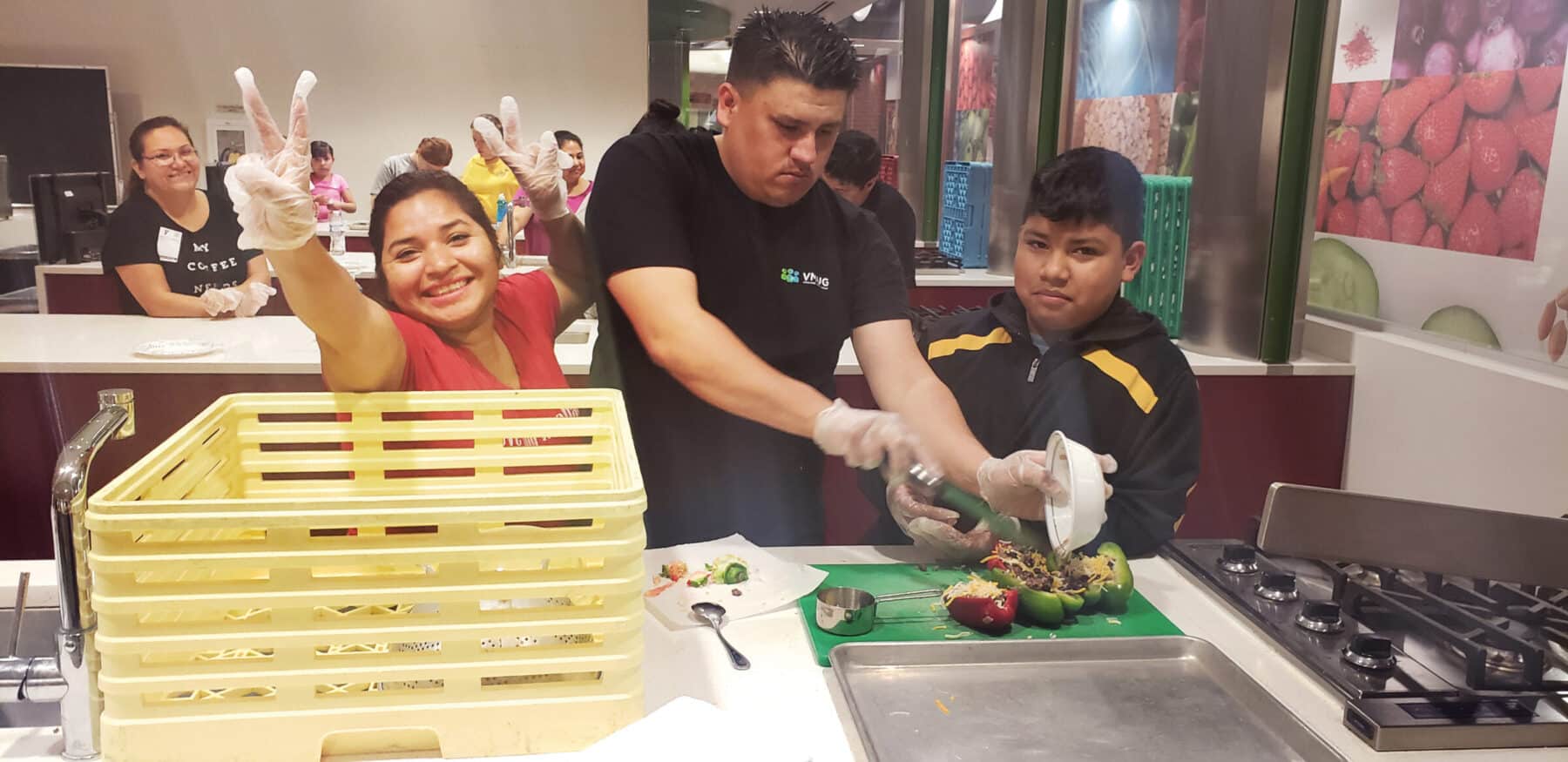
We decided that any kids with prediabetes would automatically be placed into the intervention group. We knew that referring pediatricians (and families) would be reassured by this provision. Based on past measures of prevalence, we hadn’t anticipated it would apply to more than a couple kids, but soon found that a whopping 15% of participants were prediabetic. This had three important ramifications. First, prediabetes was a common and growing—yet undetected—health issue in the local community. Second, to have enough participants in control and treatment groups, we needed to account for prediabetes in enrollment numbers and statistical analysis. Third, we needed another study focused exclusively on kids with prediabetes.
Designing that additional study was a challenge. At that time, there were plenty of studies that described the pathophysiology of prediabetes in youth (including some of my own work) but no real evidence on what to do about it. So we reached out to colleagues at Phoenix Children’s Hospital for a potential collaboration. Its endocrinology and diabetes division ran a specialized program for youth at the highest risk for obesity-related diseases that provided access to pediatric endocrinologists and registered dietitians.
This was more than an opportunity to advance the science on how to help youth with prediabetes and build up limited services in the local community. It would expand our existing partnership (which now consisted of ASU, YMCA, and St. Vincent de Paul) to include a large regional health system. We submitted another NIH grant proposal to compare an intervention for youth with prediabetes with what was already happening at Phoenix Children’s Hospital. It was funded on the initial submission, before we even completed our previous NIH study.
We faced the fortunate challenge of wrapping up one intervention while launching a new one in the same community. We brought on 10 more researchers and added over 20 community referral sites. We were building momentum, and our research team was getting comfortable working with groups outside academia. We’d learned to ask ourselves critical questions: What else could we be doing? And who could help? Our CAB again offered important insight: Prevention efforts would likely work best before kids showed signs of prediabetes. Although we always encouraged family involvement in our interventions, the focus was on adolescents. To learn how to prevent prediabetes, we’d have to focus on younger kids, and that meant working more intensely with families. We reached out to the Arizona Department of Health Services (ADHS) and got their support for a pilot study to learn whether we could engage effectively with high-risk families. Thus, we brought on yet another kind of partner and began learning to reach beyond the immediate communities we were working with.
Scaling interventions
ADHS generously provided funding (via an intergovernmental agreement with ASU) to enable us to establish the feasibility, acceptability, and preliminary efficacy of a family diabetes prevention program. But what really propelled us into thinking more broadly was the technical support that came from the ADHS diabetes program manager. He urged us to think about scaling our work across the state. By this time, we had published the primary outcomes from our first randomized controlled trial, and our study on youth with prediabetes was well under way. We had also published multiple related papers, each led by mentees in my lab with community partners as coauthors. As a collective, we’d demonstrated a robust track record of working together and learning together—but preparing to scale an intervention across multiple communities required both new scientific approaches and moving beyond our network in Phoenix to find partners across Arizona. We turned to a new approach for us, a hybrid study design, which simultaneously assesses an intervention’s efficacy while planning to implement it in different contexts. This strategy shrinks the nearly two-decade lag much scientific research faces between establishing what interventions work and implementing what works for those who need it most.
Prevention needs vary greatly across Arizona’s diverse communities.
ADHS connected us with the Arizona Diabetes Coalition, a statewide effort of over 200 organizations, and together we submitted another grant application to NIH, which the agency funded in 2021. We are now in the final stages of data collection with 125 families in Phoenix (representing more than 350 participants) and working with over 30 community organizations serving four counties across Arizona. Our goal is to build trust and rapport in other communities so that any future interventions are widely accessible, locally relevant, and aligned with partners’ missions.
We don’t yet have efficacy data from families, but we’ve already learned much about how to carry out family-based programs. One concrete example is that we’ve realized we need to accommodate extended families, adapting our work to include aunts, uncles, grandparents, and other household members beyond parents and their children. We have also found that prevention needs vary greatly across Arizona’s diverse communities. Some of our new partners are working with refugee populations that are only recently exhibiting diabetes-related health problems, so we need to find ways to ground prevention programs in the culture of the priority community to help interventions resonate.
Moving from research to impact
My 15-year journey—from “pedantic” research to working deeply with communities and families across Arizona—has led me to reflect on how research can shift toward impact. Just this year, I challenged my research center and its 20 faculty to develop a collective definition of impact; this will help us both recognize and communicate how we can help. In the meantime, here are a few thoughts about what I’ve learned along the way.
Incorporate your partners’ success metrics. In academia, getting grants and generating peer-reviewed publications are major currencies of success. However, most community organizations receive little in grant funding (compared to universities), and many couldn’t care less whether their name is on a scientific paper. Nonetheless, academic research still has something to offer community organizations. Sometimes it’s straightforward services at university-affiliated hospitals, such as health screenings or bloodwork, and sometimes it’s other sorts of validation, like being associated with a research team.
Embedding our partners’ goals into our projects has even led to surprising academic collaborations.
I interview our partners’ leaders to figure out what they considered markers of success—and by extension, what would help them accomplish their mission. These conversations require transparency, trust, and rapport. One organization invited me to speak to their donor base about the power of our partnership. Their donors were excited to be on the cutting edge of research that was tackling unmet community needs. Leaders at another community partner appreciated my help facilitating discussions with health care payors on what evidence-based diabetes preventive services should be covered for reimbursement. Similarly, another executive wanted help showing that the services they provided—which they tracked closely—offered value to the larger community. This leader explained that the organization excelled on the delivery side but needed “success stories” to demonstrate their role beyond that of a service provider.
Understanding our partners’ goals has informed ideas and enabled new projects. And embedding our partners’ goals into our projects has even led to surprising academic collaborations. After a partner encouraged us to find ways of spreading the word about our collective work, we reached out to ASU’s Walter Cronkite School of Journalism and Mass Communication and learned it had just received a major grant to produce health information campaigns to reduce local health disparities. Strikingly, the school hoped to reach families with young children about topics of obesity and diabetes.
It was a clear match. My partners and I benefitted from multiple media opportunities, health awareness campaigns, and community engagement events to promote our work, and we coordinated across institutions to ensure consistent messaging and publicity. A student video focusing on one of our diabetes programs won an international award in communications. Thus, thanks to this collaboration, all participants achieved something that would have otherwise been difficult or impossible while advancing their own goals.
Nurture networks. Community partnerships can only grow at the speed of trust, so it’s important to give time and space to get to know people and organizations by fostering mutually beneficial relationships around shared values and norms. I also learned that asking partners, “Who else do you work with, and how can we bring them into the conversation?” is more than a way to elicit information. It can build social capital to expand collaborations, secure interagency agreements, share staff, and facilitate knowledge exchange.
As the number of individuals involved grows, the network expands, and communities benefit. We have often seen staff from one organization hired into a higher position by a partnering organization. In other situations (or less healthy partnerships), this would be condemned as “poaching”—but my experience suggests it should be lauded as capacity-building, both for the individuals and the network.
Talk strategy proactively. Big ideas can get lost in a tangle of tactics. Once a project gets going, it’s easy to become mired in details. Therefore, having a strategic plan and long-term vision can anchor the work to a larger purpose. Yes, it’s important to reserve meeting rooms and make sure there are enough chairs, but it’s also important to look forward, ask whether the right people are at the table, and make sure the work is guided by a shared mission and vision.
As partnerships mature, it’s crucial to set aside time regularly for strategic planning. These sessions set the stage for tough conversations to advance goals, priorities, and expectations, and to decide how resources should be allocated. For example, when one of our community research projects ran out of funding, we were able to come together as partners to decide the best course of action: sunset the project or try to absorb the work into other sources of funding. We decided that the project was too important to terminate and to continue, albeit at a much smaller scale, until additional resources could be identified. Had we not already held ongoing strategic planning sessions, I doubt our discussions or adapted project would have been as effective.
Embrace policy. Informing policy is another kind of impact. This magnifies the reach of the research, contributing to the creation of a healthier state. Our team produced a policy brief describing findings from one of our research studies and also held a policy forum on the public health and financial benefits of preventing diabetes. An advocacy group used our work to urge the inclusion of family-based diabetes prevention efforts in Arizona’s Diabetes Action Plan, a set of formal recommendations to the governor and state legislature. And we’ve had conversations with a few health insurance providers about the potential to cover family-based diabetes prevention programs for their Medicaid beneficiaries.
Governments aren’t the only entities with policies. Shaping policies within organizations can produce a virtuous cycle of impact. For our first project, our community partners dutifully completed a 10-hour training on ethical, legal, and regulatory principles for conducting research. After they told us how exasperating that was, my academic team approached our university’s institutional review board and argued that requiring this level of training for community partners discouraged collaboration and was at odds with our university’s commitment to social embeddedness. The board has since agreed to accept an alternate training designed specifically for the unique roles that non-academic partners play in community-engaged research. Whether within a government or institution, it’s important for researchers both to know what information policymakers need and assemble advocates and partners who can get to decisionmakers with the right message at the right time.
We’ve worked across partner organizations to adapt institutional policies to facilitate collaborations. The YMCA allowed outside personnel from ASU and St. Vincent de Paul to teach health classes; Phoenix Children’s Hospital worked out a process so that ASU staff could work with research participants receiving MRI exams at the hospital both to obtain informed consent and to help share any incidental research findings with families. These new practices facilitated our research and benefited participants and communities, but each change required institutional leaders to offer support, be flexible, think creatively, and coordinate. This flexibility was fueled by established rapport and common goals.
Take a long-term view. A generational view of community research can also enhance impact. Aside from producing knowledge directly, research provides an opportunity to develop the next generation of researchers, clinicians, and others who will go on to advance the field, care for patients, and collectively build capacity to meet health challenges.
A generational view of community research can also enhance impact.
Many students come to work with me because diabetes runs in their family, and they want to be part of helping others be healthy. This resonates personally, as both my parents have diabetes, and I became interested in a research career through trying to understand and improve my metabolic health. Although my mother has since passed, she was a firm believer in “paying it forward” by investing in others and promoting their success. I try to honor her legacy through intentional mentorship and ongoing sponsorship. Several of my undergraduate students have gone on to work in community health programs after graduation, or have attended medical school and are now physicians. For our PhD students and postdoctoral scholars, many move into faculty positions and start their own research programs in other communities. I have come to see my research program as a “feeder system” that produces scientists, physicians, nurses, dietitians, psychologists, social workers, exercise trainers, and research coordinators. Collectively, this talented group will carry the torch that continues to benefit people.
As I reflect on the gift of feedback from my initial grant application review, I look ahead with a broader vision. I want my work to advance science, support the next generation of researchers and practitioners, inform policy, and in short, aim to make an impact beyond the ivory tower. That impact relies on mutually beneficial collaborations with community partners.