Pornography, the truism goes, is the real driver of technological adoption in the consumer market. VHS tapes and consumer video cameras, the internet, DVDs, virtual reality rigs—their adoption was helped along the way by people looking to upgrade their experience with porn. Next up: brain-computer interfaces, God help us.
But there are some exceptions. Not every technology lends itself to pornography. The car? Not really, at least until self-driving features came along.
In addition to pornography, the widespread adaptation of any cutting-edge technology is helped along by crass consumerism and crime.
Perhaps, then, the cliche should be three-pronged: In addition to pornography, the widespread adoption of any cutting-edge technology is helped along by crass consumerism and crime. The technology at the center of “The Pocket Box™,” Gunnar Anderson’s Future Tense Fiction story, might not do much for pornography, but it sure is helpful for overconsumption and maybe, just maybe, murder.
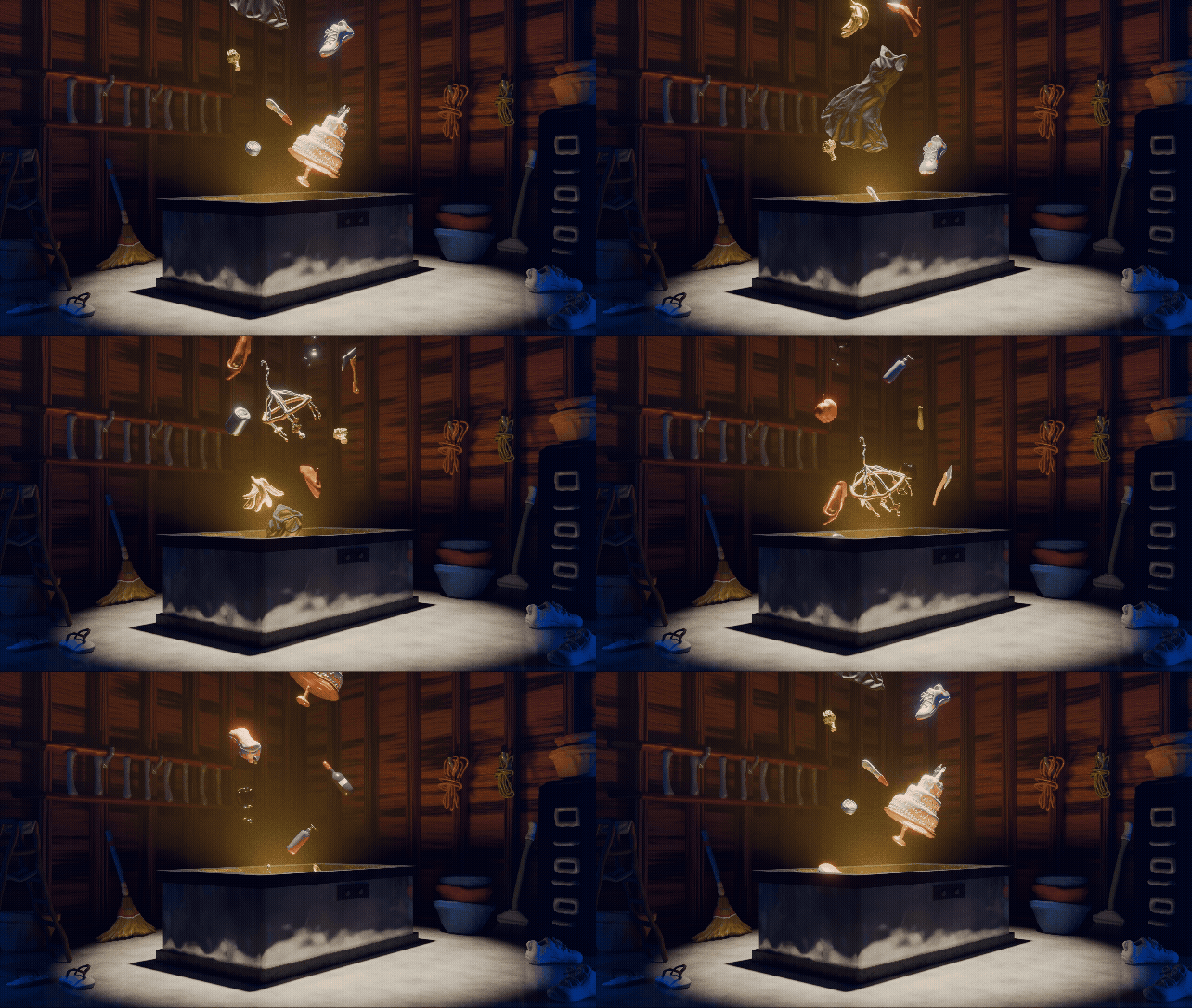
Anderson’s story introduces us to “a moon landing moment” for a new generation. “The biggest scientific breakthrough in the history of humankind,” in the words of its inventor, is a portal to another dimension of sorts, “another world existing within our own.” The inventor-discoverer, Dr. Wertz, introduced it to the world as a fix for climate change: A quantum physics landfill—black-hole-fill?—into which emissions and plastics and fracking sludge and all the other yuckiness generated by humanity could be jettisoned.
After tackling climate change, governments try to use the pocket dimension for military purposes, because why not? It turns out to be a bust—you can’t send people there, at least not if you expect them to come back alive, let alone in fighting shape.
But every technology has its high and low purposes, and the pocket dimension becomes not just an intragalactic garbage disposal but the greatest enabler of consumerism since Amazon. All the space freed up from the garbage that now ends up in the new dimension? People want to fill it. No matter what size suitcase I choose to take on a trip, it ends up feeling a little too small.
The pocket dimension as don’t-you-dare-walk-in closet starts innocently, with someone creating a system to use the pocket dimension to store stuff that doesn’t fit in his tiny house. (I often think of the people who appeared on all of those “tiny house” reality shows about 10 years ago, who would limit themselves to 100 objects or something. Did their minimalism last?)
Every technology has its high and low purposes.
From there, the Pocket Box is born, and consumers like our protagonist pay a relatively nominal fee to get unlimited storage.
I’d like to think that I would not fall victim to what would surely be Amazon’s greatest-ever loss leader, one that Jeff Bezos could sell to encourage people to buy, buy, buy. But let’s be honest: I would get one, just like our narrator. “Who needs Carrie Bradshaw’s closet when you can have an entire other dimension to store all your shoes?” she says. Sometimes the only thing holding me back from a late-night purchase, the kind where I’m really buying a brief dopamine hit instead of a viral pet-hair remover, is the knowledge that I’d have to find somewhere to put it.
This consumerism as a driver of technological adoption applies to smartphones, to the internet, to anything else that supports purchases or can itself be purchased and collected. Where would Labubus be without the internet? (Are the kids still buying Labubus, or have they moved on to something else?) If we had the Pocket Box, would trends die, or would each trend just layer on top of each other, facilitated by an endless place to put these things and realistically never look at them again? Would we all become hoarders, just without the vermin and rubbernecking reality TV? Perhaps. No—probably.
So now we come to crime—to the Murder Box, as our narrator calls it in her fantasies. The Pocket Box, we are told, has an organic-matter sensor advertised as a way to keep children from slipping into the other dimension. But it doesn’t work so well: People quickly trade tips on overriding the sensor to store food. The implication, then, is that the sensor doesn’t keep someone from putting organic material in, but simply alerts Pocket Box HQ that they’ve done so. To shove a body into the Pocket Box, all the protagonist must do is put some dried jerky and fruit near the front in case an inspection takes place.
This consumerism as a driver of technological adoption applies to smartphones, to the internet, to anything else that supports purchases or can itself be purchased and collected.
She doesn’t go ahead with the crime. But, she makes clear, someone will, if they haven’t already. And that is true for many a new technology: It becomes used in crime almost as quickly as it’s used for pornography or consumerism. Think of the artificial intelligence scams using fake teenagers’ voices to terrify grandparents into paying an unnecessary ransom, of the Bitcoin forked over to buy and sell drugs, of the stalker who plants a cheap GPS tracker on the underside of his target’s car.
Each time I reread “The Pocket Box,” my own heart breaks just a little for the pocket dimension’s discoverer, Dr. Wertz. He disappears when we’re less than one-fifth of the way through the story. The invention he hoped would save humanity fades into a backdrop for everyday life, weaponized and commercialized so far from his original vision. As crime, consumerism, pornography, and other base human instincts took over, I wonder how he felt. Did he still feel some pride, particularly once it became clear that the invention seemed to resist militarization? He did, after all, stop climate change. Would his heart ache with the release of the first Netflix documentary about a Pocket Box–enabled murder?
That must be the hardest part of inventing something world-changing: No matter how lofty your goal, humanity’s basest tendencies will weigh it down.