
Covid Latino
Arizona State University University of California, Merced
Spanish (and English) language cartoon videos about COVID-19 and the vaccine.
Arizona State University University of California, Merced
Spanish (and English) language cartoon videos about COVID-19 and the vaccine.
thinking about water collaborative
COVID-19 can take some credit for the co-creation of this site. It felt necessary to to do something positive together in the face of this ongoing and frightening tragedy. We are a collective of ecological artists and activists who interpret, celebrate and defend water. These invited artists have experienced the effect that art can have upon ordinary perception, and how it can open us to new ways of being. They have chosen water as their subject matter or medium.
Nothing alive exists without water. Our bodies are mostly water, and our eyes are 95% water. It is no surprise that water has always called artists to it. These water journeys cover many disciplines. Through art, we can begin to think as water, rather than simply about it.
Think About Water is excited to learn about all ideas, projects, artists and organizations that align with our mission, especially under-represented and minority groups in the US and around the world.
We hope that all visitors to this site will fill out the contact form which adds you to our mailing list.
Laura Hyunjhee Kim
Created during post-pandemic lockdown that called for constant hand-washing and limited human-to-human contact, “A Virtual Lotioning Session” (Video, 3min 13sec, 2020) is about noticing and attending to one’s own body-to-body. Through an intimate yet public presentation of applying lotion to one’s own hand(s), the video performance positions self-care as a doubling act, one that is for others as much as it is for oneself. With a humorous spin on a daily ritual that is simultaneously mundane and absurdly sensual, an emollient-for-skin morphs into oil paint and a hand transforms into a “sensorial canvas,” waiting to be touched by all felt-experiences. As noted in the video, “Time to give your hand(s) some loving that only hugs your hand and no other human’s.”
Kitti Baracsi
Our multimodal and multilingual collective diary of imagination, “Imaginarios de cuarentena,” has become a place for us to share our feelings and desires, with ourselves and with others. The diary has since developed into a larger project called “Errant Imaginaries: Possible Utopias,” which unites the diary with an inquiry into existing inspiring models and practices of change.
As artists, activists, grassroots organisers, mothers, scholars, educators, and citizens, we are all working for a better world in many different ways. For almost three years, the network Mujeres Errantes has been a space where we have supported each other in this mission. Via our collective diary, we are able to focus on the dreams that fuel our desire for change.
As part of the “Errant Imaginaries: Possible Utopias” project, we are contacting other collectives that inspire us and that work on some of the desires and challenges that the collective diary expresses. Through an online encounter that we will record on video, we will create an occasion for sharing their experiences and dialogue through art. In the summer, we will hold in-person and hybrid arts residencies, drawing on a shared methodology and in collaboration with other women’s groups.
More information can be discovered at: https://linktr.ee/tutela.
Marcos Lutyens
The Rose River Memorial is a grassroots community art movement that honors and grieves the many lives lost during the COVID-19 pandemic in the United States. We aspire to create a felt rose as a symbol of grief for every life lost. This has been a time in which so many have been devastated by the loss of a close relative, compounded by the inability to say final goodbyes and to freely grieve for loved ones. Rose River Memorial helps with the grieving process by encouraging these families to create roses for their loved ones, while at the same time inspiring the rest of the community to show their support by also contributing with hand-crafted roses. Why the Rose? We chose the rose as a symbol of mourning as it is used in the context of funerals throughout the US, The red rose symbolizes courage and valor and is the national flower of the US. The roses are hand-crafted by the community out of red eco-felt and mounted on recycled fishing nets, including some that have been extracted from marine preserves. We are partnering with Building Bridges, Marked by Covid, and Let’s Reimagine, and believe in inclusivity in all our collaborations by working with communities and age groups of all backgrounds. The project has been supported officially endorsed by mayors, lawmakers, and spiritual leaders from around the country. The Rose River Memorial has been exhibited in many places including Los Angeles, Orange County,. St. Louis, Topeka, Maui, Ojai, Rio Grande Valley, and many upcoming venues. We aim to create a national-scale memorial that will be exhibited in Washington DC. How can I get involved? Schools, churches, museums, art centers, universities, senior citizen centers, and groups including the Kiwanis and Girl Scouts of America have generously contributed thousands of roses and yet we have many more to make. If you are interested please check on the Making Roses tab or contact us to get involved, We are seeking partners to bring this project to full fruition, either by making roses or helping to host a memorial in your hometown.
RAM DEVINENI, SHUBHRA PRAKASH
PRIYA — India’s first female superhero, embarks on a mission to stop the spread of Covid-19 in the comic book “Priya’s Mask.” She befriends a little girl named Meena to show her the sacrifices made by frontline healthcare workers and instill the power of courage and compassion during this difficult time. Along with her tiger Sahas, Priya explains the importance of wearing a mask and working together to help end the pandemic around the world. She teams up with Pakistan’s female superhero, Burka Avenger, to foil her arch enemy from infecting her city with the potent virus. Released as an online comic book, the edition reached millions of people in India and the worldwide.
The short animated film, “Priya’s Mask” is an important testament to the courage of women healthcare workers and will help educate people about the virus. An international array of actors and leaders lend their voices to this important film including Vidya Balan, Mrunal Thakur, Sairah Kabir and Rosanna Arquette.
This first story was specifically constructed to address the problem of blaming victims of sexual violence and provided a character, Priya, who could inspire change throughout communities by appealing to audiences — especially youth — with an empathetic narrative. Priya’s story became a powerful voice a in the global movement for women’s rights and a symbol of solidarity against gender-based violence and continuing with the #MeToo movement. The creators of the comic book were honored by UN Women as “gender equality champions.”
New York Times
The famed Guggenheim institution and other museums are reaching out to audiences who cannot connect to art in typical ways.
Although many major art institutions have programs for people with disabilities, the pandemic has forced museums to recreate them in a digital space. In-person tours incorporating verbal descriptions for visitors with low vision, or American Sign Language interpretation for the hearing-impaired, have often transformed into Zoom sessions about specific artworks.
This article is part of a special report on museums, which focuses on reopening, reinvention, and resilience.
OK Go Sandbox
In 2021, OK Go Sandbox invited the world to help create a new video and remix of “All Together Now.” The #ArtTogetherNow project ended up creating 6 films and 5 new versions of the song, thanks to approximately 15,000 global collaborators.
Developed as a collaboration between OK Go and the Playful Learning Lab at the University of St. Thomas (led by Dr. AnnMarie Thomas), OK Go Sandbox is about bringing different ideas, disciplines, and people together to explore creativity and learning. Director Geoff Shelton is creating new videos specifically designed to inspire classroom discussions and projects.
We are particularly looking forward to interacting with even more educators as we work to expand the OK Go Sandbox offerings. We encourage you to reach out to us (hello@okgosandbox.org) with your feedback and ideas. The best part of a sandbox is that we can try building lots of new things and improving them based on your input- even if we occasionally need to knock down a castle and start over!
Missouri Botanical Garden
Live video tours of the Garden during lockdown when public were not permitted on grounds, and other entities of the Garden created video and other online material to share via social media feeds
Tova Speter, Maya Bernstein, Emily Bhargava, and Maria Beatriz Arvelo
Translations: chains of positive energy (c.o.p.e.) was launched in April 2020 in direct response to the isolating effects of the Covid-19 crisis. After experiencing the powerful connections created by participating in chains of art as part of a physical art exhibit), I started this project to help others connect as well. We may be socially distancing, but we can still be connected. Participants are invited to sign up to be a part of a chain of art where they can receive work created by someone else and then create work in response in order to then inspire someone else in the chain. Each chain in Translations: chains of positive energy (c.o.p.e.) was started by someone offering a word/phrase/quote that describes a quality or mindset they have that allows them to move forward through these challenging times. The word was then sent to another artist to “translate” into their own modality. Once complete, that new artwork was sent to a different artist to translate into a different modality, and on and on, with each artist ONLY seeing the one translation immediately prior to their own. The seven links in the completed chain are a nod to the seven days in each week that feel so long right now.
National Academy of Sciences
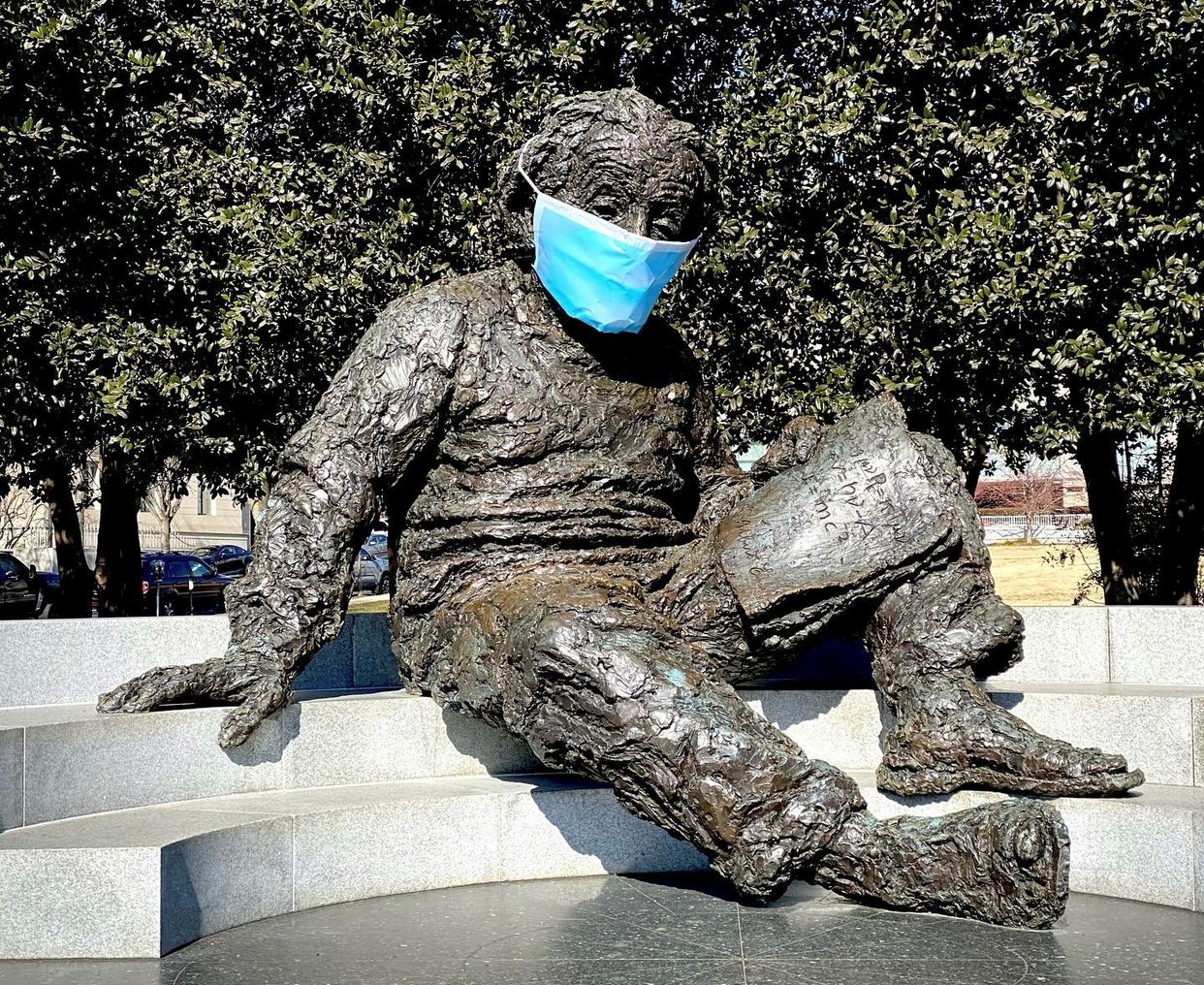
In late 2020 and early 2021, the National Academy of Sciences fabricated a large mask for the Einstein Memorial to promote the wearing of masks to reduce the spread of COVID-19. Visitors were encouraged to post images of themselves wearing masks with the hashtag #MaskUpwithEinstein
Makara Center for the Arts
RESPIRATION:RESTORATION is a project that began by recognizing that if the problems of police violence, pandemics, and the climate crisis are connected, then the solutions must be connected as well. Creating more green spaces with plant life leads to cleaner air. Connecting to local food source-”including our own backyards or community gardens-”reorients us towards reciprocity with non-human relatives. Defunding militarized racist police means refunding investments into Indigenous land sovereignty and stewardship, public parks, gardens, libraries, and services for the people. These solutions begin to transform an extractive and exploitative economy into a sustainable and regenerative culture. RESPIRATION:RESTORATION is an ongoing invitation to breathe together. The opening performance of music for mutual flourishing began on Saturday, September 26, 2020, when music collective Spooky Action Labs created music featuring PlantWave—a technology that converts the electromagnetic waves of plant life into musical sounds. The act of listening to plants as creative musicians encourages a radical shift in consciousness: the realization that these beings who provide us with oxygen have their own messages to share. This initial performance launched a multimedia webpage at www.makaracenterarts.org, creating a source of art and educational resources related to these intertwined themes. An ongoing call for submissions by nonprofit organization Makara Center for the Arts is now exchanging free plants for art works, creative responses and/or educational resources from members of local communities, prompted by the following question: What does it feel like to breathe in a world without police violence, pandemics, and climate disasters?
Brandon Ballengée / University of Houston’s Cynthia Woods Mitchell Center for the Arts
In his newsletter of April 2021, Brandon Ballengée wrote:
Since last fall, I have been an Artists-in-Residence at University of Houston’s Cynthia Woods Mitchell Center for the Arts. Here I have been working on a new series entitled VII.
VII explores Houston’s urban species through the lens of VII deadly vices (unsustainable practices) and VII cardinal virtues (sustainable actions) in relation to the COVID-19 epidemic (a zoonotic disease thought to be brought on by environmental degradation).
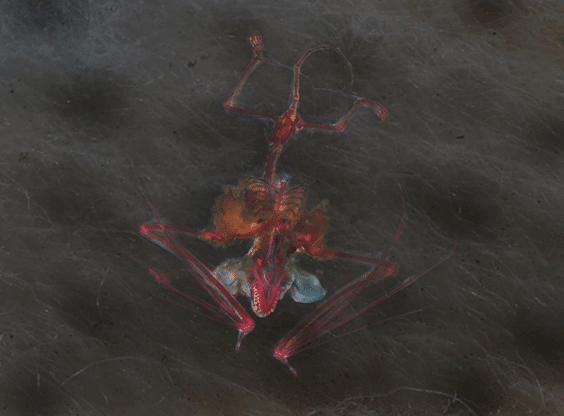
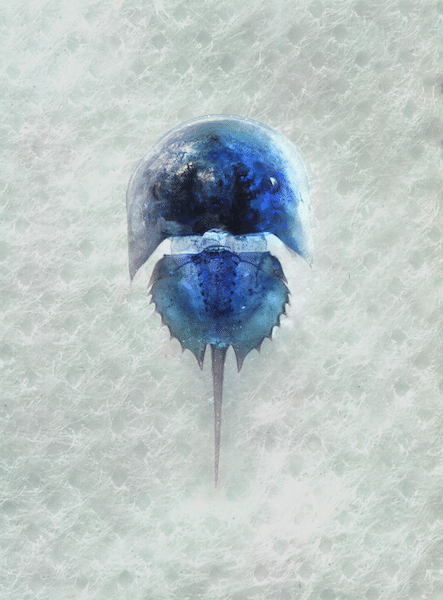
In total 14 species are depicted, each telling the story of ecosystem functionality through their population health and numbers, or lack thereof. For example, some species represent degradation and loss such as the Atlantic horseshoe crab, a species vital to modern medicine because of its use in antibody testing, but which has been missing from Texas waters since the 1990’s. Others offer a message of hope because they have rebounded such as Big Brown bats, one of several bat species found in Houston with stable populations.
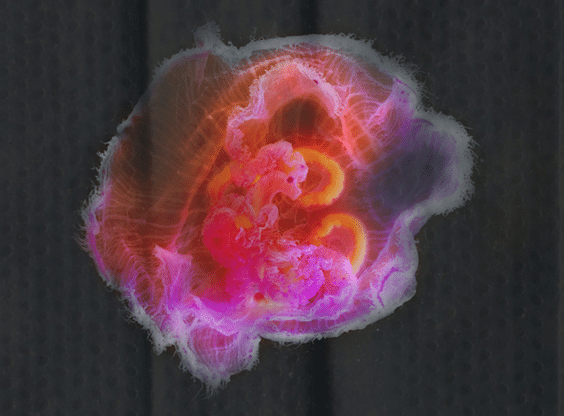
Some species reflect adaptation to environmental challenges such as the hybridization of Gulf and Atlantic killifish populations in the Houston Ship Channel that have become resistant to pollutants, or the Moon jellyfish “infesting” Galveston bay as they can thrive in low-oxygen waters and are tolerant to petrochemicals.
Symbolically, each of these species has a story to tell about environmental virtue or vice and such stories are increasingly relevant as they relate to the current COVID 19 pandemic and overall human health. COVID-19 is a zoonotic disease, one which has passed from non-human animals to humans to create the largest global pandemic in modern history. Although diseases are natural, the transmission of Coronavirus from animal to human due to wildlife trade as well as its rapid global spread can be considered preternatural. Moreover, COVID-19 as well as 60% of emerging infectious diseases have recently been described as symptomatic of environmental degradation.
Following this logic, our treatment of ecosystems may be seen in terms of good (virtues moving towards sustainability) or evil (vices, selfish acts of consumption moving us closer to environmental collapse). Furthermore, actions of environmental virtue decrease our risk of zoonotic disease, while behaviors of environmental vice increase our risk.
For VII, I individually photographed natural history specimens to create portraits and used photoshop to juxtapose these depictions onto high-resolution scans of PPE masks worn during my time in Houston. They were then printed at a scale to recall human children, a size that is familiar and not threatening, to draw us towards instead of away from the image, so that we may further think about how we approach ecosystems and other species, systems that are important to our survival yet to some are not considered, while being cherished by others.”
The new works will be exhibited at the Blaffer Art Museum on the University of Houston Campus, April 17—25, 2021.
Brandon Ballengée (American, born 1974) is a visual artist, biologist and environmental educator based in Louisiana.
Ballengée creates transdisciplinary artworks inspired from his ecological field and laboratory research. Since 1996, a central investigation focus has been the occurrence of developmental deformities and population declines among amphibians. In 2001, he was nominated for membership into Sigma XI, the Scientific Research Society. In 2009, Ballengée and SK Sessions published “Explanation for Missing Limbs in Deformed Amphibians” in the Journal of Experimental Zoology and received international media attention from the BBC and others. This scientific study was the inspiration for the book Malamp: The Occurrence of Deformities in Amphibians (published by Arts Catalyst & Yorkshire Sculpture Park, UK) and a solo exhibition at the Royal Institution of Great Britain (London, England: 2010). From 2009 through 2015 he continued his amphibian research as a Visiting Scientist at McGill University (Montréal, Canada) and, in 2011, he was awarded a conservation leadership fellowship from the National Audubon Society’s TogetherGreen Program (USA). In 2014 he received his Ph.D. in Transdisciplinary Art and Biology from Plymouth University (UK) in association with Zürich University of the Arts and Applied Sciences (Switzerland). In 2015, he was the recipient of a fellowship from the New York Foundation for the Arts (NYFA).
Stories love music
We have adapted our Joy of Creative Engagement program to an online format to reach the affected population of isolated caregivers and their senior clients.
We teach caregivers how to use music and storytelling with seniors who may suffer from memory impairment, depression, and feelings of isolation during the COVID-19 pandemic.
Jennifer Karson
After an introduction to the work of Yoko Ono through examples from her book “Grapefruit” and watching the film “Above Us Only Sky” students (receiving our class teachings through remote learning and quarantined in their homes) created unique written scores and then engaged their communities of friends and family to act out the scores written by their peers in the class. Sometimes they distributed the scores to their roommates and sometimes they did it over Microsoft Teams to distant friends and family. Participants included grandparents, parents, siblings and roommates – many who had previously little exposure to the work of Ono or this strain of contemporary art.
Savannah Walker
Almost overnight, circles and shoe pads became our ubiquitous governing:
Social distancing, also called “physical distancing,” means keeping a safe space between yourself and other people who are not from your household. To practice social or physical distancing, stay at least 6 feet (about 2 arms’ length) from other people who are not from your household in both indoor and outdoor spaces
CDC, Social Distancing
“Keep a Safe Distance to Slow the Spread”
Updated July 15th 2020
Savannah Walker is a visual designer based in NYC. She crafts identity systems, is fascinated by digitally converted experiences, draws a lot of buildings, and has 18,729 photos on her phone, some of which are shared here.
Socil Distance Art Project (TSDAP)
The Social Distance Art Project (TSDAP) was set up in the wake of Covid-19 by a small group of 2020 Fine Art graduates hoping to offer a platform to showcase and discuss graduate work in the absence of Degree Shows.
Our mission doesn’t stop here. As emerging artists, we need more than just a degree show alternative. At TSDAP our goal is to provide a digital community for artists, providing them with the exposure they need to make it in the art world. We want to create a more diverse and equal model for our artists by encouraging a spread of shared opportunities, both digital and physical, not based upon nepotism.
Tova Speter
Translations: chains of positive energy (c.o.p.e.) was launched in April 2020 in direct response to the isolating effects of the Covid-19 crisis. After experiencing the powerful connections created by participating in chains of art as part of a physical art exhibit), I started this project to help others connect as well. We may be socially distancing, but we can still be connected. Participants are invited to sign up to be a part of a chain of art where they can receive work created by someone else and then create work in response in order to then inspire someone else in the chain. Each chain in Translations: chains of positive energy (c.o.p.e.) was started by someone offering a word/phrase/quote that describes a quality or mindset they have that allows them to move forward through these challenging times. The word was then sent to another artist to “translate” into their own modality. Once complete, that new artwork was sent to a different artist to translate into a different modality, and on and on, with each artist ONLY seeing the one translation immediately prior to their own. The seven links in the completed chain are a nod to the seven days in each week that feel so long right now.
CAPE Chicago
The CAPE Network Forum is a place where our artists, teachers, program staff, and researchers share their inquiries, ideas, reflections, and video instructions in response to the pandemic and school closures.
The Eureka Ensemble Corporation
In response to the Covid-19 surge, Boston Hope Hospital was created. This field hospital based at the Boston Convention Center was designed to care for patients recovering from Covid after hospital discharge, as well as homeless patients who were Covid+ in need of respite care and isolation. Boston Hope Music project brought over 100 musicians from the around the city together who submitted “musical doses” of electronically. These were curated into over 25 playlists that patients could access via Samsung tablets three times a day to promote healing. These playlists are now available to the general public on a dedicated website. In addition, musicians visited the Boston Hope Hospital to play music for the healthcare providers to help promote wellness and wellbeing for the front line.
Ashley Maria and David Raiklen
A fast moving musical journey made on 3 continents by a diverse team of actors, dancers, musicians, cinematographers, and regular folks sending their made in quarantine/social distance videos from around the world. Then assembled into a unique film. An incredible array of talent on display to raise spirits and bring a smile. Creative within science guidelines. Building community through art.
Directed by Ashley Maria
Composed by David Raiklen
Edited by Crystal Lentz
Cinematography by Autumn Palen
Produced by David Raiklen and Ashley Maria
(social distancing and PPE used during production and post)
Bowery Poetry
In these days of quarantine, when a touch is a wave from six masked feet away, we turn again to language, to the essence of language, to the art of language, to poetry.
The “Poetry Is Like Bread” Ghazal is a collaborative poem created by a world of poets to nourish us all through the Pandemic and to envision the world After. We take our inspiration from Pablo Neruda: “On our earth, before writing was invented, before the printing press was invented, poetry flourished. That is why we know that poetry is like bread, it should be shared by all, by scholars and by peasants, by all our vast , incredible, extraordinary family of humanity.” This collaborative poem was created with the idea that each poet’s unique voice would join together as one, and that the result would be shared by all. There is no poetic form better suited to do this than the Ghazal.
If, as Neruda thought, poetry is like bread,
Then let it leaven this dark time and be my bread. [ Christopher Merrill ]
Struggling (and losing) in this Antipoem, ghosted thread,
Spreading cool butter, sweet jam on homemade toasted bread. [ Bob Holman ]
No one waits to forgive the dead
don’t pardon the dirt, nor the psalm palms, this celebration of bread [ Mahogany L. Browne ]
Distracted by detonating deadlines and demonstrations,
I couldn’t meet your request for peaceful bread. [ Sandra Cisneros ]
Willson Center Micro-fellowships in the Arts and Humanities
The University of Georgia Willson Center for Humanities and Arts, in partnership with the UGA Graduate School, Arts Council, Franklin College of Arts and Sciences, and Flagpole magazine, awarded 34 micro-fellowships in its Shelter Projects program. The $500 fellowships supported graduate students and community-based artists and practitioners in the creation of shareable reflections on their experience of the pandemic through the arts and humanities. Projects were shared publicly in a virtual exhibition, and continuing phases of the program have provided further support for UGA graduate student research in the arts and humanities.
CNN
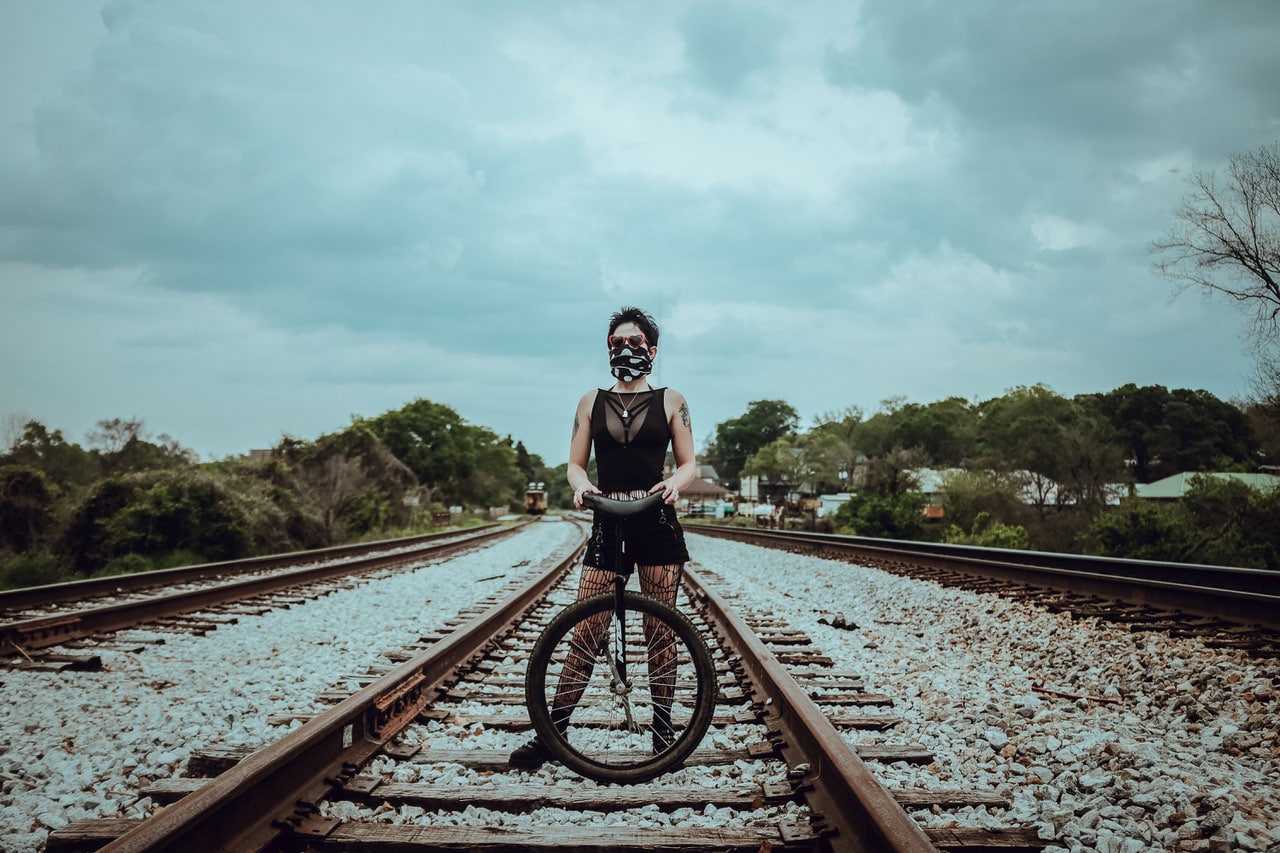
CNN’s Anderson Cooper talks to Childersberg High School Principal Quentin Lee, the principal behind the viral “U Can’t Touch this” parody video meant to help students deal with Covid-19 ahead of his school reopening.
Smithsonian American Art Museum
Mary Savig, the Lloyd Herman Curator of Craft at SAAM’s Renwick Gallery, has been collecting firsthand accounts of the dual pandemics, COVID-19 and systemic racism, from artists working with craft-based materials and techniques. In this series, “Making the Most: Craft Practice during the Dual Pandemics,” artists share personal insight into how they responded to the cascade of canceled or delayed programs, workshops, and exhibitions, as well as the demands of social distancing and social justice. Each account brings new understanding to the import of the studio as a space of reflection, creation, and collaboration.
We’re kicking off the series with Julia Kwon, an artist who sews interpretative bojagi—Korean object-wrapping cloths—and wraps figures with them to comment on the objectification of Asiatic female bodies. The museum recently acquired a face mask by Kwon from her series Unapologetically Asian. Kwon, whose studio is located in Northern Virginia, stitched a vibrant patchwork of Korean silk to honor her ethnic identity during the rise of anti-Asian racism in the United States, and emphasize the importance of public mask wearing to stop the spread of COVID-19. Unapologetically Asian is an extension of Kwon’s interactive art projects that facilitate solidarity and community in the throes of violent social and political unrest.
The Guardian
Scientists and artists have used the drop in noise pollution during the coronavirus lockdown to create the first global public sound map of the spring dawn chorus.
Throughout May, people around the world have uploaded about 3,000 early morning bird recordings made on their phones to the Dawn Chorus website, where they are being shared to help conservation and to create public art.
The soundscape project is inspired by the pioneering work of the bioacoustician Bernie Krause and is led by Prof Michael John Gorman, the founding director of the Biotopia museum in Munich, Germany.
Gorman said the idea was created rapidly after Covid-19 led to lockdowns around the world: “Suddenly the natural world could be heard more clearly. It is a moment to stop and listen, to record and share the unique acoustic fingerprint of the bird species of your local area.”
Dawn Chorus website: https://dawn-chorus.org/idea/
The Covid-19 lockdown silences the noise of civilization around the world.
Rushing traffic, airplanes, industrial noise – all this has come to an almost full standstill and is bringing the otherwise often drowned out sounds of nature to the foreground. We are experiencing a historical moment that makes us stop and consider, feel, and above all hear!
Hundreds of bird species are welcoming the Spring sunrise with their songs every morning. Now is the time to listen to them.
Under the unique circumstances of this memorable spring of 2020, the idea for this Citizen Science and Arts project was born – inspired by the work of the American musician, bio-acoustician and artist Bernie Krause, the founding father of soundscaping.
PBS News hour
Mike Smith co-founded the Names Project AIDS Memorial Quilt in 1987. Now living through his second pandemic, Smith is finding ways to help out amid COVID-19 — and to inspire others to do the same. He shares his Brief But Spectacular take on turning grief into action.
The Magik Theatre
The Magik Theatre is a professional theatre in San Antonio and one that is dedicated to youth and promoting literacy through the arts.
With our theatre closed due to COVID-19 and with many children at home due to school closures, Magik made the pivot to creating online materials for our young audiences. This has ranged from online story time and Madlibs to full-scale videos of our productions. On the 4th of July, we launched the premiere of “Jack and the Beanstalk.”
Kadambari Sahu, Viswatej Kurma and Sandeep Mulagapati
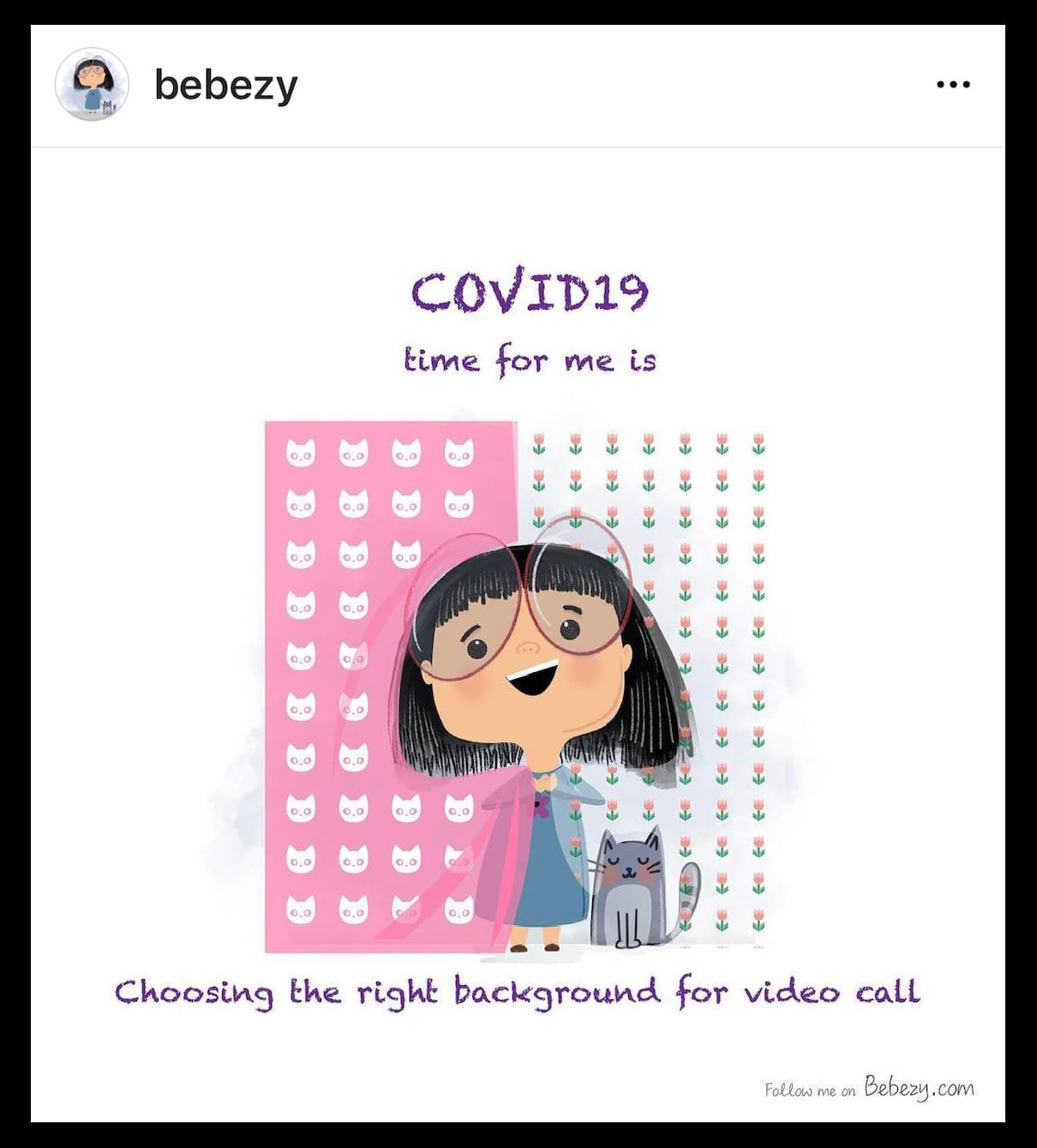
Bebezy: Bebezy is an empathetic happiness champion to fight negative contagion caused by Covid-19. She champions safety and emotional well being. She is a collaboration between Kadambari Sahu, Viswatej Kurma and Sandeep Mulagapati. Covid-19 time is unprecedented. A big part of this battle is fighting the ill effects of isolation. Modern technology has provided some means of coping with this. Art in this context becomes a solution where it can be used to create togetherness by giving a platform for expression and sharing the commonalities. It also becomes one of the effective channels which when used in the service of people can create positive emotions more infectious and break the negative contagion. In an article by HBR tilted The Contagion We Can Control “While medical and public health leaders are working as hard as they can to control the spread of the novel coronavirus, we, of course, listen to and heed their advice. But experts in emotional intelligence also have something powerful to offer” a way to help us manage a different type of contagion that, if we let it run rampant, will only make things worse. Stemming negative emotional contagion” and making positive emotions more infectious” will make us feel more prepared and in control during this frightening period.” [1] To fight this negative emotional contagion some of the methods described are to have empathy, gratitude, express emotions (art therapy), and help others. The “Covid-19 time for me is” becomes a social platform for people to send short expressions of their time which can be documented. It will also give people a chance to get creative and send us their time phrase which we will illustrate. The collection of such illustrations will create positivity, common global spirit to stay on this fight. It will become an archive preserved through illustrations. It will encourage people to stay safe and it will also spread common empathy and positivity. To create a positive, solidarity-based content we will filter the ones and create it emotionally intelligent so it can offer people to think on lines of empathy, gratitude, and positivity.
@bebezy on Instagram
Rice University
Our goal is to identify specific domains of pandemic preparedness and response that benefit from an applied medical humanities approach, and produce detailed descriptions of the forms of output that result from this engagement. Applied Medical Humanities for Public Health will identify, synthesize, and translate humanities-based responses to COVID-19 from around the world so that these projects may together provide a blueprint for education and research on pandemic preparedness and response in humanities disciplines.