Principal Turns ‘U Can’t Touch This’ Into COVID-19 Safety Video
CNN
CNN’s Anderson Cooper talks to Childersberg High School Principal Quentin Lee, the principal behind the viral “U Can’t Touch this” parody video meant to help students deal with Covid-19 ahead of his school reopening.
Humanizing Epidemiology: Non-medical Investigations into Epi/Pandemic Phenomena
Nature
Since the current global outbreak has emerged, most of the prestigious scientific publishers including ours (Springer Nature) have raised open-calls and free material in order to fight COVID-19. all these efforts logically are addressed to the medical societies and related disciplines. However, we are convinced that the contributions of academics, policymakers and other stakeholders from other areas, including the humanities, arts and social sciences (HASS), should not be overlooked. Therefore, I am pleased to announce this open call for research article collection that aims to examine the innovative role and contributions of Humanities, Arts, and Social Sciences -HASS- disciplines, as well as interdisciplinary efforts, in shaping the global response to public health crises. To this end, this collection intends to bring together a range of perspectives, empirical and theoretical, qualitative and quantitative, which draw on methods and approaches from, among other areas: cultural studies, new-media arts, history, digital humanities, law, media and communication studies, political sciences, psychology, sociology, social policy, science and technology studies. Further, Interdisciplinary perspectives are welcomed, whether between HASS disciplines, or at the interface between HASS scholarship and the physical and clinical sciences, or engineering, mathematics, computer science.
Additional Details
Prospective authors should submit a 200-word abstract and a short biography to the Collection Editors in the first instance. Authors whose proposals are deemed suitable will be invited to submit full papers at any point up until the end of June 2021.
Guest Editor: Diaa Ahmed Mohamed Ahmedien (Faculty of Art Education, Helwan University, Cairo, Egypt)
Co-Guest Editor: Michael Ochsner (ETH, Zurich, Switzerland)
Advisory board: Jon Hovi (University of Oslo, Norway), Adele Langlois (University of Lincoln, UK), Tony Waters (California State University, Chicago, USA), Merryn McKinnon (Australian National University, Australia), Chisomo Kalinga (University of Edinburgh, Scotland, UK), Ann H Kelly (King’s College London, UK), Jochen Buechel (Charite Berlin, Germany), Lin Wang (University of Cambridge, UK), Shinichi Egawa (Tohoku University, Japan).
Pandemic outbreaks as public health crises have the potential to reshape human life, from herpes, and Legionnaires’ disease to HIV and Ebola. Each virus or bacteria has its unique biological properties by which it interacts with and affects populations. Human coronaviruses, for instance, have been known since the 1960s. In the past two decades, however, several new dangerous human coronaviruses have emerged, namely, SARS-CoV in 2002, MERS-CoV in 2012, and currently, SARS-CoV-2 is the cause of the disease known as COVID-19, which has put global public health institutions on high alert. Each pandemic brings its own political, economic, cultural, social and ethical challenges. Although efforts to combat such outbreaks are primarily driven by clinical and medical professionals, the contributions of academics, policymakers and other stakeholders from other arenas, including the humanities, arts and social sciences (HASS), should not be overlooked.
Against this backdrop, this research collection aims to examine the role and contributions of the HASS disciplines, as well as interdisciplinary efforts, in shaping the global response to public health crises. To this end, this collection intends to bring together a range of perspectives, empirical and theoretical, qualitative and quantitative, which draw on methods and approaches from, among other areas: cultural studies, new-media arts, history, digital humanities, law, media and communication studies, political sciences, psychology, sociology, social policy, science and technology studies.
Our goal is to identify specific domains of pandemic preparedness and response that benefit from an applied medical humanities approach, and produce detailed descriptions of the forms of output that result from this engagement. Applied Medical Humanities for Public Health will identify, synthesize, and translate humanities-based responses to COVID-19 from around the world so that these projects may together provide a blueprint for education and research on pandemic preparedness and response in humanities disciplines.
Kirsten Ostherr (reported by Inside Higher Education)
In times of crisis, when we face complex challenges like global pandemics, we need a collaborative response that transcends disciplinary boundaries and offers novel approaches to vexing problems. In the current moment, biologists, engineers and others in fields with established pipelines for translational research have sprung into action, working together to create life-saving diagnostics and therapeutics to help with the COVID-19 pandemic. Yet it isn’t always so obvious how scholars in the humanities can contribute to the front-line response.
Additional Details
Kirsten Ostherr, PhD, MPH is the Gladys Louise Fox Professor of English at Rice University in Houston, Texas, where she is a media scholar, health researcher, and technology analyst. Her research on trust and privacy in digital health ecosystems has been featured in Slate, The Washington Post, Big Data & Society, and Catalyst. She has recently published research on medical humanities and artificial intelligence in The Journal of Medical Humanities, and her writing on COVID-19 has been featured in Inside Higher Ed and in American Literature. She is currently leading a multidisciplinary project called “Translational Humanities for Public Health” that will identify humanities-based (and humanities-inspired) responses to the COVID-19 pandemic, to document and help others build upon these creative efforts. Kirsten is the author of Medical Visions: Producing the Patient through Film, Television and Imaging Technologies (Oxford, 2013) and Cinematic Prophylaxis: Globalization and Contagion in the Discourse of World Health (Duke, 2005). She is editor of Applied Media Studies (Routledge, 2018), and co-editor of Science/Animation, a special issue of the journal Discourse (2016). Kirsten is currently writing a book called Quantified Health: Learning from Patient Stories in the Age of Big Data.
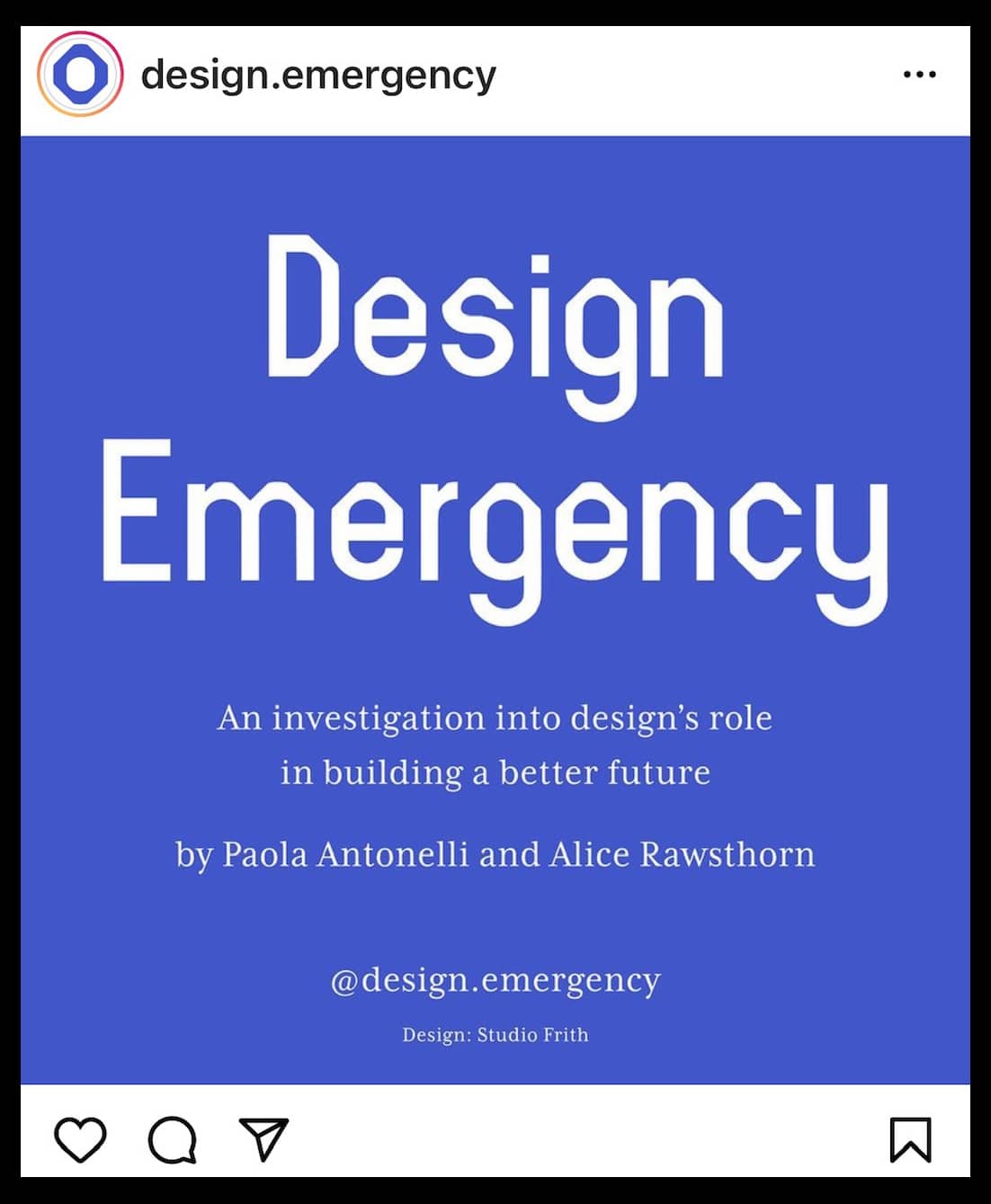
The project is by design curator Paola Antonelli and design critic Alice Rawsthorn. Paola and Alice plan to publish a book on Design Emergency and are streaming weekly Instagram Live talks with leading figures in the design response to Covid-19.
Lockdown in Lancaster and Morecambe (and Area): Walk, Run, Pedal, Push, Map by Louise Ann Wilson
Lancaster Arts at Lancaster University, UK and Louise Ann Wilson Company
Have you discovered new places and routes to walk, run, pedal or push due to the recent Stay at Home (Stay Aware) restrictions we are experiencing due to COVID-19? Places and routes that give you a breathing space – mentally, emotionally and physically. If so, can you record them so they can be added to a map/artwork: Lockdown in Lancaster and Morecambe (and area): Walk, Run, Pedal, Push, Map? Since the COVID-19 Lockdown, I have been running and walking every day from home. Gradually, I have found and followed new paths that have taken me to parts of Lancaster that I didn’t know were there and had not explored!! I am now becoming more aware of how the city connects; where tracks, streams, waterways, roads and the river meet and cross. I have found allotments, prisons and graveyards, followed narrow bluebell-lined tracks through woods and into high-up places where the view across The Bay or The Lakes open up and lorries on the motorway push past. I wave at Ingleborough Fell and glimpse Clougha and Pendle Hill in the distance. I’ve gained fitness, am running more regularly and a little further than usual. The pull of fresh air, warm sun or the whip of the wind is irresistible as is the need to stretch my legs and body, and clear my mind – and have some physical, emotional and mental breathing space. I am not alone in these findings and revelations – lots of others have told me they are doing exactly the same as me. Whether it be on foot or bicycle, with pushchair or wheelchair we are still venturing out from home. Those who can’t leave the house, move very far or easily are walking indoors, in yards, squares, gardens, streets and parks. So, can you start recording the route/s you are finding and share them with me? Walks from all parts of Lancaster and Morecambe AND the surrounding areas can be shared RECORDING AND SHARING YOUR ROUTE/S You can record and share your route/s via GPS, email or post. From hand drawn to digitally captured GPS, all maps are welcome! All of the mapped routes will be combined in to a single Lockdown in Lancaster and Morecambe: Walk, Run, Pedal, Push, Map map. This map will then become a bespoke artwork that abstracts and stitches the routes and paths into a made-at-home PPE intensive care gown. Please note, walks can be share from all parts of Lancaster and Morecambe (UK) AND the surrounding areas. Digital GPS maps and hand drawn maps can shared, please email: louise@louiseannwilson.com This project has been commissioned by Lancaster Arts, which was devised a support programme called ‘Breathing Space’ to connect people with each other and support the freelance arts community in Lancashire (UK) during the current pandemic.
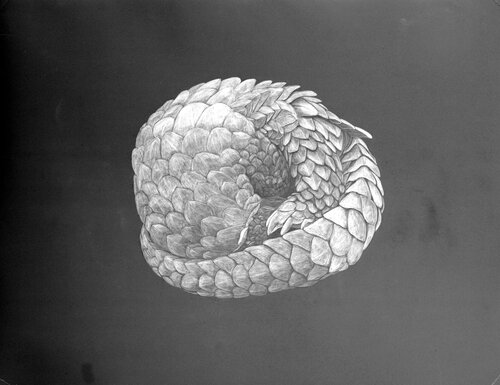
Artist Sarah Ronald, based in Port Coquitlam BC, Canada writes, “I am an animal artist, I focus on creating educational artwork about human behavior and our treatment of wildlife. With the Covid-19 pandemic, I began reading a lot about potential causes, and learnt about Zoonotic viruses – that this virus is thought to have come from bats, to pangolin, to humans via the wet markets. This has inspired a whole new body of work, which I have titled Pandemica. The work is (so far) focused on bats and pangolin, but after absorbing Merlin Tuttle’s talk about covid-19 and bats, the arc of this work has shifted and will soon include humans (we will find deadly viruses wherever we decide to look, including humans), and will eventually include other host animals that have been thought to pass viruses onto humans. My entire message with my art practice is to re-present wild animal information in an effort to educate and bring self-awareness to individuals, and the fact that we are all part of nature, not separate from it. I embrace the concept that when we fight with nature, we are fighting with ourselves (ref. GA Bradshaw’s book ‘Talking With Bears, Conversations with Charlie Russell’)”
Pangolin (II), 2020, Pencil crayon on drafting film, black paper backing, 17″X22″ digitally enhancee contrast
the AHRC funded ART/DATA/HEALTH Project /Dr Aristea Fotopoulou at the University of Brighton
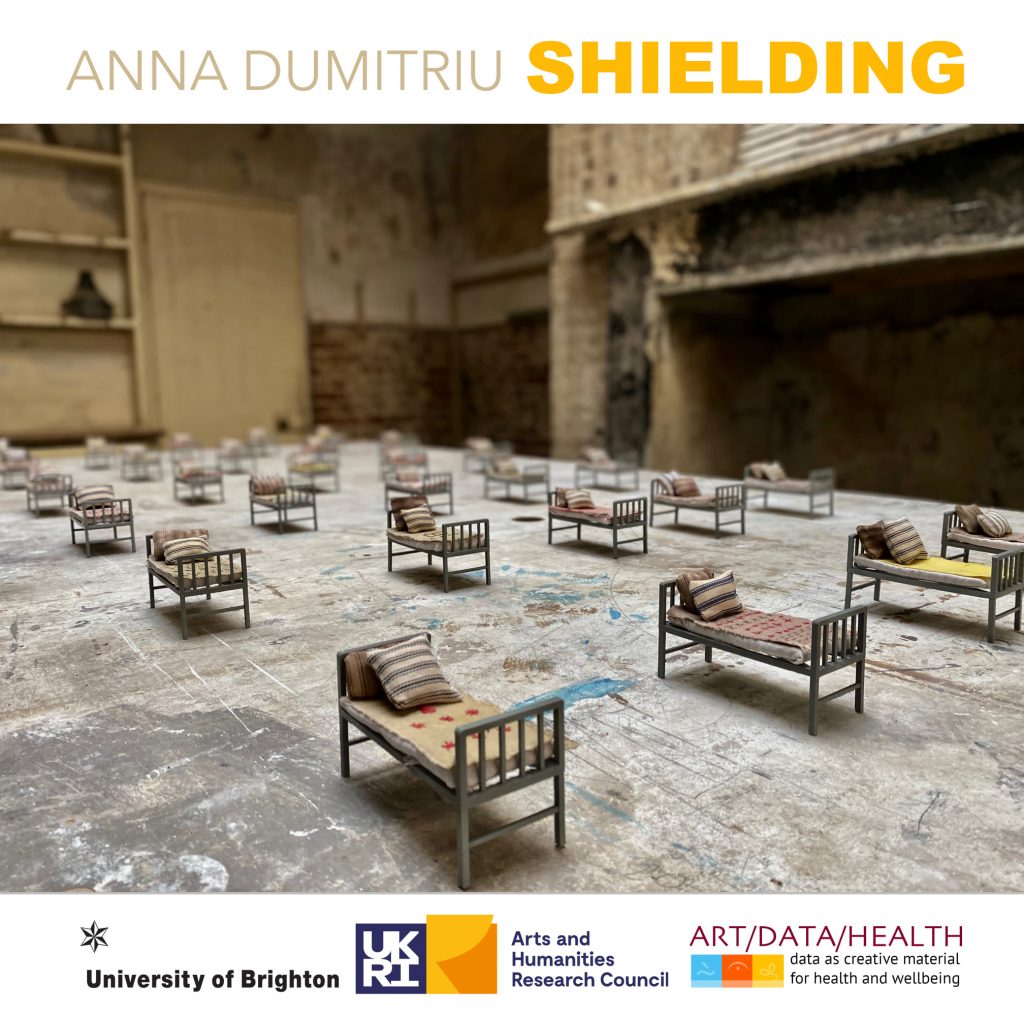
“Shielding” explores the impact of the the COVID-19 quarantine on women facing domestic abuse and the paradoxical meaning of home as shelter. News stories around the world have highlighted the significant upsurge in violence and the need for increased support for victims of abuse from both governments and the charity sector, a time when support has been much harder to access because of infection control measures and reduced capacity, especially in the early stages of the pandemic.
The artwork is inspired by Virginia Woolf’s feminist essay “A Room of One’s Own” (1929) which states that women need their own safe space in order to flourish and be creative. This notion of a safe space is set against the stark image of the hastily constructed temporary hospital ward that has become such a familiar image in the news stories of 2020. Those locked down with abusive partners have no safe space in which to escape. Movement restrictions aimed to stop the spread of COVID-19 are making violence in homes more frequent, more severe and more dangerous. “Shielding” has become a familiar term for protecting those vulnerable to COVID-19 who are asked to stay home but the reality is for those at risk of domestic abuse the home is not a place of safety and care, and helplines globally are facing an increase of up to one third. The final installation combines traditional feminine crafts such as sewing, embroidery and natural dyeing with healing plants (such as turmeric), with 3D printing based on digital reconstructions of hospital beds from the first temporary hospitals in Wuhan with their rows of identical beds, often with a bizarre jumble of colourful makeshift bedding sourced at speed from nearby factories. The doll sized beds also remind us of Henrik Ibsen’s play “A Doll’s House” (1879) which deals with the fate of a married woman in a male dominated world. In the context of Dumitriu’s BioArt practice the aim is also to safely incorporate biomaterial related to the pandemic in the work. This Art/Data/Health commissioned artwork by Anna Dumitriu is particularly relevant in the current crisis where numbers of domestic violence cases have been rising globally, while under-resourced civil society organisations struggle to remain accessible to those who need them most. The commission initially aimed to represent and creatively explore data around domestic abuse through hands on art workshops with staff from Brighton-based charity RISE, but has been adapted to respond to the global pandemic situation in light of the limitations that social distancing has brought. Since the creative workshops planned by the ART/DATA/HEALTH project were cancelled due to the pandemic, Dumitriu prepared an art kit for the participants instead, which they were able access online. The creative activity prompted them to imagine an ideal a room of their own or a safe and cosy space for a service user, reflecting on Woolf’s writings. It is hoped that in due course participants can work with artist to create miniature bedcovers to be incorporated into the artwork with embroideries that bring their own meaning to the piece. Dumitriu said in an interview for SENSORIUM in March 2020: “An important aspect is to let this situation inspire work and I am relieved that I have been able to adapt one current art commission to explore the impact of self-isolation and quarantine due to the COVID-19 pandemic on the issue of domestic abuse and violence from a global perspective.” This work is commissioned as part of the AHRC funded ART/DATA/HEALTH Project led by Dr Aristea Fotopoulou at the University of Brighton 2018-20. Anna Dumitriu’s project is inspired by the work of community domestic abuse and violence charity RISE.
Longevicity: Social Inclusion for the Elderly Through Walkability
University of Milano-Bicocca
The LONGEVICITY project is based on a strong collaboration among Artificial Intelligence and Design, developing new research and solutions allowing an active aging through the fruition of walkable cities. Because of the Covid 19 emergency, many elderly have been forced to stop an active fruition of the cities. The purpose of the project is to extend our research on affective walkability issues, measuring the level of stress (via wearable sensors and an Affective Computing approach) of aged walkers during the preservation of interpersonal distances, joint with the design of new public areas coming from architecture and design.
We created online music classes to keep our community playing music and connected to each other during the crisis. Every weekend we run 4 online classes. We had never done this before. The creativity of our faculty has been amazing. Students from all over the US, Canada, and abroad have been taking the classes.
Additional Details
While recognizing that virtual learning cannot replace the in-person experience, we’ve launched “AEM Online” – four classes each weekend taught by different faculty members. Our goal is to feature as many faculty members as possible while also giving students a chance to learn and interact with each other. As we work to offset deep community financial losses, registration fees fund the work of the teachers and organizers of the program.
Blog with practical advice regarding how to use music as a coping strategy to enhance wellbeing at this stressful time.
Suzanne Hanser writes, “In Greater Good Magazine, Dacher Keltner provides an answer. He says, ‘Choose awe: Wander outdoors looking for awe, reflect on people whose courage and kindness give you the chills, listen to music that lifts you up. If you open yourself up to feeling awe, our research suggests you’ll gain strength for facing our collective challenges. And perhaps lead us out of the toxic dimension of these times, to an age of awe.’
I like to think that we can do this – enter the age of awe – when we really listen and allow ourselves to feel the awe of music. Music can echo our feelings, helping us identify and acknowledge how we feel. It can also change our moods, soothing or exciting us, validating or empowering us. Back in March, my first blog post after learning about COVID-19 addressed how to use the “iso-principle” to create music playlists to modulate emotions and manage moods. This concept is based on matching your feelings with music and slowly changing the music with the intention of changing your mood.”
Additional Details
Suzanne B Hanser, EdD, MT-BC is Professor and Chair Emerita of the Music Therapy Department at Berklee College of Music. Dr. Hanser is Past President of both the World Federation of Music Therapy and the National Association for Music Therapy. She established the music therapy program at the Leonard P. Zakim Center for Integrative Therapies at Dana-Farber Cancer Institute, and is also a Resident Scholar at the Women’s Studies Research Center at Brandeis University. Dr. Hanser is the author of The New Music Therapist’s Handbook, and co-author of Manage Your Stress and Pain, book and CD, with Dr. Susan Mandel, and Integrative Health through Music Therapy: Accompanying the Journey from Illness to Wellness. In 2006 Dr. Hanser was named by the Boston Globe as one of eleven Bostonians Changing the World. She is the recipient of a National Research Service Award from NIA, the Sage Publications Prize, and the American Music Therapy Association’s Lifetime Achievement Award.
University of Maryland College of Arts and Humanities
Keep Creating is a College of Arts and Humanities (ARHU) virtual initiative that creates spaces for University of Maryland’s community to share their works and for anyone to experience UMD’s arts offerings from home. As a college of arts and humanities, it was important for us to create an online space to continue to share, engage and celebrate creativity. Engineers are artists. Scientists are artists. Teachers are artists. The hope is that everyone across campus will respond with how they’re creating. We want to encourage people to continue to think about new ways to explore creativity given the challenges of our day. The space features a digital stage, virtual events, news items about how the UMD community is staying creative and more.
Additional Details
During this time of uncertainty, the arts and humanities can help us create new approaches and insights for empathy and for understanding our rapidly changing world. More than ever, they also connect us to our shared humanity. We invite all members of our creative community to join our movement to keep creating.
Bonnie Thornton Dill Dean, College of Arts & Humanities
Infodemic is a neural network-generated video that questions the mediated narratives created by social media influencers and celebrities about the coronavirus. The term ‘infodemic’ can be traced back to the SARS outbreak in 2003, but gained popularity in February of 2020 when the WHO Director, General Tedros Adhanom Ghebreyesus stated: “we’re not just fighting an epidemic; we’re fighting an infodemic. Fake news spreads faster and more easily than this virus, and is just as dangerous.” The speakers featured in the video are an amalgam of celebrities, influencers, politicians, and tech moguls that have contributed to the spread misinformation about the coronavirus by either repeating false narratives, or developing technologies that amplify untrue content. The talking heads are generated using a conditional generative adversarial network (cGAN), which is used in some deepfake technologies. Unlike deepfake videos where a neural network is trained on images of a single person to produce a convincing likeness of that person saying things they did not say, we trained our algorithms on a corpora of multiple individuals simultaneously. The result is a talking head that morphs between different speakers or becomes a glitchy Frankensteinian hybrid of different people that contributed to the current infodemic speaking the words of academics, medical experts, or journalists that are correcting false narratives or explaining how misinformation is created and spread. The plastic, evolving, and unstable speakers in the video evoke the mutation of the coronavirus, the instability of truth, and the limits of knowledge.
Additional Details
Jennifer Gradecki is an artist and theorist who aims to facilitate a practice-based understanding of socio-technical systems that typically evade public scrutiny. Using methods from institutional critique, tactical media, and information activism, she investigates information as a source of power and resistance. Her work has focused on Institutional Review Boards, social science techniques, financial instruments and, most recently, intelligence agencies and technologies of mass surveillance. She teaches Game Design and Media Arts courses at Northeastern University.
Performing Public Health: Remote Cultures Conversation Series
Center for Arts in Medicine, University of Florida
The Remote Cultures Conversation Series documents various interpretations and practices of how artists and arts communities are supporting public health efforts. We recently hosted our first conversation centered on experiences of uniquely precarious artists in performing public health (please see project website for further details), i.e. the lived-experiential knowledges they possess of how best to combat social isolation, shifts in social routines, creative practices to engage and maintain well-being, and/or statements/discussion of the lack of any change to routine whatsoever. This project is part of a larger effort in collaboration with the University of Florida’s Center for Arts in Medicine’s COVID-19 Arts Response, which houses the Performing Public Health initiative, as well as a COVID-19 Arts Repository, advisory briefs, and links to a white paper entitled “Creating Healthy Communities: Arts and Public Health in America.”
Additional Details
What are “Remote Cultures”?
In this context, “Remote Cultures” refer to the cultures evolving in response to the public health measures implemented due to the Coronavirus pandemic. Remote Cultures vary among different populations and communities, including Unique Precarities (particular experiences, knowledges, needs, and abilities of marginalized groups) and individuals’ adaptations to the novel public health measures implemented during this pandemic.
Minibinders, Small Antiviral Proteins for SARS-CoV-2 Therapeutics
Baker Lab, Institute of Protein Design
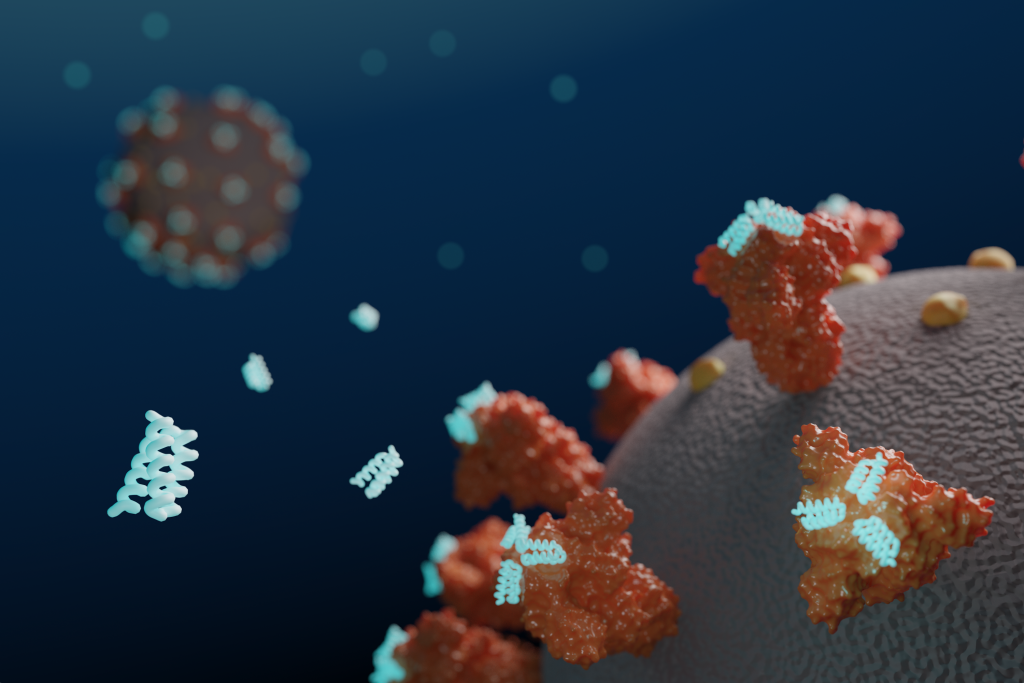
This artwork shows a comparison between minibinders (small antiviral proteins, shown in shades of red) and antibodies (blue) that bind to the spike proteins on the surface of the SARS-CoV-2 virus. Prof David Baker’s group at the Institute of Protein Design commenced the computational design of minibinders in January 2020 around the time when community transmission of the virus began. By the end of May, they had identified minibinders that were able to strongly bind the spike proteins and neutralize the virus. Minibinders are 20-fold smaller than antibodies, and can be scaled up in production at a lower cost. While antibodies have only two binding sites to its target, minibinders in an equal mass offer 20-fold more potential neutralizing sites. The small size and higher stability of minibinders offer a possible advantage of nasal formulations for drug delivery and eliminating the need for refrigeration during storage and transport. These minibinders are currently in development for their potential use as SARS-CoV-2 therapeutics. This example highlights the power of computer-generated protein design, especially during a pandemic when time is critical.For more information refer to https://www.bakerlab.org/index.php/2020/09/09/covid-minibinders/
New Ways of Living: Understanding the Science of COVID-19
CellSpace
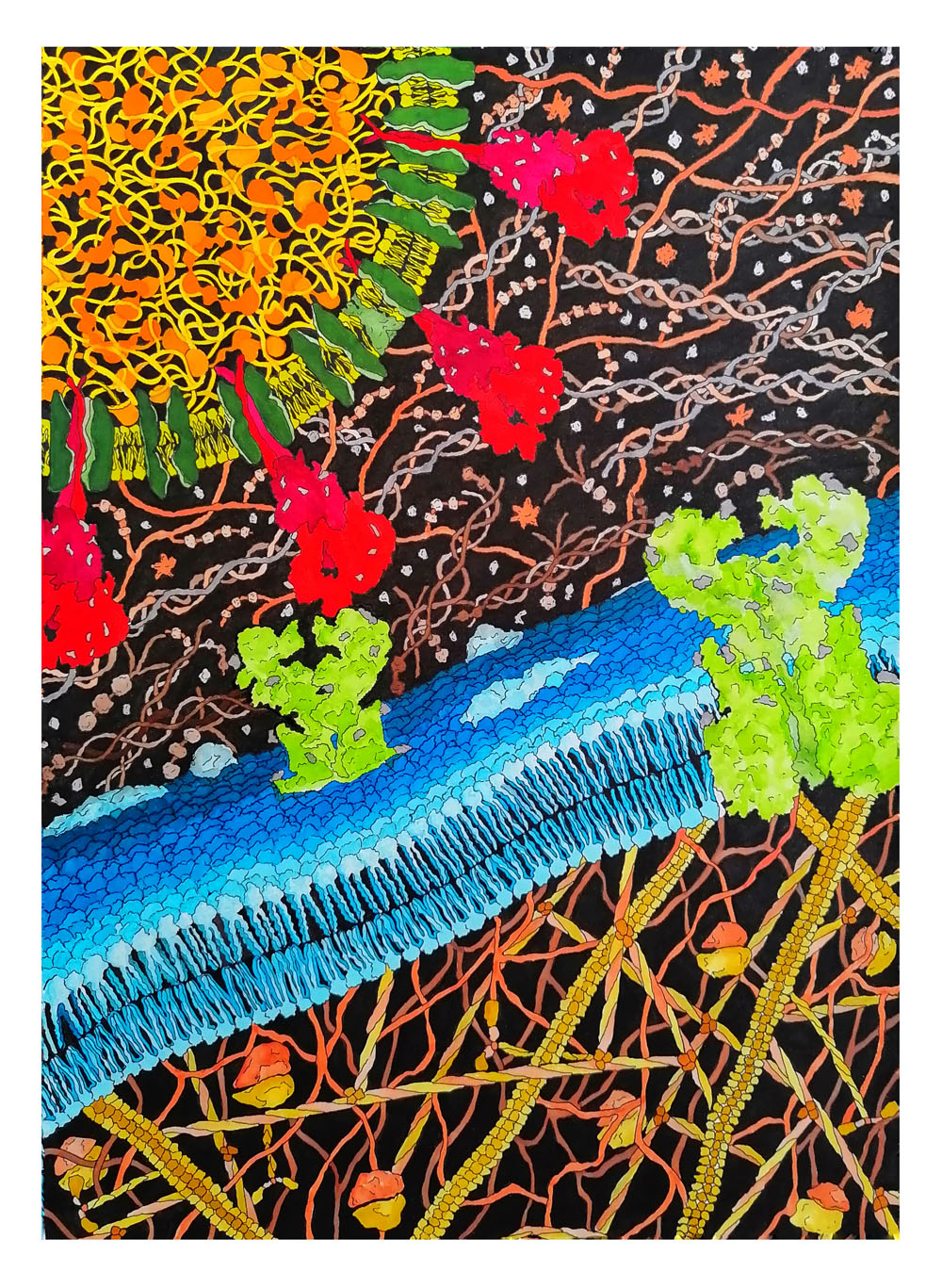
Information about the spread of coronavirus is critical knowledge for personal safety and global response to the pandemic. In collaboration with SciCommMake 2020, an event hosted by SigmaXi and ScienceTalk, “New Ways of Living” explores the science of COVID-19, using art to provide friendly, intuitive and evocative windows into the growing body of information about how the virus is transmitted. The show is seeded with the work of V. Anne Burg and David S. Goodsell, and includes work from an international community of participants in the 2020 “CellSpace” sciart workshop. The show explores the science behind transmission of the virus, from the nanoscale details of respiratory drops, to the persistence of virus in our household environments, to the population-level mechanisms and implications of testing. Cross-discipline dialog informs the work of participating sciartists and creates work that bridges knowledge silos that span from the molecular to the human scale.
CellSpace is a workshop for cellular and molecular sciartists. For our 2020 project, we are creating work for “New Ways of Living.” The artists are located around the world, and are working in multiple media, including traditional painting, digital art, animation, virtual reality, sculpture, and sonification.
The creative response is a watercolor painting showing the SARS-CoV-2 entry into the cell. The painting illustrates the viral spike protein coming in contact with the ACE-2 receptor in the plasma membrane of a lung cell.
SARS-CoV2 Access to the Nervous System, Illustrated: The Role of Angiotensin-converting Enzyme-2 (ACE-2) in Mediating COVID-19 Infectivity.
Samar Abdelhady
I do scientific illustrations mainly in the scope of neuroscience, in accordance with my primary research focus. I barely got excited for visualization projects except for the brain research. Since the Covid world-wide crisis, I thought why not try hands with the COVID urging-focus. It has been the most appraised project I have worked on so far establishing my on-going design style. From there on, I became more established as a scientific illustrator divergent about exploring various visualization projects of research focus other than my primary one.
Additional Details
Sketching Process
The behind-the-scene initial paper sketches; literature excerpt to visualize, list of vectors to draw, and some random doodles.
As the Covid-19 epidemic emerged, so too did an abundance of how-to hand washing videos. Starting in late January 2020, one in particular played on a continuous, hypnotic loop in the dining hall that my partner and I shared with hundreds of others in Singapore. Always running, hands in motion, suds, instruction, rinsing, sensation, ablution. My partner’s and my time as artists-in-residence in Southeast Asia transformed into one of sheltering-in-place for months on end. With a hazard so invisible and communicable, and within a global mesh where everything is shared, the significance of safety, of self, and of contact became more pressing and at the same time more difficult to discern. The ritual choreography of hand washing became deeply embedded in our bodies and minds over those months, while forms of protection, isolation, and communion continue to mutate.
My partner’s and my time as artists-in-residence in Southeast Asia transformed into one of sheltering-in-place for months on end. With a hazard so invisible and communicable, and within a global mesh where everything is shared, the significance of safety, of self, and of contact became more pressing and at the same time more difficult to discern. The ritual choreography of hand washing became deeply embedded in our bodies and minds over those months, while forms of protection, isolation, and communion continue to mutate.
The UF Center for Arts in Medicine, along with arts and public health leaders from across the U.S., created an array of resources designed to support arts-based responses to COVID-19. They call for and enable cross-sector collaboration between the public health, arts and culture, and community development sectors to drive high-impact responses to COVID-19 across diverse communities. The resources include advisory briefs, webinars, an evidence-based framework, and a robust resource repository.