The MIT Press & UC Berkeley launched an open access, rapid-review overlay journal that accelerates peer review of COVID-19-related research and delivers real-time, verified scientific information that policymakers and health leaders can use. Scientists and researchers are working overtime to understand the SARS-CoV-2 virus and are producing an unprecedented amount of preprint scholarship that is publicly available online but has not been vetted yet by peer review for accuracy. Traditional peer review can take four or more weeks to complete, but RR:C19’s editorial team, led by editor-in-chief, Stefano M. Bertozzi, Professor of Health Policy and Management and Dean Emeritus of the School of Public Health at University of California Berkeley, produces expert reviews in a matter of days. Using artificial intelligence tools, a global team identifies promising scholarship in preprint repositories, commission expert peer reviews, and publishes the results on an open access platform in a completely transparent process. The journal strives for disciplinary and geographic breadth, sourcing manuscripts from all regions and across a wide variety of fields, including medicine; public health; the physical, biological, and chemical sciences; the social sciences; and the humanities.
The Curb Center for Art, Enterprise & Public Policy at Vanderbilt University
When the COVID-19 pandemic catalyzed a sudden shift to online and virtual platforms for classrooms, exhibits, and other communal gatherings, it offered a unique opportunity for the Curb Center for Art, Enterprise and Public Policy and The ArtLab Studio to collaborate on See You Again: Students Respond to COVID-19, an exhibit of Curb Scholars’ artwork on the pandemic and the vaccine rollout, which is currently showcased through virtual reality on ArtSteps and augmented reality on the Mezzanine level of Vanderbilt University Adult Hospital at Vanderbilt University Medical Center. Additionally, the exhibit is currently being reconfigured to be displayed via augmented reality on Zapworks. The Curb Scholars’ paintings, graphic designs, collages, music, films, and poetry featured in the exhibit, as well as the ArtLab Studio’s VR and AR designs, exemplify what it means to identify as a “creative” rather than an “artist.”
Despite the perceptibility of the effects they impart on their hosts, the most incredible capacity of viruses is in their invisibility. Invisibility is the most frightening side of the current pandemic, and invisible is also the work of the scientists striving to find a solution. This proposal presents a data visualization that aims to give visibility to those scientists working on COVID-19. Their scientific publications have been computationally analyzed and transformed into a relational structure based on lexical similarity. The result is a network of scientists whose proximity is given by their closeness in writing. An innovative visual method that hybridizes network visualizations and word clouds presents the scientists in deep space, explorable through keywords. In such a space, individuals are situated according to their lexical similarity, and keywords are used to clarify their proximity. By zooming, the visualization reveals more information about scientists and their clusters. While a lot of visualizations during the pandemic focused on showing the spread of infection, causing anxiety among the readers, this visualization reveals the efforts of science in eradicating the virus. Making visible the enormous number of scientists working on COVID-19 research will contribute to coping more positively with the pandemic.
During the lockdowns of the COVID-19 pandemic in 2020, technologies that were not particularly new or innovative were rediscovered as a means to communicate during social distancing. Video conferencing in particular quickly became the standard adopted means of work, education, and collaboration. In a sense, old became new again and was presented as if it never was; the technologies were quickly integrated as part of essential communication infrastructures and their use became a key skill.
Networked performance practices have, for many years, been defined by these networked technologies and their form. Consequently, the pandemic brought to the fore several questions about this type of artistic practice. If the use of networked technologies is now a key everyday skill widely employed, can networked performance truly align itself with technology art (as it often has been), or does it revert to a closer relationship with the performance art of the twentieth century? If the latter is the case—and for many it is highly contentious that it qualifies as having any relationship with those art forms—has networked performance become isolated within art history? Is it pushed to irrelevance by the current popularization of its technological forms, doomed to be haunted by its artistic predecessors?
In response to these questions and the condition of performance in confinement, during lockdown I began to model a series of scenes in 3D that recreate the locations of landmark performance art. All performances selected occurred in the interior spaces of an artist’s home, studio, or residency to reflect on the confined circumstances artists were now required to create within during the pandemic. The result is a series of scenes for networked performance that consist of 3D-rendered images and models created from video and photographic documentation of the original performances. The artist who originally performed is absent from each scene, allowing new artists to “virtually” occupy the spaces and create new performances.
Distributed through GitHub under a Creative Commons by Attribution license, the scenes are created “after”—or in the manner of—the original artists. They constitute a form of instruction, guide, or performance media kit that enables new artists to reenact performances or create new works inspired by the originals within the context of digital technology and networked performance. The media kits can be employed within various networked environments, such as through Zoom or Skype’s virtual backgrounds or as imported models in Second Life, Unity, or various other 3D/VR/AR applications.
The series is intended to facilitate the exploration of what can be achieved when spatial and corporeal possibilities are on the one hand limited or simplified but the necessity of technology to view performance is on the other a way to move beyond those limitations. This is most obviously demonstrated in how artists can appear out of their actual living or studio spaces and in another. The spaces/props and the bodies/actions of the performances, however, are only “virtually” copresent: technically in image, through bluescreening, 3D rendering, interpretation, etc. and conceptually through the concept of “hautology.”
While employed network technologies remove the limitations of an occupied space, artists have to refer to what they know, such as landmark performances, or what their current frame of reference lets them imagine—perhaps a performance in a space they know. This existing awareness of performances and spaces known in a sense haunts all new performances by artists, a condition that spans all creative practices in postmodernism and beyond.
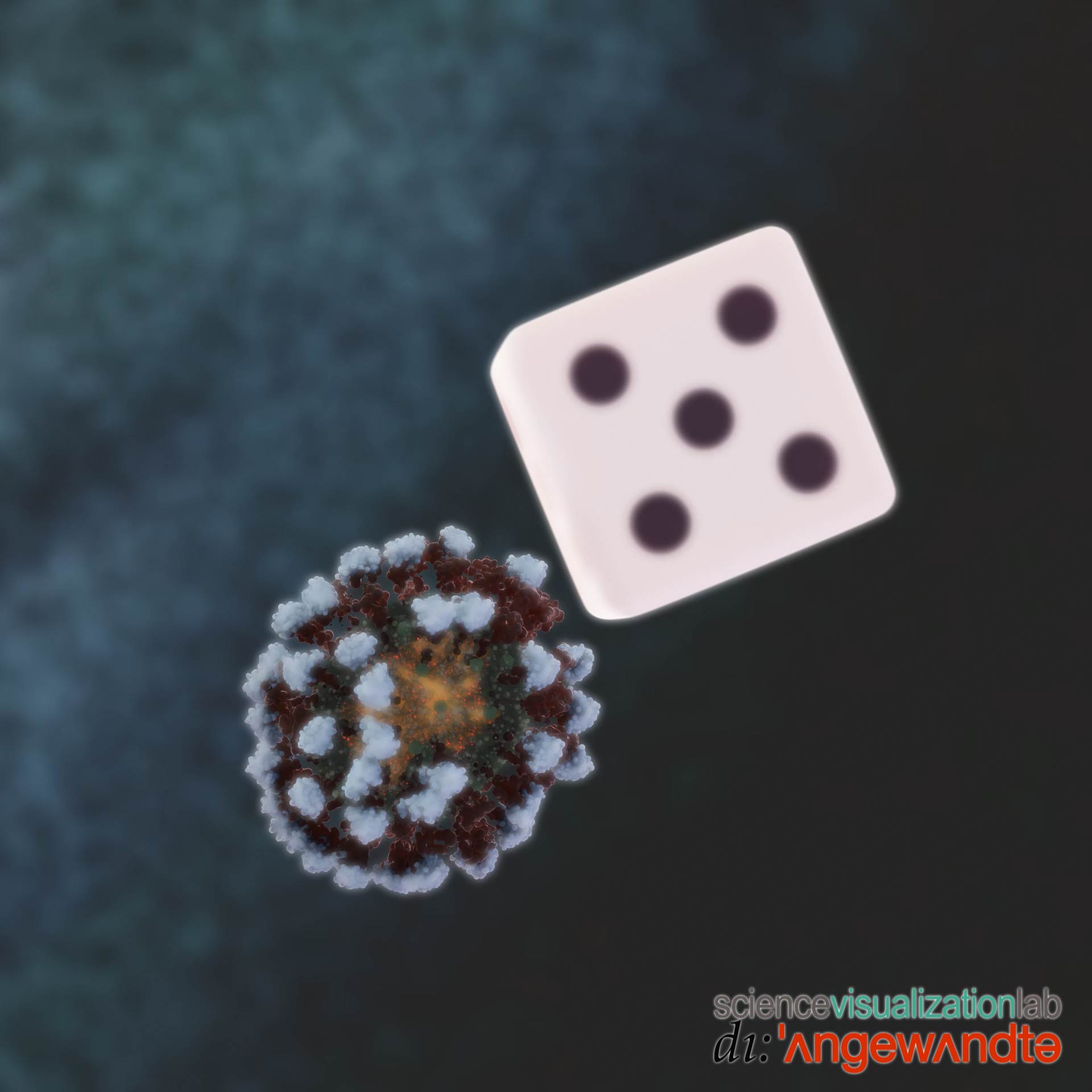
Virus Dice is an artistic and scientific visualization project. It features videos and an interactive installation. The project informs about the infection pathway and how medications work. The project makes the delicate, extremely vulnerable state of human health visible in a metaphorical way.
PRIYA — India’s first female superhero, embarks on a mission to stop the spread of Covid-19 in the comic book “Priya’s Mask.” She befriends a little girl named Meena to show her the sacrifices made by frontline healthcare workers and instill the power of courage and compassion during this difficult time. Along with her tiger Sahas, Priya explains the importance of wearing a mask and working together to help end the pandemic around the world. She teams up with Pakistan’s female superhero, Burka Avenger, to foil her arch enemy from infecting her city with the potent virus. Released as an online comic book, the edition reached millions of people in India and the worldwide.
The short animated film, “Priya’s Mask” is an important testament to the courage of women healthcare workers and will help educate people about the virus. An international array of actors and leaders lend their voices to this important film including Vidya Balan, Mrunal Thakur, Sairah Kabir and Rosanna Arquette.
Additional Details
This first story was specifically constructed to address the problem of blaming victims of sexual violence and provided a character, Priya, who could inspire change throughout communities by appealing to audiences — especially youth — with an empathetic narrative. Priya’s story became a powerful voice a in the global movement for women’s rights and a symbol of solidarity against gender-based violence and continuing with the #MeToo movement. The creators of the comic book were honored by UN Women as “gender equality champions.”
The Guggenheim is Proving That Museums Aren’t Just to Be Seen
New York Times
The famed Guggenheim institution and other museums are reaching out to audiences who cannot connect to art in typical ways.
Although many major art institutions have programs for people with disabilities, the pandemic has forced museums to recreate them in a digital space. In-person tours incorporating verbal descriptions for visitors with low vision, or American Sign Language interpretation for the hearing-impaired, have often transformed into Zoom sessions about specific artworks.
This article is part of a special report on museums, which focuses on reopening, reinvention, and resilience.
In 2021, OK Go Sandbox invited the world to help create a new video and remix of “All Together Now.” The #ArtTogetherNow project ended up creating 6 films and 5 new versions of the song, thanks to approximately 15,000 global collaborators.
Additional Details
OK Go Sandbox is an online resource for educators that uses OK Go’s music videos as starting points for integrated guided inquiry challenges allowing students to explore various STEAM concepts.
Developed as a collaboration between OK Go and the Playful Learning Lab at the University of St. Thomas (led by Dr. AnnMarie Thomas), OK Go Sandbox is about bringing different ideas, disciplines, and people together to explore creativity and learning. Director Geoff Shelton is creating new videos specifically designed to inspire classroom discussions and projects.
We are particularly looking forward to interacting with even more educators as we work to expand the OK Go Sandbox offerings. We encourage you to reach out to us (hello@okgosandbox.org) with your feedback and ideas. The best part of a sandbox is that we can try building lots of new things and improving them based on your input- even if we occasionally need to knock down a castle and start over!
How Pratt Students Met the Pandemic With Creativity and Reshaped Their Practices for the Future
Pratt institue
The ongoing pandemic has changed everything, from the way we learn and create to how we think about the future. At Pratt Institute, students have used their creativity to adapt to these shifts, while addressing isolation, grief, uncertainty, hope, and community into their work. Eight of these students shared how their processes evolved over the past year and what they will carry forward into their future practices.
SIR Model of Infectious Diseases: A Dance Film Project Part of Evolve Dynamicz’s Mathematical Methods Series
Evolve Dynamicz / John Straub
Mathematical Methods is a collaboration project with Boston University Chemistry Professor John Straub. The project is a choreographic research of the spatial dynamics of applied mathematics at the collegiate level. The members of Evolve are currently working with Professor Straub to both learn concepts of applied mathematics presented in his new text book “Mathematical Methods for Molecular Science” and interpret them through movement and choreography. In the time of COVID, Professor Straub and the company have worked together to create a film based on the concepts presented in Straub’s Supplement on Kinetic Models of Infectious Disease. The film titled “SIR Model for Infectious Diseases” can be seen below.
Design Innovation Initiative Uses Creativity to Help Medical Proffesionals Fight COVID-19
Kent State Today
Kent State University’s Design Innovation (DI) Initiative is responding to the COVID-19 crisis by prototyping and producing face shields and masks to help fill the gap being experienced by medical personnel on the front lines.
The team is utilizing the 3D printing and laser-cutting resources in place at Kent State to produce much-needed and increasingly scarce personal protective equipment (PPE) to donate to Kent State’s first responders at the Kent State Police Department and DeWeese Health Center. The remainder will go to the Cleveland-based nonprofit MedWish International, which will distribute the supplies to Northeast Ohio’s hospital workers and first responders who are in dire need. MedWish repurposes medical supplies and equipment.
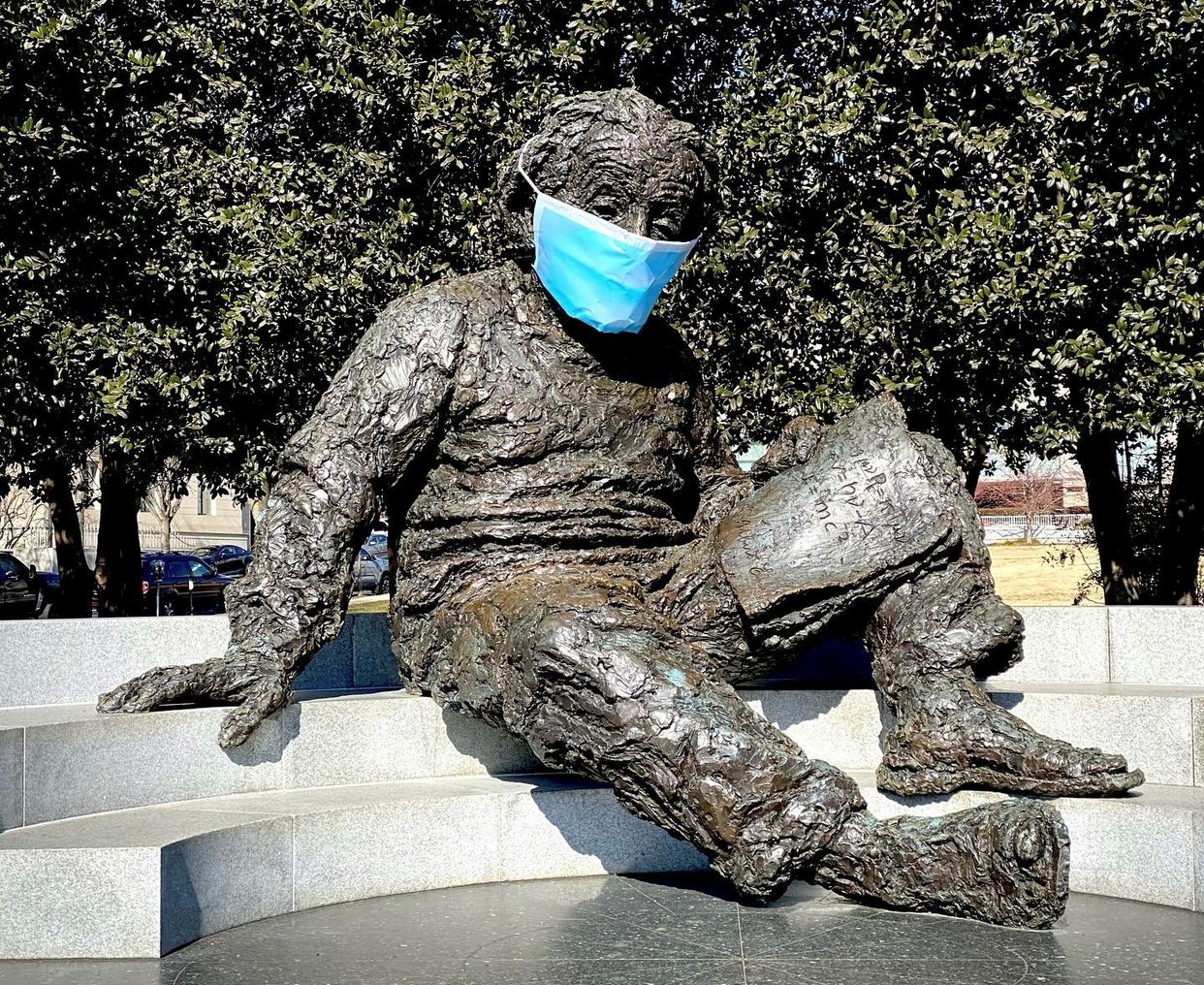
In late 2020 and early 2021, the National Academy of Sciences fabricated a large mask for the Einstein Memorial to promote the wearing of masks to reduce the spread of COVID-19. Visitors were encouraged to post images of themselves wearing masks with the hashtag #MaskUpwithEinstein
An event exploring questions that have arisen during the co-created ASU Humanities Lab “ArtScience: COVID Responsen (link is external)” and over the past year in considering and experimenting with how to respond to COVID. Selecting from questions posed to or by students during the Lab, as well as those that remain unanswered –or perhaps unasked– we will discuss the challenges of how we determine truth and trust; how we identify or anticipate implications for policy, education, and creative collaboration; in what ways art and science address what is known and unknown. How does COVID require taking creative leaps in science and art, how can we “toggle between rigor and wonder”, and where can we find hope and healing pathways while responding to a health crisis we are still experiencing. Dr. Hartwell, Nobel Prize Winner, Center Director and Professor of the Biodesign Pathfinder Center Website: https://biodesign.asu.edu/leland-hartwell Dr. Hartwell led a research team at the Department of Genetics, University of Washington using cell biology and genetics to investigate how yeast cells divide from 1968 to 1997. They discovered two cellular pathways that are integrated by an overall control point regulating cell division and a signaling pathway that arrests cell division in response to DNA damage. Dr. Hartwell is a member of the National Academy of Sciences and he received the 2001 Nobel Prize in Physiology or Medicine. Other honors include the Albert Lasker Basic Medical Research Award, the Gairdner Foundation International Award, the Alfred P. Sloan Award in cancer research, and the Genetics Society Medal of Honor. Diana Ayton-Shenker, CEO of Leonardo/ISAST (International Society of Arts, Science, Technology) Website: https://leonardo.asu.edu/content/diana-ayton-shenker Diana Ayton-Shenker, is an award-winning social entrepreneur who connects and convenes key partnerships, resources and capital for positive global impact. She serves as the Executive Director of Leonardo’s partnership with ASU, where she is Professor of Practice jointly appointed with the School for the Future of Innovation in Society (SFIS), and the Herberger Institute of Design & Arts’ School for Arts, Media, & Engineering. Diana is also founding CEO of Global Momenta(link is external), philanthropic strategy and social innovation firm, and the Global Catalyst Senior Fellow at The New School, where she recently collaborated with XReality Center and her partner-husband, artist William T. Ayton, to produced New Babel(link is external), the largest A.R. (Augmented Reality) public art installation of its kind (Union Square, NYC).
Additional Details
Held on 23rd March 2021 at 15:30pm Arizona Time / MST.
Mason is engaging with our students and community by highlighting the scholarly work of our faculty through the lens of the ongoing coronavirus pandemic. UNIV 391: COVID-19 and the Mason Impact is a free one-credit course offered to Mason students this summer, and each presentation is also being shared with the public. During each session, a different Mason faculty or staff member is featured and leads conversational presentation about an aspect of COVID-19 that has intersected with their scholarly work. The recorded presentation is posted below for the general public after the live session is completed.
Brandon Ballengée / University of Houston’s Cynthia Woods Mitchell Center for the Arts
In his newsletter of April 2021, Brandon Ballengée wrote:
Since last fall, I have been an Artists-in-Residence at University of Houston’s Cynthia Woods Mitchell Center for the Arts. Here I have been working on a new series entitled VII.
VII explores Houston’s urban species through the lens of VII deadly vices (unsustainable practices) and VII cardinal virtues (sustainable actions) in relation to the COVID-19 epidemic (a zoonotic disease thought to be brought on by environmental degradation).
Kindness, 2020-2021, unique Giclée print, 44 X 33.5 in.
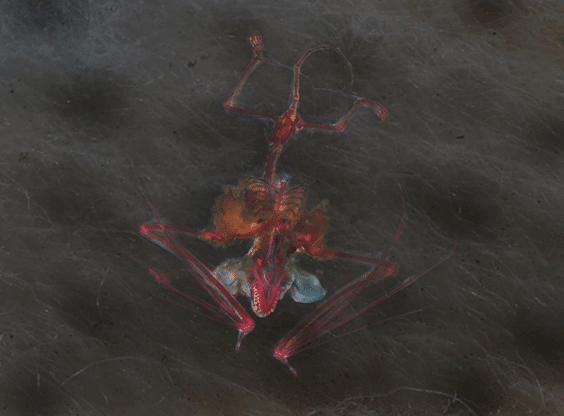
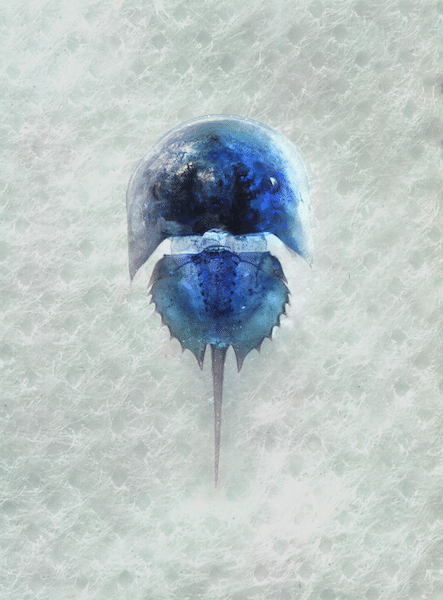
In total 14 species are depicted, each telling the story of ecosystem functionality through their population health and numbers, or lack thereof. For example, some species represent degradation and loss such as the Atlantic horseshoe crab, a species vital to modern medicine because of its use in antibody testing, but which has been missing from Texas waters since the 1990’s. Others offer a message of hope because they have rebounded such as Big Brown bats, one of several bat species found in Houston with stable populations.
Humility, 2020-2-21, unique Giclée print, 44 X 33.5 in.
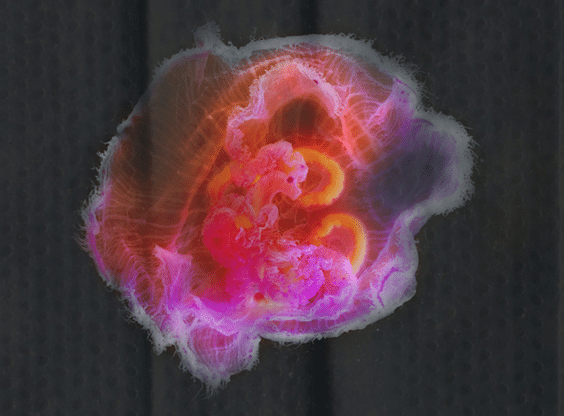
Some species reflect adaptation to environmental challenges such as the hybridization of Gulf and Atlantic killifish populations in the Houston Ship Channel that have become resistant to pollutants, or the Moon jellyfish “infesting” Galveston bay as they can thrive in low-oxygen waters and are tolerant to petrochemicals.
Sloth, 2020-2-21, unique Giclée print, 44 X 33.5 in
Symbolically, each of these species has a story to tell about environmental virtue or vice and such stories are increasingly relevant as they relate to the current COVID 19 pandemic and overall human health. COVID-19 is a zoonotic disease, one which has passed from non-human animals to humans to create the largest global pandemic in modern history. Although diseases are natural, the transmission of Coronavirus from animal to human due to wildlife trade as well as its rapid global spread can be considered preternatural. Moreover, COVID-19 as well as 60% of emerging infectious diseases have recently been described as symptomatic of environmental degradation.
Following this logic, our treatment of ecosystems may be seen in terms of good (virtues moving towards sustainability) or evil (vices, selfish acts of consumption moving us closer to environmental collapse). Furthermore, actions of environmental virtue decrease our risk of zoonotic disease, while behaviors of environmental vice increase our risk.
For VII, I individually photographed natural history specimens to create portraits and used photoshop to juxtapose these depictions onto high-resolution scans of PPE masks worn during my time in Houston. They were then printed at a scale to recall human children, a size that is familiar and not threatening, to draw us towards instead of away from the image, so that we may further think about how we approach ecosystems and other species, systems that are important to our survival yet to some are not considered, while being cherished by others.”
Brandon Ballengée (American, born 1974) is a visual artist, biologist and environmental educator based in Louisiana.
Ballengée creates transdisciplinary artworks inspired from his ecological field and laboratory research. Since 1996, a central investigation focus has been the occurrence of developmental deformities and population declines among amphibians. In 2001, he was nominated for membership into Sigma XI, the Scientific Research Society. In 2009, Ballengée and SK Sessions published “Explanation for Missing Limbs in Deformed Amphibians” in the Journal of Experimental Zoology and received international media attention from the BBC and others. This scientific study was the inspiration for the book Malamp: The Occurrence of Deformities in Amphibians (published by Arts Catalyst & Yorkshire Sculpture Park, UK) and a solo exhibition at the Royal Institution of Great Britain (London, England: 2010). From 2009 through 2015 he continued his amphibian research as a Visiting Scientist at McGill University (Montréal, Canada) and, in 2011, he was awarded a conservation leadership fellowship from the National Audubon Society’s TogetherGreen Program (USA). In 2014 he received his Ph.D. in Transdisciplinary Art and Biology from Plymouth University (UK) in association with Zürich University of the Arts and Applied Sciences (Switzerland). In 2015, he was the recipient of a fellowship from the New York Foundation for the Arts (NYFA).
Virtual REU Site: Neurotechnologies to Help the Body Move, Heal, and Feel Again
Jose Contreras-Vidal / university of Houston
In response to the need for social distancing and campus closures, we converted our NSF Research Experiences for Undergraduates (REU) Site to a Virtual Experience to support the research, social and creativity needs of talented students from around the nation.
Yoko Ono Inspired Scores (In the time of COVID-19)
Jennifer Karson
After an introduction to the work of Yoko Ono through examples from her book “Grapefruit” and watching the film “Above Us Only Sky” students (receiving our class teachings through remote learning and quarantined in their homes) created unique written scores and then engaged their communities of friends and family to act out the scores written by their peers in the class. Sometimes they distributed the scores to their roommates and sometimes they did it over Microsoft Teams to distant friends and family. Participants included grandparents, parents, siblings and roommates – many who had previously little exposure to the work of Ono or this strain of contemporary art.
STEAM challenges designed for my grandchildren, but adaptable to many age groups. Intended to stimulate creative and critical thinking, and problem-solving skills. Blog was taken on and promoted by Leonardo.
This micro-course aims to help teachers deal with the suspension of classes due to measures against the coronavirus (COVID-19) outbreak.
ART AND SCIENCES TOGETHER
We believe in a learning model based on the student’s active role, in contextualized knowledge, in the promotion of curiosity and in the constant integration between Science, Technology, Engineering, Arts and Mathematics (STEAM).
National Academy of Engineering (NAE) President John Anderson sat down to talk about some of the engineering challenges posed by the pandemic and how engineers — and the NAE in particular — are working to meet them.
Troubleshooting the Pandemic – Engineers Pitch Innovative Solutions to Help Address COVID-19
National Academies
While the world waits for a vaccine to prevent COVID-19 infection, international and multigenerational teams of engineers have come together through the National Academy of Engineering’s COVID-19 Call for Engineering Action to find creative solutions to problems caused by the pandemic. Their ideas aim to prevent the spread of the virus, help people most at risk, and make life easier under social distancing protocols.
“This is why the NAE was created — to bring creative engineering expertise to bear in order to address vital needs of society,” said John L. Anderson, president of the National Academy of Engineering, during the first pitch showcase of the Call for Engineering Action last week.
The Call for Engineering Action was launched to facilitate crowdsourcing and brainstorming of ideas that could protect public health and the economy during the pandemic. The initiative has attracted individuals ranging from university-level students enrolled in NAE Grand Challenges Scholars Programs to seasoned engineers and other experts. This first showcase consisted of five teams pitching their concepts to an Expert Review Committee of NAE members who provided feedback and advice on how best to advance the ideas that were presented.
Designers from around the world are putting forth rapid-fire creative solutions for battling COVID-19 and its aftermath. Here are some of the most noteworthy so far—from pop-up clinics to morale-boosting posters
Between March and September 2020, the Boston University Arts Administration compiled this list of media articles that chronicle the impact of the pandemic on the sector and the creative responses of the field. We are currently conducting a longitudinal research project with ArtsBoston to track the career outcomes of professional arts managers who were employed at a large sample of Greater Boston arts organizations at the time the pandemic hit in February. We will post the results of that study at regular intervals as they become available.
How COVID-19 accelerated change in design and arts education at ASU.
Liz Cohen wasn’t eager to teach online. The Guggenheim-winning associate photography professor, who considers herself a people person, didn’t think it was for her.
When COVID-19 happened, Cohen threw herself into figuring out “how to use this (ASU Sync) platform in ways that are interesting.”
To her surprise, she said, “I like it. COVID has taught us something — not that I’m going to give COVID too big a pat on the back.” She appreciates the “dynamic relationship” between herself and the students — “there’s banter, and everyone’s engaged”—and she likes the ease and convenience of teaching via ASU Sync.
Early artistic responses to Covid-19 offer fascinating insights into key issues arising from the crisis, argue ART/DATA/HEALTH researchers Elodie Marandet, Harriet Barratt, and Aristea Fotopoulou.
This Too Shall Pass: Creativity in the Time of COVID-19
The Science & entertainment exchange with Cultural programs of the national academy of sciences
This Too Shall Pass: Creativity in the Time of Covid-19 is a series of online discussions organized by Cultural Programs of the NAS and by the Science & Entertainment Exchange to explore creative responses in all disciplines to the pandemic.
Programs included:
July 1, 2020 Claudius Conrad, Andrew Janss, and Indre Viskontas
August 5, 2020 Clifford Johnson, Mike Smith and Molly Webster
October 2020 Lauren Gunderson, Deric Hughes, and Kevin O’Brien
We are developing a virtual exchange for our summer writing program for high school students, creating digital learning courses on creative writing and disabilities and creative writing and dance, and exploring ways to bring together our pedagogical interests and public health. We have just published a range of reactions from IWP alumni to The Situation, as we call the pandemic, which can be found here:
3-D Simulation Shows Why Social Distancing Is So Important
New York Times
Simulation, created using research data from the Kyoto Institute of Technology, offers one view of what can happen when someone coughs indoors. A cough produces respiratory droplets of varying sizes. Larger droplets fall to the floor, or break up into smaller droplets.