Science and the American Experiment: 250 Years of Innovation

For 250 years, science, engineering, and medicine have been integral to the American experiment. They have helped the nation understand its land and resources, improve public health, strengthen its economy, expand opportunity, and confront challenges that no individual or institution could solve alone. In turn, public needs, national priorities, and democratic institutions have shaped the questions researchers pursue and the knowledge they produce.
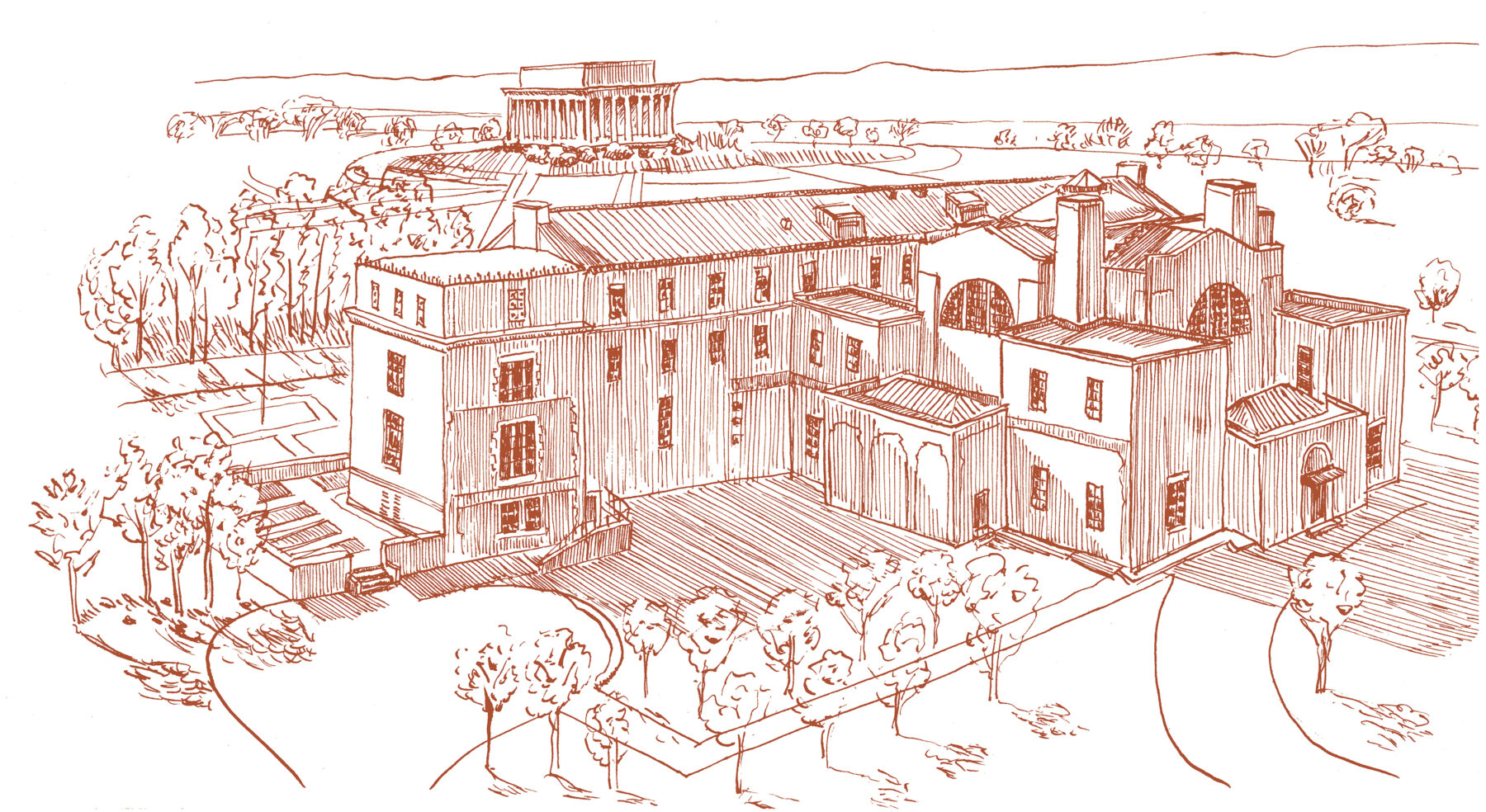
The National Academy of Sciences Building, 1924. With the Lincoln Memorial visible in the distance, this view of the newly completed National Academy of Sciences building evokes the institution’s origins six decades earlier. In 1863, amid the Civil War, President Abraham Lincoln signed the Academy’s charter, establishing a permanent source of independent scientific advice for the federal government. The Academy remains a testament to the idea that scientific expertise can help inform public decisionmaking in times of challenge and change. Illustration by Olivia Angelozzi.
The National Academy of Sciences Building, 1924. With the Lincoln Memorial visible in the distance, this view of the newly completed National Academy of Sciences building evokes the institution’s origins six decades earlier. In 1863, amid the Civil War, President Abraham Lincoln signed the Academy’s charter, establishing a permanent source of independent scientific advice for the federal government. The Academy remains a testament to the idea that scientific expertise can help inform public decisionmaking in times of challenge and change.

Science and the American Experiment: 250 Years of Innovation explores this enduring relationship between discovery and public purpose. Organized by Cultural Programs of the National Academy of Sciences in collaboration with the Smithsonian Institution, the exhibition highlights the people, programs, discoveries, and innovations that have shaped American society and its institutions. Their stories reveal how advances in knowledge emerge from a dynamic exchange between curiosity and necessity, ideas and institutions, expertise and society.
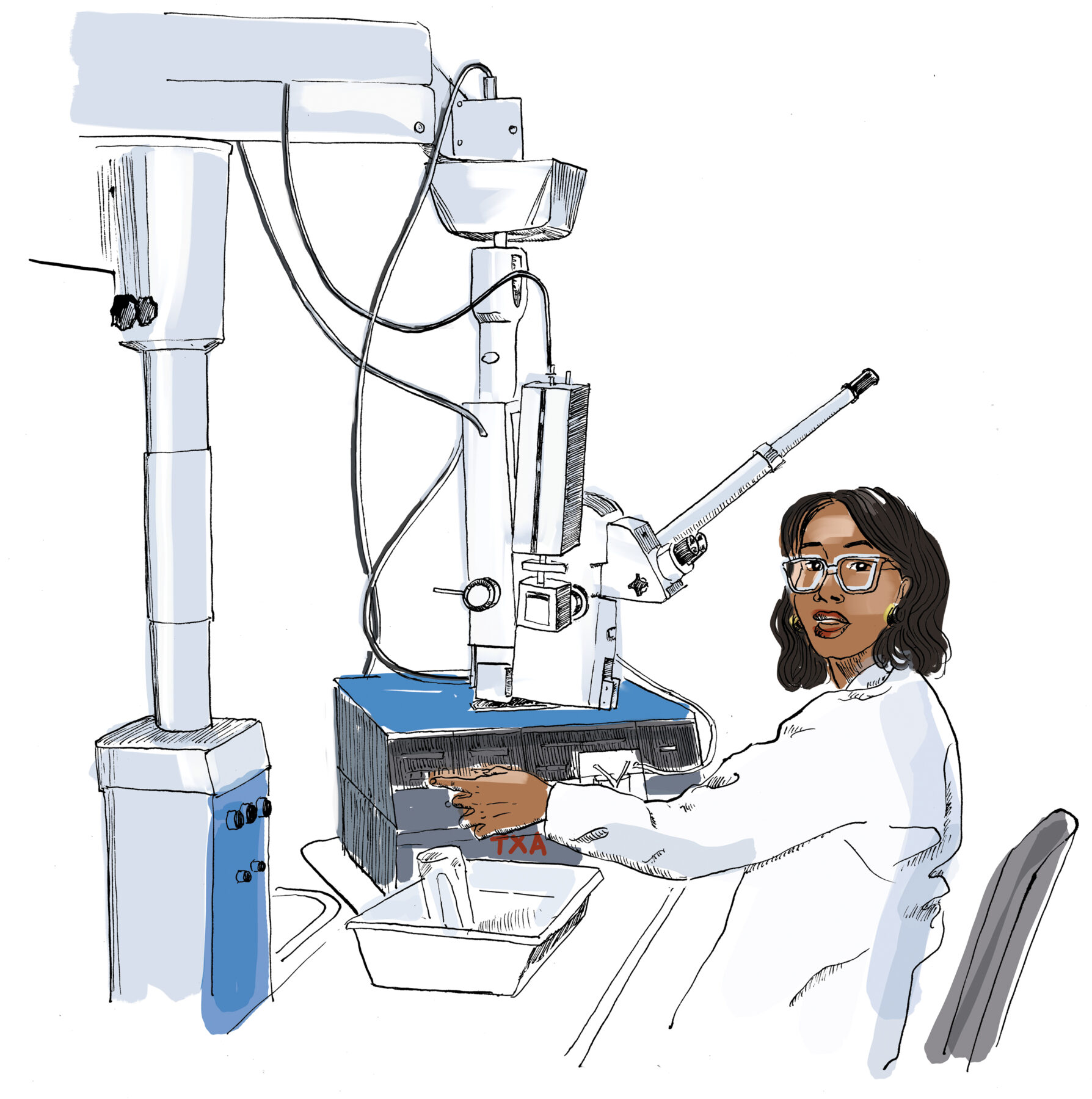
Patricia Bath and the Laserphaco Probe. In 1986, ophthalmologist and inventor Patricia Bath developed a device that used laser technology to remove cataracts with greater precision and less discomfort than earlier methods. Patented in 1988, the Laserphaco Probe helped restore vision for patients around the world and exemplified how advances in medicine and engineering can translate scientific knowledge into life-changing care. Illustration by Olivia Angelozzi.
Patricia Bath and the Laserphaco Probe. In 1986, ophthalmologist and inventor Patricia Bath developed a device that used laser technology to remove cataracts with greater precision and less discomfort than earlier methods. Patented in 1988, the Laserphaco Probe helped restore vision for patients around the world and exemplified how advances in medicine and engineering can translate scientific knowledge into life-changing care.

From the republic’s earliest years, government leaders recognized the practical value of scientific knowledge. Surveying coastlines, mapping territories, improving agriculture, and protecting public health were essential tasks for a growing nation. As the United States expanded, so did its investment in scientific and technical capabilities. New institutions supported research, education, exploration, and innovation, creating infrastructure that connected discovery with public service.

Over time, this partnership generated advances that reshaped daily life. Scientific research led to breakthroughs in medicine that extended life expectancy and reduced the burden of disease. Engineering innovations transformed transportation, communication, and manufacturing. New technologies altered how people work, learn, and connect with one another. Many of these achievements emerged from collaborations among universities, government agencies, industry, philanthropic organizations, and independent research institutions.

The relationship has never been simple or automatic. Scientific knowledge does not dictate public choices, nor do public priorities always align with scientific consensus. Decisions about research, technology, and innovation reflect broader social values and competing visions of the public good. Yet throughout American history, science has remained a vital resource for informing those decisions and expanding the range of possible solutions.

The illustrations here highlight just a few of the people, programs, discoveries, and innovations featured in the exhibition. Together, they point to a larger story. Across 250 years, scientific discovery, technological innovation, and medical advances have strengthened the nation’s capacity to address public needs, respond to emerging challenges, and create new opportunities. The result is not a single narrative of progress, but an ongoing process through which knowledge, institutions, and society shape one another.

Olivia Angelozzi created these illustrations for Science and the American Experiment: 250 Years of Innovation, on view through 2027 at the National Academy of Sciences in Washington, DC.
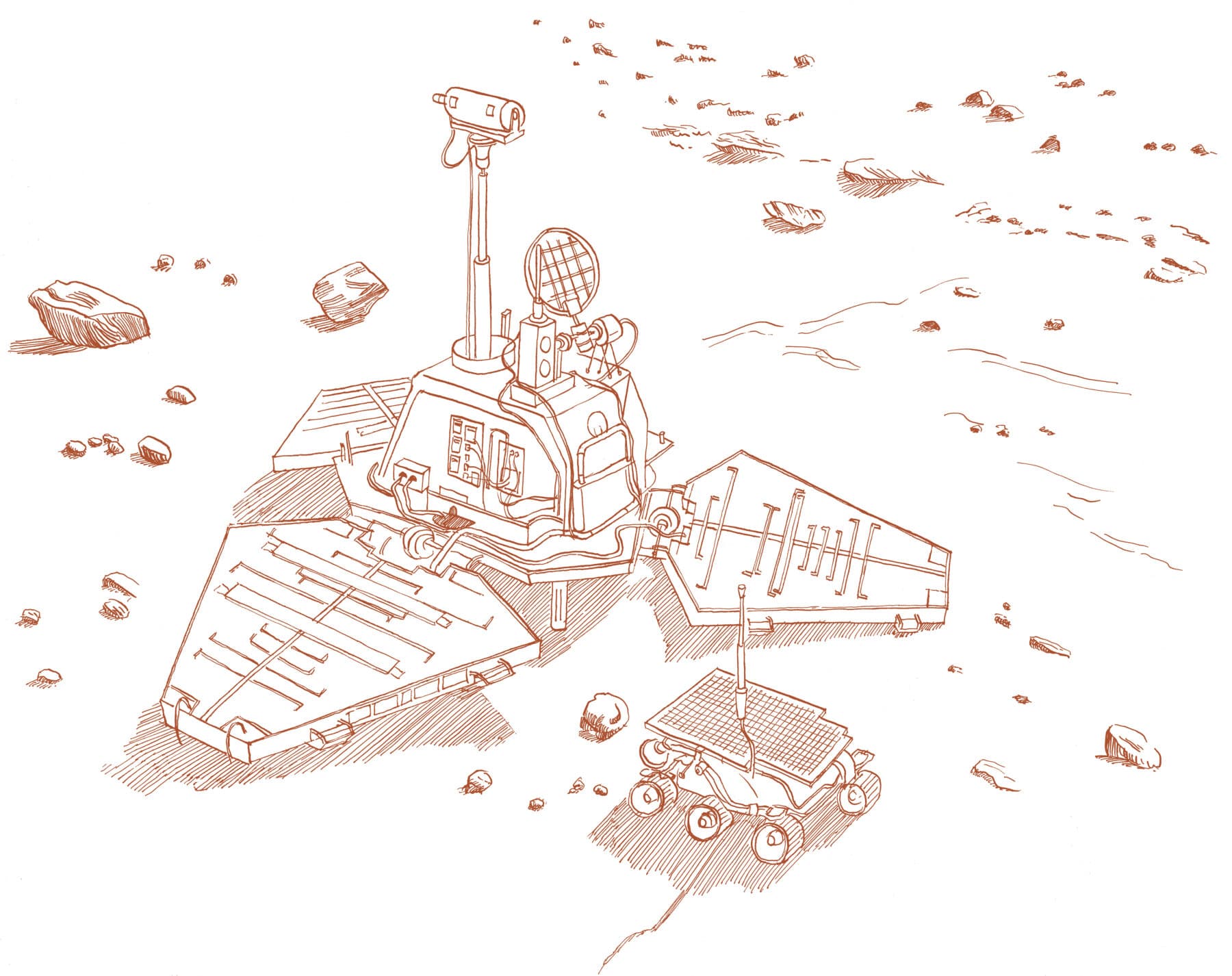
Sojourner and Pathfinder. When NASA’s Mars Pathfinder mission landed in 1997, the rover Sojourner became the first wheeled vehicle to explore another planet. Its success launched a new era of robotic exploration, paving the way for missions that revealed evidence of ancient water and environments that may once have supported life on Mars. Built through decades of public support for space exploration, these missions have transformed Mars from a distant point of light into a place scientists can investigate as a dynamic world with its own history. Illustration by Olivia Angelozzi.
Sojourner and Pathfinder. When NASA’s Mars Pathfinder mission landed in 1997, the rover Sojourner became the first wheeled vehicle to explore another planet. Its success launched a new era of robotic exploration, paving the way for missions that revealed evidence of ancient water and environments that may once have supported life on Mars. Built through decades of public support for space exploration, these missions have transformed Mars from a distant point of light into a place scientists can investigate as a dynamic world with its own history.
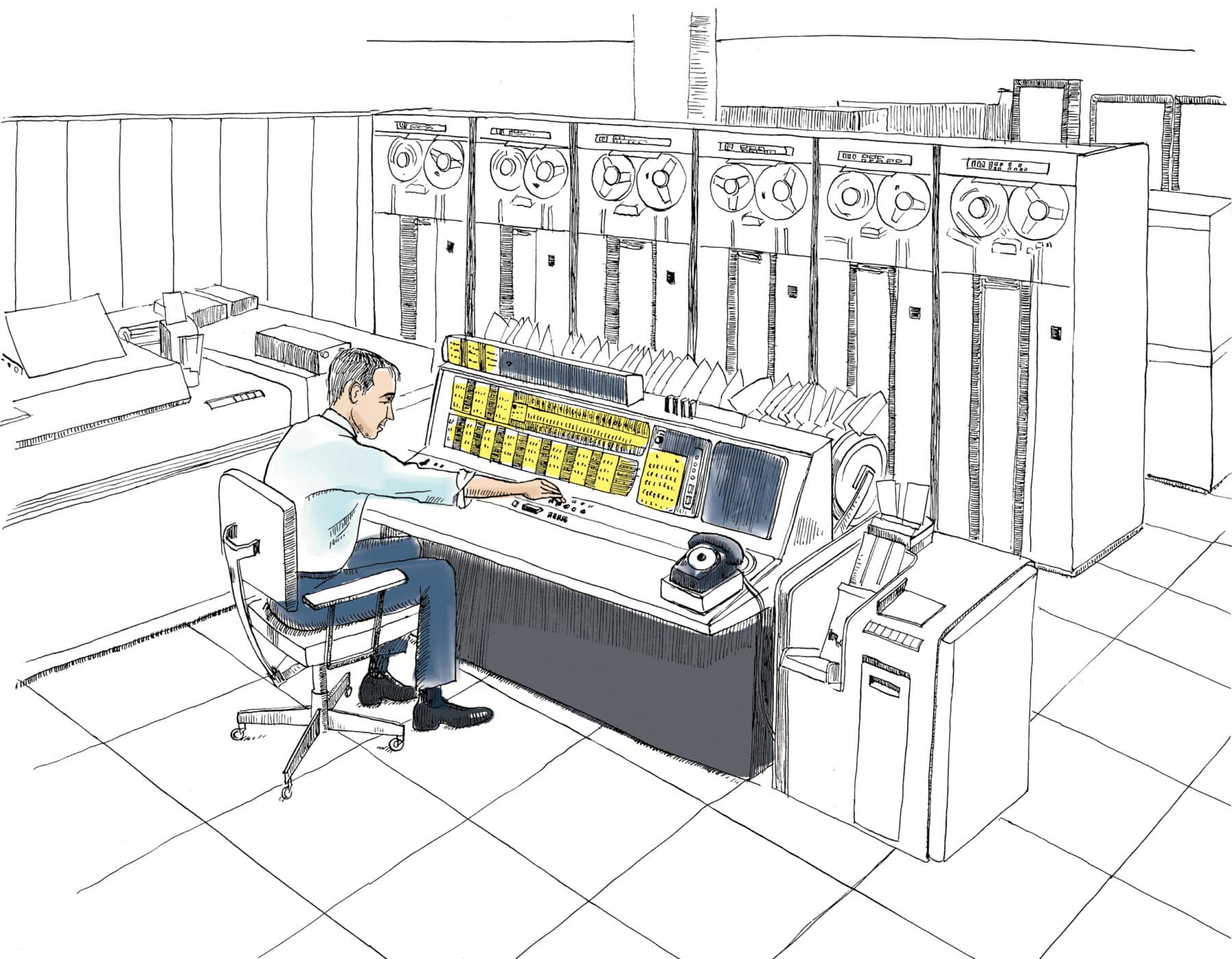
IBM Compatible Time-Sharing System. Introduced in the 1960s, the Compatible Time-Sharing System (CTSS) allowed multiple users to interact with a single computer simultaneously, transforming computing from a specialized tool into a shared resource. By making access to computing more efficient and collaborative, systems like CTSS helped lay the groundwork for the networked technologies that increasingly connected American institutions, workplaces, and daily life. Illustration by Olivia Angelozzi.
IBM Compatible Time-Sharing System. Introduced in the 1960s, the Compatible Time-Sharing System (CTSS) allowed multiple users to interact with a single computer simultaneously, transforming computing from a specialized tool into a shared resource. By making access to computing more efficient and collaborative, systems like CTSS helped lay the groundwork for the networked technologies that increasingly connected American institutions, workplaces, and daily life.
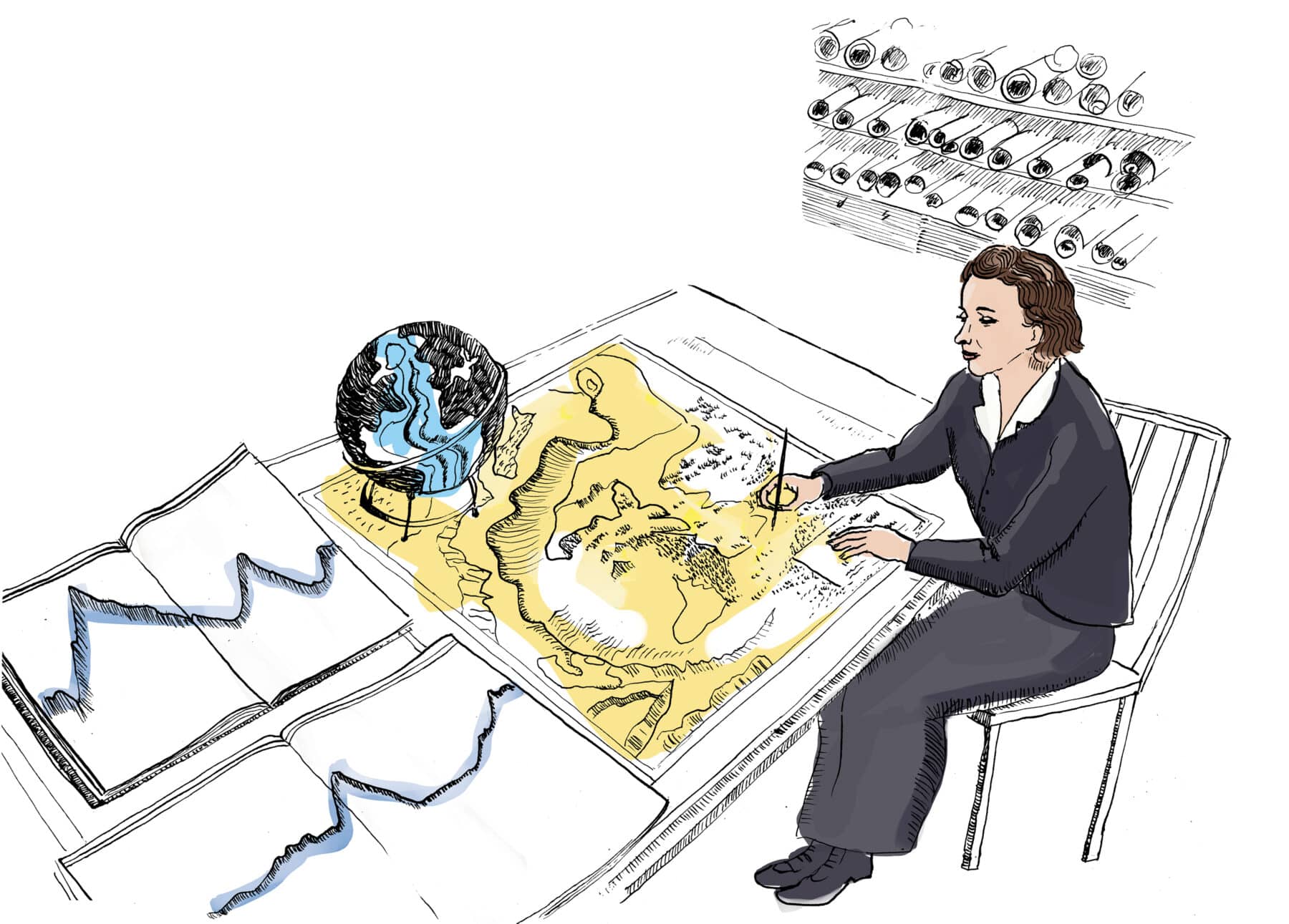
Marie Tharp at Her Drafting Table. Working from thousands of sonar measurements collected across the world’s oceans, cartographer Marie Tharp painstakingly transformed numerical data into visual maps of the seafloor. Her work revealed a continuous mid-ocean ridge system and provided crucial evidence for plate tectonics, fundamentally changing how scientists understood the dynamic structure of Earth. The maps she helped create turned vast stretches of the unseen ocean floor into a landscape that could finally be explored and understood. Illustration by Olivia Angelozzi.
Marie Tharp at Her Drafting Table. Working from thousands of sonar measurements collected across the world’s oceans, cartographer Marie Tharp painstakingly transformed numerical data into visual maps of the seafloor. Her work revealed a continuous mid-ocean ridge system and provided crucial evidence for plate tectonics, fundamentally changing how scientists understood the dynamic structure of Earth. The maps she helped create turned vast stretches of the unseen ocean floor into a landscape that could finally be explored and understood.
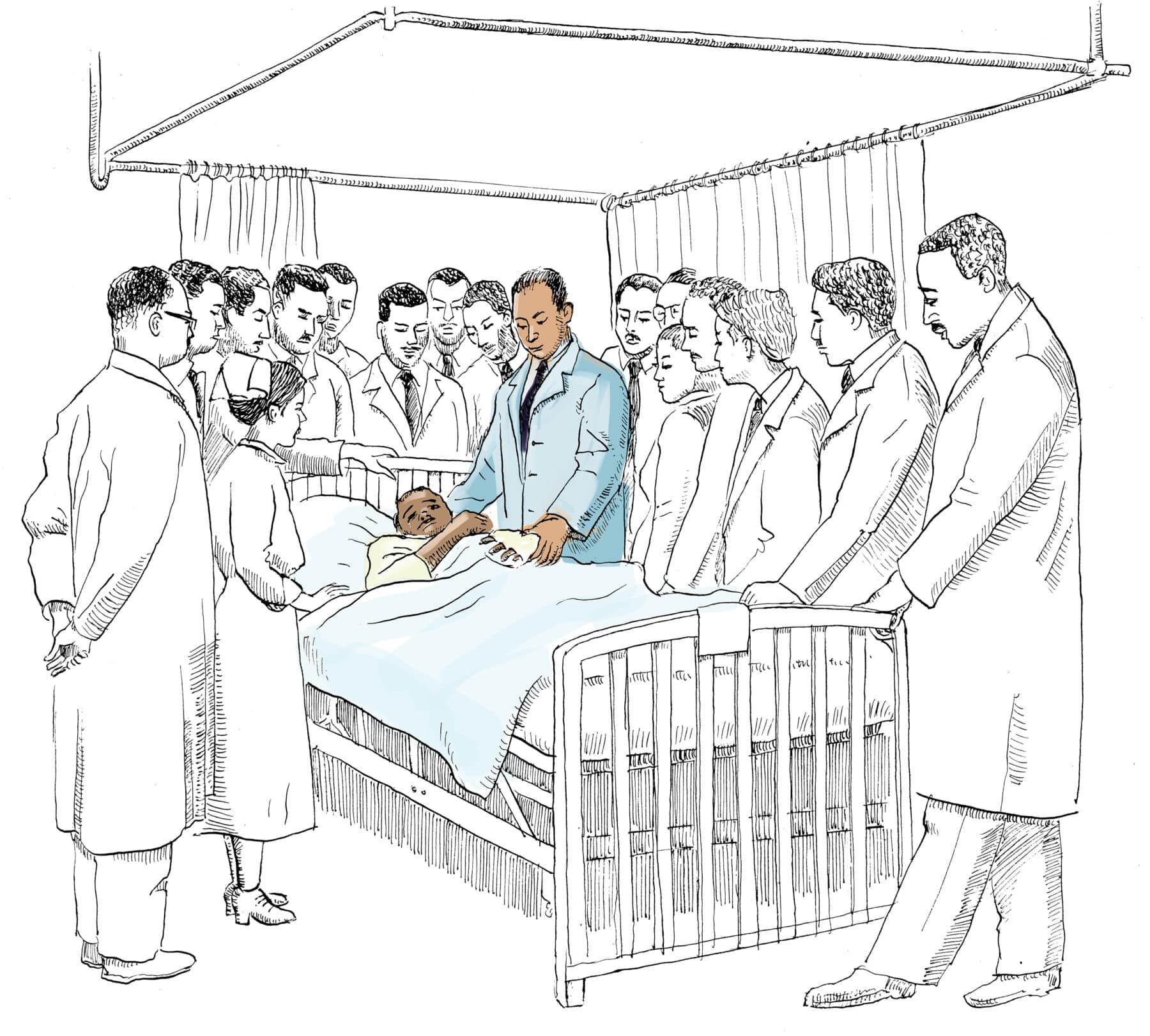
Charles R. Drew Teaching at Freedmen’s Hospital, Washington, DC, ca. 1947. During World War II, surgeon Charles R. Drew developed blood banking and preservation methods that made it possible to collect, store, and transport plasma on an unprecedented scale, saving lives on and off the battlefield. Here, Drew trains the next generation of physicians at Freedmen’s Hospital, now known as Howard University Hospital, reflecting how scientific advances achieve lasting impact not only through discovery, but also through education and public service. Illustration by Olivia Angelozzi.
Charles R. Drew Teaching at Freedmen’s Hospital, Washington, DC, ca. 1947. During World War II, surgeon Charles R. Drew developed blood banking and preservation methods that made it possible to collect, store, and transport plasma on an unprecedented scale, saving lives on and off the battlefield. Here, Drew trains the next generation of physicians at Freedmen’s Hospital, now known as Howard University Hospital, reflecting how scientific advances achieve lasting impact not only through discovery, but also through education and public service.

Cite this Article

“Science and the American Experiment: 250 Years of Innovation.” Issues in Science and Technology 42, no. 4 (Summer 2026): 5–17. https://doi.org/10.58875/BQVN9977

Vol. XLII, No. 4, Summer 2026