The MIT Press & UC Berkeley launched an open access, rapid-review overlay journal that accelerates peer review of COVID-19-related research and delivers real-time, verified scientific information that policymakers and health leaders can use. Scientists and researchers are working overtime to understand the SARS-CoV-2 virus and are producing an unprecedented amount of preprint scholarship that is publicly available online but has not been vetted yet by peer review for accuracy. Traditional peer review can take four or more weeks to complete, but RR:C19’s editorial team, led by editor-in-chief, Stefano M. Bertozzi, Professor of Health Policy and Management and Dean Emeritus of the School of Public Health at University of California Berkeley, produces expert reviews in a matter of days. Using artificial intelligence tools, a global team identifies promising scholarship in preprint repositories, commission expert peer reviews, and publishes the results on an open access platform in a completely transparent process. The journal strives for disciplinary and geographic breadth, sourcing manuscripts from all regions and across a wide variety of fields, including medicine; public health; the physical, biological, and chemical sciences; the social sciences; and the humanities.
Authentic Learning of Clinical Skills Through AIMST University Model of Ambulatory Care and In-patient Care Simulation.
AIMST University, Malaysia
The lockdown in Malaysia since 18th March 2020 has created a sudden vacuum in the face to face learning opportunity of clinical skills. We had to design and deliver authentic learning of clinical-skills in a simulated environment in the faculty of Medicine, AIMST University, for the under-grad medical students studying in the MBBS program. This is a gist of the principles we have followed to achieve that to the best of the collective ability of the faculty. Guiding Principles in Brief: Structuring of Clinical Teaching-Learning (through years 3 to 5 of MBBS) has been done by adopting RIME framework. We have been following the RIME model since 2019. Briefly, it is to teach and learn, — recording (R) clinical history and physical examination in year-3; — interpreting (I) the clinical case details and the investigation reports in year-4; and — planning management (M) of the case; — how to give follow up advice by patient education (E) in year-5 of the MBBS course. Choice of the Mode of Teaching-Learning: This has been based on the predominant domain as per the revised Bloom’s taxonomy and Miller’s prism/pyramid. Academic freedom was given to each clinical unit to base their choice of the level of clinical experience based on availability of resources, feasibility and priorities. The guiding principle for the choice of learning experience was Dale’s cone of experience. For example, the clinical units with access to real ambulatory cases arranged to get the cases to the simulated bedside discussions. Other units, used hybrid models to the extent possible combining, i) standardized patients, who could give clinical history in a consistent manner, ii) normal volunteers for the students to practice physical examination, and iii) high fidelity simulators to learn perceptual skills of visual, auditory and tactile senses. Ambulatory Care Simulation: Ambulatory (outpatient) care is medical care provided on an outpatient basis, including diagnosis, observation, consultation, treatment, intervention, and rehabilitation services. The goal is to learn the skills of focused case assessment and advising the patient on home based management of the problem. It is feasible to use some of the clinical students to play the roles of ambulatory cases with a bit of guidance and coaching on key features of the case scenario. The others would then interact with them in layperson’s language to elicit the case history. Several symptoms do not have any abnormal physical findings and are diagnosed based on history alone. These are easy to begin the program of ambulatory care simulation. “AIMST University Model” of simulated In-patient environment: Cognitive realism is more important than physical realism in creating authentic learning environment. Therefore, each clinical unit has planned sustainable and practicable in-patient simulation based on the principles of design stated earlier. We have created a 4 bedded in-patient cubicle to create a realistic milieu. On day-0, the briefing is done on the objectives of the in-patient simulation exercises, which would spread over 3 to 5 days. The students who play the roles of in-patient cases will be initially coached on case details. From day-1, they would plan to narrate their daily progress until they are discharged. The clinical conditions are chosen from the common diseases prevalent in Malaysia. On day-1, the rest of the students are allotted a new patient for clerking. Appropriate Mannequins or videos will be supplemented to present the physical findings of the patient allotted. After an hour of clerking, the clinical instructor will take ward rounds and analyze each case presentation in detail, especially focusing on differential diagnosis, further investigations and initial treatment plan. On day-2, the daily progress report, and the lab reports & images will be the basis for discussions. The focus will be narrowing the diagnostic possibilities, planning further work up if needed, and modifying treatment plan based on test results. This may go on for a day or two more as planned by the unit. On the final day of the simulation exercise, the students will discuss discharge plans and instructions to the patients. Evaluation of the Ambulatory and In-patient simulation: Evaluation of the learning outcomes are assessed daily, using the RIME evaluation format already available with the major clinical units. In addition, feedback has been obtained from the students, from the role-players and from the clinical instructors on the usefulness of the simulated clinical environment in achieving the expected outcomes. The encouraging feedback has consolidated our efforts to persist with the AIMST-model during 2021, the second year of pandemic-associated disruption in face-to-face learning in real-life clinical settings. In conclusion, to the best of our knowledge, our model of longitudinal clinical-clerkship simulation over 4 to 5 days, is an original contribution to Medical Education.
PRIYA — India’s first female superhero, embarks on a mission to stop the spread of Covid-19 in the comic book “Priya’s Mask.” She befriends a little girl named Meena to show her the sacrifices made by frontline healthcare workers and instill the power of courage and compassion during this difficult time. Along with her tiger Sahas, Priya explains the importance of wearing a mask and working together to help end the pandemic around the world. She teams up with Pakistan’s female superhero, Burka Avenger, to foil her arch enemy from infecting her city with the potent virus. Released as an online comic book, the edition reached millions of people in India and the worldwide.
The short animated film, “Priya’s Mask” is an important testament to the courage of women healthcare workers and will help educate people about the virus. An international array of actors and leaders lend their voices to this important film including Vidya Balan, Mrunal Thakur, Sairah Kabir and Rosanna Arquette.
Additional Details
This first story was specifically constructed to address the problem of blaming victims of sexual violence and provided a character, Priya, who could inspire change throughout communities by appealing to audiences — especially youth — with an empathetic narrative. Priya’s story became a powerful voice a in the global movement for women’s rights and a symbol of solidarity against gender-based violence and continuing with the #MeToo movement. The creators of the comic book were honored by UN Women as “gender equality champions.”
In 2021, OK Go Sandbox invited the world to help create a new video and remix of “All Together Now.” The #ArtTogetherNow project ended up creating 6 films and 5 new versions of the song, thanks to approximately 15,000 global collaborators.
Additional Details
OK Go Sandbox is an online resource for educators that uses OK Go’s music videos as starting points for integrated guided inquiry challenges allowing students to explore various STEAM concepts.
Developed as a collaboration between OK Go and the Playful Learning Lab at the University of St. Thomas (led by Dr. AnnMarie Thomas), OK Go Sandbox is about bringing different ideas, disciplines, and people together to explore creativity and learning. Director Geoff Shelton is creating new videos specifically designed to inspire classroom discussions and projects.
We are particularly looking forward to interacting with even more educators as we work to expand the OK Go Sandbox offerings. We encourage you to reach out to us (hello@okgosandbox.org) with your feedback and ideas. The best part of a sandbox is that we can try building lots of new things and improving them based on your input- even if we occasionally need to knock down a castle and start over!
SIR Model of Infectious Diseases: A Dance Film Project Part of Evolve Dynamicz’s Mathematical Methods Series
Evolve Dynamicz / John Straub
Mathematical Methods is a collaboration project with Boston University Chemistry Professor John Straub. The project is a choreographic research of the spatial dynamics of applied mathematics at the collegiate level. The members of Evolve are currently working with Professor Straub to both learn concepts of applied mathematics presented in his new text book “Mathematical Methods for Molecular Science” and interpret them through movement and choreography. In the time of COVID, Professor Straub and the company have worked together to create a film based on the concepts presented in Straub’s Supplement on Kinetic Models of Infectious Disease. The film titled “SIR Model for Infectious Diseases” can be seen below.
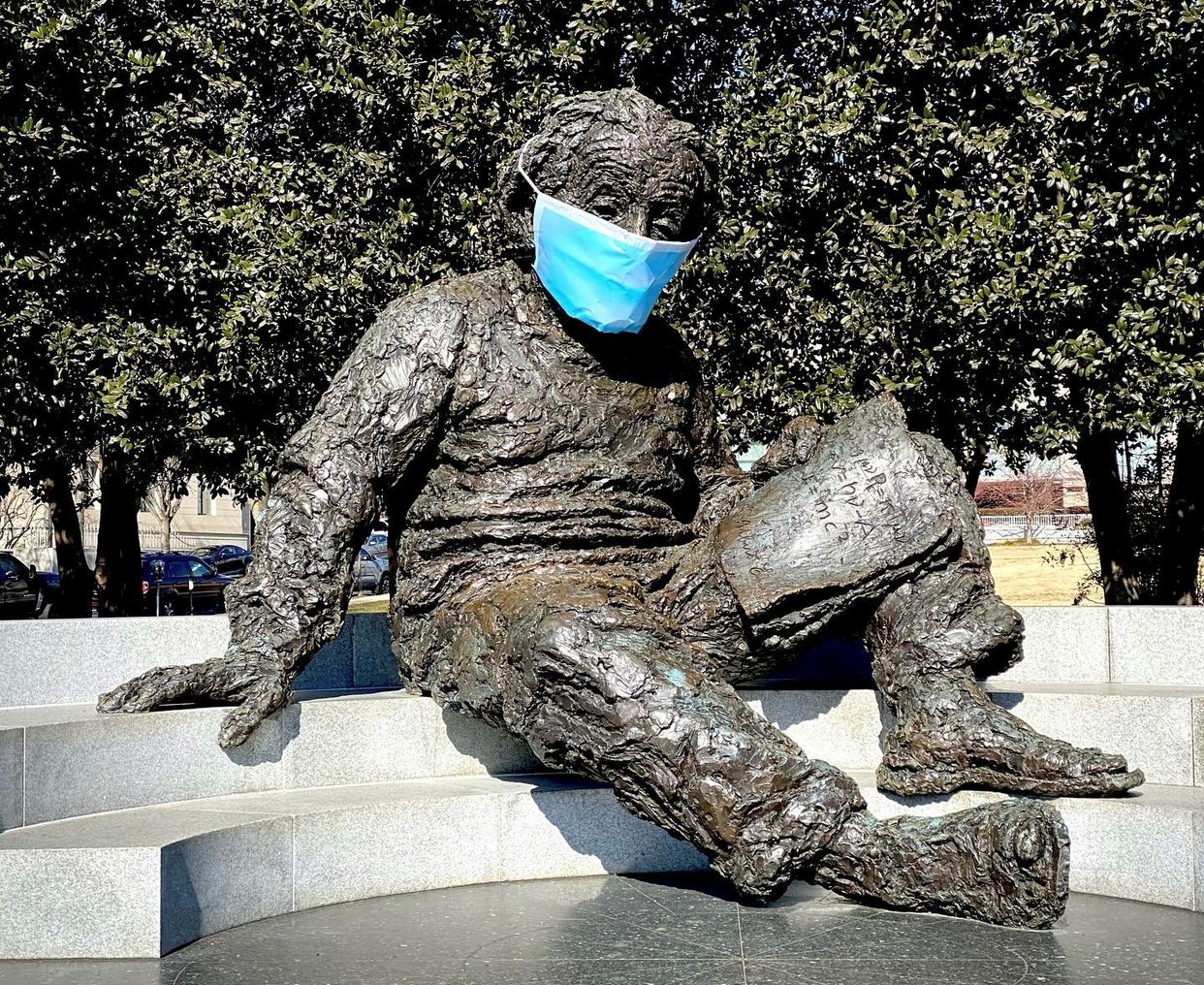
In late 2020 and early 2021, the National Academy of Sciences fabricated a large mask for the Einstein Memorial to promote the wearing of masks to reduce the spread of COVID-19. Visitors were encouraged to post images of themselves wearing masks with the hashtag #MaskUpwithEinstein
An event exploring questions that have arisen during the co-created ASU Humanities Lab “ArtScience: COVID Responsen (link is external)” and over the past year in considering and experimenting with how to respond to COVID. Selecting from questions posed to or by students during the Lab, as well as those that remain unanswered –or perhaps unasked– we will discuss the challenges of how we determine truth and trust; how we identify or anticipate implications for policy, education, and creative collaboration; in what ways art and science address what is known and unknown. How does COVID require taking creative leaps in science and art, how can we “toggle between rigor and wonder”, and where can we find hope and healing pathways while responding to a health crisis we are still experiencing. Dr. Hartwell, Nobel Prize Winner, Center Director and Professor of the Biodesign Pathfinder Center Website: https://biodesign.asu.edu/leland-hartwell Dr. Hartwell led a research team at the Department of Genetics, University of Washington using cell biology and genetics to investigate how yeast cells divide from 1968 to 1997. They discovered two cellular pathways that are integrated by an overall control point regulating cell division and a signaling pathway that arrests cell division in response to DNA damage. Dr. Hartwell is a member of the National Academy of Sciences and he received the 2001 Nobel Prize in Physiology or Medicine. Other honors include the Albert Lasker Basic Medical Research Award, the Gairdner Foundation International Award, the Alfred P. Sloan Award in cancer research, and the Genetics Society Medal of Honor. Diana Ayton-Shenker, CEO of Leonardo/ISAST (International Society of Arts, Science, Technology) Website: https://leonardo.asu.edu/content/diana-ayton-shenker Diana Ayton-Shenker, is an award-winning social entrepreneur who connects and convenes key partnerships, resources and capital for positive global impact. She serves as the Executive Director of Leonardo’s partnership with ASU, where she is Professor of Practice jointly appointed with the School for the Future of Innovation in Society (SFIS), and the Herberger Institute of Design & Arts’ School for Arts, Media, & Engineering. Diana is also founding CEO of Global Momenta(link is external), philanthropic strategy and social innovation firm, and the Global Catalyst Senior Fellow at The New School, where she recently collaborated with XReality Center and her partner-husband, artist William T. Ayton, to produced New Babel(link is external), the largest A.R. (Augmented Reality) public art installation of its kind (Union Square, NYC).
Additional Details
Held on 23rd March 2021 at 15:30pm Arizona Time / MST.
Mason is engaging with our students and community by highlighting the scholarly work of our faculty through the lens of the ongoing coronavirus pandemic. UNIV 391: COVID-19 and the Mason Impact is a free one-credit course offered to Mason students this summer, and each presentation is also being shared with the public. During each session, a different Mason faculty or staff member is featured and leads conversational presentation about an aspect of COVID-19 that has intersected with their scholarly work. The recorded presentation is posted below for the general public after the live session is completed.
Brandon Ballengée / University of Houston’s Cynthia Woods Mitchell Center for the Arts
In his newsletter of April 2021, Brandon Ballengée wrote:
Since last fall, I have been an Artists-in-Residence at University of Houston’s Cynthia Woods Mitchell Center for the Arts. Here I have been working on a new series entitled VII.
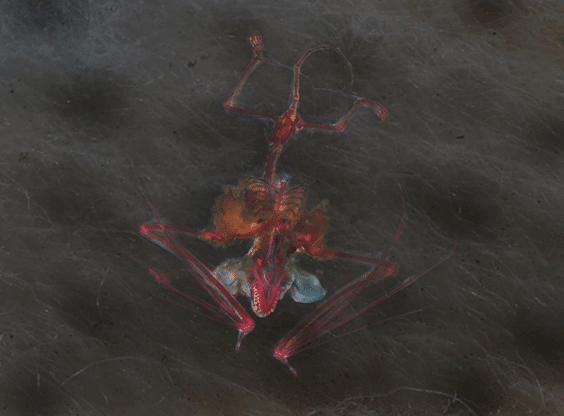
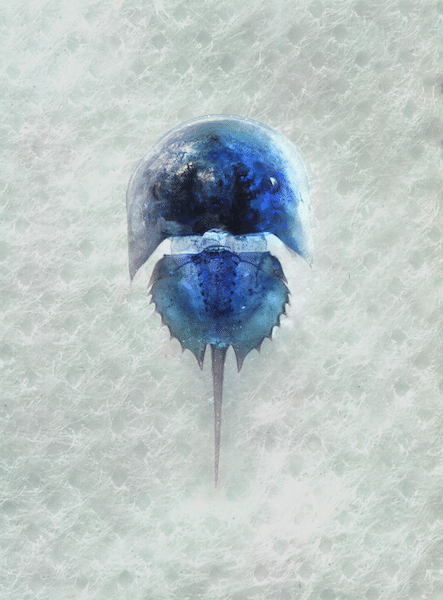
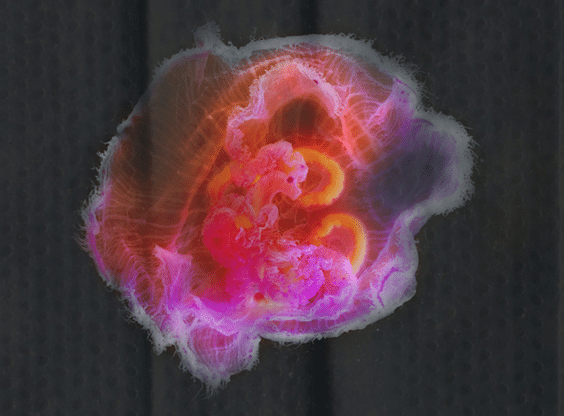
VII explores Houston’s urban species through the lens of VII deadly vices (unsustainable practices) and VII cardinal virtues (sustainable actions) in relation to the COVID-19 epidemic (a zoonotic disease thought to be brought on by environmental degradation).
Kindness, 2020-2021, unique Giclée print, 44 X 33.5 in.
In total 14 species are depicted, each telling the story of ecosystem functionality through their population health and numbers, or lack thereof. For example, some species represent degradation and loss such as the Atlantic horseshoe crab, a species vital to modern medicine because of its use in antibody testing, but which has been missing from Texas waters since the 1990’s. Others offer a message of hope because they have rebounded such as Big Brown bats, one of several bat species found in Houston with stable populations.
Humility, 2020-2-21, unique Giclée print, 44 X 33.5 in.
Some species reflect adaptation to environmental challenges such as the hybridization of Gulf and Atlantic killifish populations in the Houston Ship Channel that have become resistant to pollutants, or the Moon jellyfish “infesting” Galveston bay as they can thrive in low-oxygen waters and are tolerant to petrochemicals.
Sloth, 2020-2-21, unique Giclée print, 44 X 33.5 in
Symbolically, each of these species has a story to tell about environmental virtue or vice and such stories are increasingly relevant as they relate to the current COVID 19 pandemic and overall human health. COVID-19 is a zoonotic disease, one which has passed from non-human animals to humans to create the largest global pandemic in modern history. Although diseases are natural, the transmission of Coronavirus from animal to human due to wildlife trade as well as its rapid global spread can be considered preternatural. Moreover, COVID-19 as well as 60% of emerging infectious diseases have recently been described as symptomatic of environmental degradation.
Following this logic, our treatment of ecosystems may be seen in terms of good (virtues moving towards sustainability) or evil (vices, selfish acts of consumption moving us closer to environmental collapse). Furthermore, actions of environmental virtue decrease our risk of zoonotic disease, while behaviors of environmental vice increase our risk.
For VII, I individually photographed natural history specimens to create portraits and used photoshop to juxtapose these depictions onto high-resolution scans of PPE masks worn during my time in Houston. They were then printed at a scale to recall human children, a size that is familiar and not threatening, to draw us towards instead of away from the image, so that we may further think about how we approach ecosystems and other species, systems that are important to our survival yet to some are not considered, while being cherished by others.”
Brandon Ballengée (American, born 1974) is a visual artist, biologist and environmental educator based in Louisiana.
Ballengée creates transdisciplinary artworks inspired from his ecological field and laboratory research. Since 1996, a central investigation focus has been the occurrence of developmental deformities and population declines among amphibians. In 2001, he was nominated for membership into Sigma XI, the Scientific Research Society. In 2009, Ballengée and SK Sessions published “Explanation for Missing Limbs in Deformed Amphibians” in the Journal of Experimental Zoology and received international media attention from the BBC and others. This scientific study was the inspiration for the book Malamp: The Occurrence of Deformities in Amphibians (published by Arts Catalyst & Yorkshire Sculpture Park, UK) and a solo exhibition at the Royal Institution of Great Britain (London, England: 2010). From 2009 through 2015 he continued his amphibian research as a Visiting Scientist at McGill University (Montréal, Canada) and, in 2011, he was awarded a conservation leadership fellowship from the National Audubon Society’s TogetherGreen Program (USA). In 2014 he received his Ph.D. in Transdisciplinary Art and Biology from Plymouth University (UK) in association with Zürich University of the Arts and Applied Sciences (Switzerland). In 2015, he was the recipient of a fellowship from the New York Foundation for the Arts (NYFA).
We have adapted our Joy of Creative Engagement program to an online format to reach the affected population of isolated caregivers and their senior clients.
We teach caregivers how to use music and storytelling with seniors who may suffer from memory impairment, depression, and feelings of isolation during the COVID-19 pandemic.
Virtual REU Site: Neurotechnologies to Help the Body Move, Heal, and Feel Again
Jose Contreras-Vidal / university of Houston
In response to the need for social distancing and campus closures, we converted our NSF Research Experiences for Undergraduates (REU) Site to a Virtual Experience to support the research, social and creativity needs of talented students from around the nation.
This micro-course aims to help teachers deal with the suspension of classes due to measures against the coronavirus (COVID-19) outbreak.
ART AND SCIENCES TOGETHER
We believe in a learning model based on the student’s active role, in contextualized knowledge, in the promotion of curiosity and in the constant integration between Science, Technology, Engineering, Arts and Mathematics (STEAM).
Vaccines & US: Cultural Organizations for Community Health
Smithsonian
Everyone has a right to accurate and trusted information, especially around health. Vaccination affects you, your family, and your community.
The Smithsonian has collaborated with cultural organizations in communities across the nation to create Vaccines & US. The resources here will help you make an informed decision about COVID‑19 vaccines and help you discuss the vaccines with your family, friends, and community.
By sharing the science, history, and cultural impact of infectious disease and vaccines, we hope to build understanding of our current moment, where we’ve been, and where we go from here.
National Academy of Engineering (NAE) President John Anderson sat down to talk about some of the engineering challenges posed by the pandemic and how engineers — and the NAE in particular — are working to meet them.
Between March and September 2020, the Boston University Arts Administration compiled this list of media articles that chronicle the impact of the pandemic on the sector and the creative responses of the field. We are currently conducting a longitudinal research project with ArtsBoston to track the career outcomes of professional arts managers who were employed at a large sample of Greater Boston arts organizations at the time the pandemic hit in February. We will post the results of that study at regular intervals as they become available.
How COVID-19 accelerated change in design and arts education at ASU.
Liz Cohen wasn’t eager to teach online. The Guggenheim-winning associate photography professor, who considers herself a people person, didn’t think it was for her.
When COVID-19 happened, Cohen threw herself into figuring out “how to use this (ASU Sync) platform in ways that are interesting.”
To her surprise, she said, “I like it. COVID has taught us something — not that I’m going to give COVID too big a pat on the back.” She appreciates the “dynamic relationship” between herself and the students — “there’s banter, and everyone’s engaged”—and she likes the ease and convenience of teaching via ASU Sync.
Almost overnight, circles and shoe pads became our ubiquitous governing:
Social distancing, also called “physical distancing,” means keeping a safe space between yourself and other people who are not from your household. To practice social or physical distancing, stay at least 6 feet (about 2 arms’ length) from other people who are not from your household in both indoor and outdoor spaces
CDC, Social Distancing “Keep a Safe Distance to Slow the Spread” Updated July 15th 2020
Additional Details
Savannah Walker is a visual designer based in NYC. She crafts identity systems, is fascinated by digitally converted experiences, draws a lot of buildings, and has 18,729 photos on her phone, some of which are shared here.
The Magik Theatre is a professional theatre in San Antonio and one that is dedicated to youth and promoting literacy through the arts.
With our theatre closed due to COVID-19 and with many children at home due to school closures, Magik made the pivot to creating online materials for our young audiences. This has ranged from online story time and Madlibs to full-scale videos of our productions. On the 4th of July, we launched the premiere of “Jack and the Beanstalk.”
Lockdown in Lancaster and Morecambe (and Area): Walk, Run, Pedal, Push, Map by Louise Ann Wilson
Lancaster Arts at Lancaster University, UK and Louise Ann Wilson Company
Have you discovered new places and routes to walk, run, pedal or push due to the recent Stay at Home (Stay Aware) restrictions we are experiencing due to COVID-19? Places and routes that give you a breathing space – mentally, emotionally and physically. If so, can you record them so they can be added to a map/artwork: Lockdown in Lancaster and Morecambe (and area): Walk, Run, Pedal, Push, Map? Since the COVID-19 Lockdown, I have been running and walking every day from home. Gradually, I have found and followed new paths that have taken me to parts of Lancaster that I didn’t know were there and had not explored!! I am now becoming more aware of how the city connects; where tracks, streams, waterways, roads and the river meet and cross. I have found allotments, prisons and graveyards, followed narrow bluebell-lined tracks through woods and into high-up places where the view across The Bay or The Lakes open up and lorries on the motorway push past. I wave at Ingleborough Fell and glimpse Clougha and Pendle Hill in the distance. I’ve gained fitness, am running more regularly and a little further than usual. The pull of fresh air, warm sun or the whip of the wind is irresistible as is the need to stretch my legs and body, and clear my mind – and have some physical, emotional and mental breathing space. I am not alone in these findings and revelations – lots of others have told me they are doing exactly the same as me. Whether it be on foot or bicycle, with pushchair or wheelchair we are still venturing out from home. Those who can’t leave the house, move very far or easily are walking indoors, in yards, squares, gardens, streets and parks. So, can you start recording the route/s you are finding and share them with me? Walks from all parts of Lancaster and Morecambe AND the surrounding areas can be shared RECORDING AND SHARING YOUR ROUTE/S You can record and share your route/s via GPS, email or post. From hand drawn to digitally captured GPS, all maps are welcome! All of the mapped routes will be combined in to a single Lockdown in Lancaster and Morecambe: Walk, Run, Pedal, Push, Map map. This map will then become a bespoke artwork that abstracts and stitches the routes and paths into a made-at-home PPE intensive care gown. Please note, walks can be share from all parts of Lancaster and Morecambe (UK) AND the surrounding areas. Digital GPS maps and hand drawn maps can shared, please email: louise@louiseannwilson.com This project has been commissioned by Lancaster Arts, which was devised a support programme called ‘Breathing Space’ to connect people with each other and support the freelance arts community in Lancashire (UK) during the current pandemic.
We created online music classes to keep our community playing music and connected to each other during the crisis. Every weekend we run 4 online classes. We had never done this before. The creativity of our faculty has been amazing. Students from all over the US, Canada, and abroad have been taking the classes.
Additional Details
While recognizing that virtual learning cannot replace the in-person experience, we’ve launched “AEM Online” – four classes each weekend taught by different faculty members. Our goal is to feature as many faculty members as possible while also giving students a chance to learn and interact with each other. As we work to offset deep community financial losses, registration fees fund the work of the teachers and organizers of the program.
Blog with practical advice regarding how to use music as a coping strategy to enhance wellbeing at this stressful time.
Suzanne Hanser writes, “In Greater Good Magazine, Dacher Keltner provides an answer. He says, ‘Choose awe: Wander outdoors looking for awe, reflect on people whose courage and kindness give you the chills, listen to music that lifts you up. If you open yourself up to feeling awe, our research suggests you’ll gain strength for facing our collective challenges. And perhaps lead us out of the toxic dimension of these times, to an age of awe.’
I like to think that we can do this – enter the age of awe – when we really listen and allow ourselves to feel the awe of music. Music can echo our feelings, helping us identify and acknowledge how we feel. It can also change our moods, soothing or exciting us, validating or empowering us. Back in March, my first blog post after learning about COVID-19 addressed how to use the “iso-principle” to create music playlists to modulate emotions and manage moods. This concept is based on matching your feelings with music and slowly changing the music with the intention of changing your mood.”
Additional Details
Suzanne B Hanser, EdD, MT-BC is Professor and Chair Emerita of the Music Therapy Department at Berklee College of Music. Dr. Hanser is Past President of both the World Federation of Music Therapy and the National Association for Music Therapy. She established the music therapy program at the Leonard P. Zakim Center for Integrative Therapies at Dana-Farber Cancer Institute, and is also a Resident Scholar at the Women’s Studies Research Center at Brandeis University. Dr. Hanser is the author of The New Music Therapist’s Handbook, and co-author of Manage Your Stress and Pain, book and CD, with Dr. Susan Mandel, and Integrative Health through Music Therapy: Accompanying the Journey from Illness to Wellness. In 2006 Dr. Hanser was named by the Boston Globe as one of eleven Bostonians Changing the World. She is the recipient of a National Research Service Award from NIA, the Sage Publications Prize, and the American Music Therapy Association’s Lifetime Achievement Award.
University of Maryland College of Arts and Humanities
Keep Creating is a College of Arts and Humanities (ARHU) virtual initiative that creates spaces for University of Maryland’s community to share their works and for anyone to experience UMD’s arts offerings from home. As a college of arts and humanities, it was important for us to create an online space to continue to share, engage and celebrate creativity. Engineers are artists. Scientists are artists. Teachers are artists. The hope is that everyone across campus will respond with how they’re creating. We want to encourage people to continue to think about new ways to explore creativity given the challenges of our day. The space features a digital stage, virtual events, news items about how the UMD community is staying creative and more.
Additional Details
During this time of uncertainty, the arts and humanities can help us create new approaches and insights for empathy and for understanding our rapidly changing world. More than ever, they also connect us to our shared humanity. We invite all members of our creative community to join our movement to keep creating.
Bonnie Thornton Dill Dean, College of Arts & Humanities
New Ways of Living: Understanding the Science of COVID-19
CellSpace
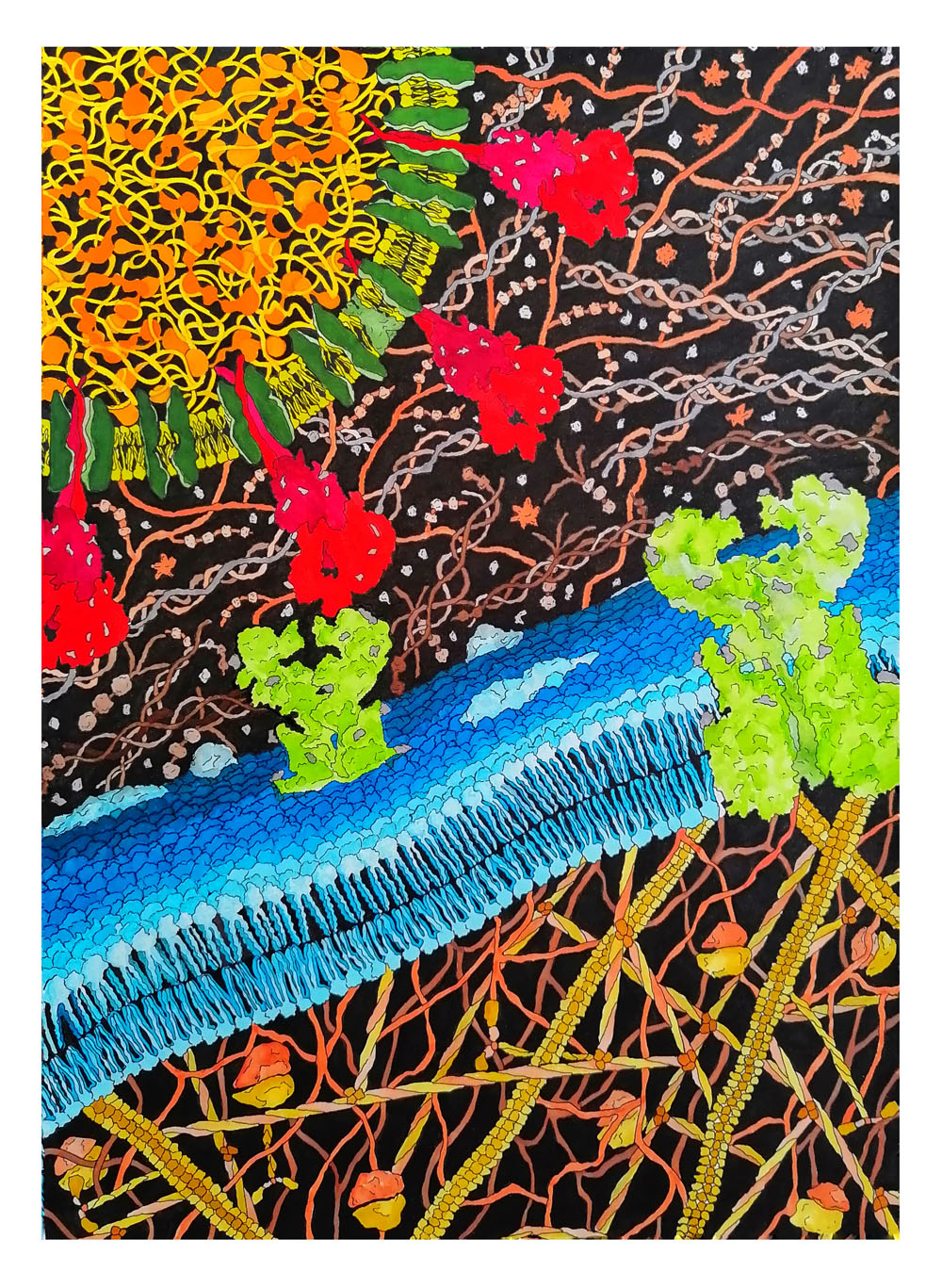
Information about the spread of coronavirus is critical knowledge for personal safety and global response to the pandemic. In collaboration with SciCommMake 2020, an event hosted by SigmaXi and ScienceTalk, “New Ways of Living” explores the science of COVID-19, using art to provide friendly, intuitive and evocative windows into the growing body of information about how the virus is transmitted. The show is seeded with the work of V. Anne Burg and David S. Goodsell, and includes work from an international community of participants in the 2020 “CellSpace” sciart workshop. The show explores the science behind transmission of the virus, from the nanoscale details of respiratory drops, to the persistence of virus in our household environments, to the population-level mechanisms and implications of testing. Cross-discipline dialog informs the work of participating sciartists and creates work that bridges knowledge silos that span from the molecular to the human scale.
CellSpace is a workshop for cellular and molecular sciartists. For our 2020 project, we are creating work for “New Ways of Living.” The artists are located around the world, and are working in multiple media, including traditional painting, digital art, animation, virtual reality, sculpture, and sonification.
The creative response is a watercolor painting showing the SARS-CoV-2 entry into the cell. The painting illustrates the viral spike protein coming in contact with the ACE-2 receptor in the plasma membrane of a lung cell.
SARS-CoV2 Access to the Nervous System, Illustrated: The Role of Angiotensin-converting Enzyme-2 (ACE-2) in Mediating COVID-19 Infectivity.
Samar Abdelhady
I do scientific illustrations mainly in the scope of neuroscience, in accordance with my primary research focus. I barely got excited for visualization projects except for the brain research. Since the Covid world-wide crisis, I thought why not try hands with the COVID urging-focus. It has been the most appraised project I have worked on so far establishing my on-going design style. From there on, I became more established as a scientific illustrator divergent about exploring various visualization projects of research focus other than my primary one.
Additional Details
Sketching Process
The behind-the-scene initial paper sketches; literature excerpt to visualize, list of vectors to draw, and some random doodles.