Three electronic musicians, quarantined in different cities across the globe, record a series of short rhythmic loops. Each loop is subsequently cut into a lock groove on a vinyl record and played back on a turntable in each location. Video and audio from the turntables are streamed to a Zoom meeting so that the rhythms can be heard together, but only as transformed by the temporal distortions inherent to Zoom and to online relationships in general. Each day, new lock grooves are selected after the previous ones begin to physically degrade from continuous playback.
Our multimodal and multilingual collective diary of imagination, “Imaginarios de cuarentena,” has become a place for us to share our feelings and desires, with ourselves and with others. The diary has since developed into a larger project called “Errant Imaginaries: Possible Utopias,” which unites the diary with an inquiry into existing inspiring models and practices of change.
As artists, activists, grassroots organisers, mothers, scholars, educators, and citizens, we are all working for a better world in many different ways. For almost three years, the network Mujeres Errantes has been a space where we have supported each other in this mission. Via our collective diary, we are able to focus on the dreams that fuel our desire for change.
As part of the “Errant Imaginaries: Possible Utopias” project, we are contacting other collectives that inspire us and that work on some of the desires and challenges that the collective diary expresses. Through an online encounter that we will record on video, we will create an occasion for sharing their experiences and dialogue through art. In the summer, we will hold in-person and hybrid arts residencies, drawing on a shared methodology and in collaboration with other women’s groups.
Trove is a durational ambient musical project created by Mutantrumpeter/Composer Ben Neill and Producer/Composer Eric Calvi. Trove originated during the Covid-19 crisis of 2020, and is created in direct response to the isolation and self-reflection that were forced by the unique circumstances of the pandemic. The project launched with the release of 5 pieces on November 24, 2020, and continues as an ongoing series of 2 releases per week for one year. Neill performs Trove playing only his self-designed Mutantrumpet – no synthesizers are used. The acoustic sound of the Mutantrumpet is captured and processed in real time by Neill’s custom system using the instrument’s 28 onboard electronic switches, joysticks, and knobs. Each piece is recorded as a single improvised performance with no overdubs. The process of making the pieces was a meditative, restorative activity for me personally, and gradually developed as the pandemic went through different stages. The compositions move through a series of chords whose pitches are based on a Fibonacci series matrix. Other aspects of the music including rhythm, melody, and formal structure are based on Fibonacci sequences, which model the forces of growth and reproduction in the natural dynamical systems of plants and animals. Trove uses this fundamental structure of lifeforms to create grounding, restorative music intended as an accompaniment to everyday life activities in these difficult times.
PRIYA — India’s first female superhero, embarks on a mission to stop the spread of Covid-19 in the comic book “Priya’s Mask.” She befriends a little girl named Meena to show her the sacrifices made by frontline healthcare workers and instill the power of courage and compassion during this difficult time. Along with her tiger Sahas, Priya explains the importance of wearing a mask and working together to help end the pandemic around the world. She teams up with Pakistan’s female superhero, Burka Avenger, to foil her arch enemy from infecting her city with the potent virus. Released as an online comic book, the edition reached millions of people in India and the worldwide.
The short animated film, “Priya’s Mask” is an important testament to the courage of women healthcare workers and will help educate people about the virus. An international array of actors and leaders lend their voices to this important film including Vidya Balan, Mrunal Thakur, Sairah Kabir and Rosanna Arquette.
Additional Details
This first story was specifically constructed to address the problem of blaming victims of sexual violence and provided a character, Priya, who could inspire change throughout communities by appealing to audiences — especially youth — with an empathetic narrative. Priya’s story became a powerful voice a in the global movement for women’s rights and a symbol of solidarity against gender-based violence and continuing with the #MeToo movement. The creators of the comic book were honored by UN Women as “gender equality champions.”
In 2021, OK Go Sandbox invited the world to help create a new video and remix of “All Together Now.” The #ArtTogetherNow project ended up creating 6 films and 5 new versions of the song, thanks to approximately 15,000 global collaborators.
Additional Details
OK Go Sandbox is an online resource for educators that uses OK Go’s music videos as starting points for integrated guided inquiry challenges allowing students to explore various STEAM concepts.
Developed as a collaboration between OK Go and the Playful Learning Lab at the University of St. Thomas (led by Dr. AnnMarie Thomas), OK Go Sandbox is about bringing different ideas, disciplines, and people together to explore creativity and learning. Director Geoff Shelton is creating new videos specifically designed to inspire classroom discussions and projects.
We are particularly looking forward to interacting with even more educators as we work to expand the OK Go Sandbox offerings. We encourage you to reach out to us (hello@okgosandbox.org) with your feedback and ideas. The best part of a sandbox is that we can try building lots of new things and improving them based on your input- even if we occasionally need to knock down a castle and start over!
Taxonomy of Breathing is a project that investigates our current societal moment through the lens of breath—its vulnerability, its oppression, and its power of transformation. The fragility of the body—and breath as its sine qua non—is a manifestation of our environment, our historical moment, and our political and social context. It is at once foundational and aspirational, embodied and symbolic.
This current moment—a watershed that without a doubt will serve to mark the passage of eras—can in many ways be crystallized, condensed, illuminated, through the lens of the breath. The breath—our respiratory system—is the primary target of this virus that has swept and is still reshaping the world. It is the site of the transgression, the violence, the oppression that catalyzed a racial justice uprising that has not been seen in a generation: ‘I CAN’T BREATHE.’ Wildfires choking the West. Blue skies in Beijing and Delhi. Must we choose between livelihoods and the black lung? Pandemic, racial injustice, environmental cataclysm—the breath connects them. Last but not least, however, the breath as site, as promise of transformation. In the midst of the despair, the desperation, the dissolution, and depression that pervades this slow-moving unraveling of life as we knew it, there is an expanding of movements towards mindfulness and meditation, anchored by and centered around a simple observation of the act of breathing. Grounding us, slowing us, silencing us, giving us space to expand, offering us distance and perspective on what we can and cannot control. In some ways, it seems that perhaps the breath is all we control…except when we can’t. Back to pandemic, police brutality, and environmental catastrophe.
There is an expression used in some Spanish-speaking countries concerning memory and conflict: “respirar por las heridas,” which translates to “breathe through wounds.” In this moment, it can also help us locate breath as both the site of the wounds and the redemptive possibility inherent in them—the promise of healing, faith in the regenerative power of life, our ability to survive. This project explores the “act of breathing” as an archive of fleeting moments. A road trip across the USA to capture the breathing moments of people with a specialized microphone, presented as a sound archive; videos documenting conversations with writers and poets about what it means today, in the current context, to “breathe through wounds.”
The project generates ten Respiratory Portraits, grounded conceptually within the scientific, the biological: the act of breathing, particularly the respiratory rate, as one of the four main vital signs. Respiratory rate is the number of breaths a living being takes in one minute, and the standard respiration rate for an adult at rest is 12 to 20 breaths per minute. The Respiratory Portraits capture the respiratory rate of people who have endured the effects of systemic racism, who have recovered (or are still suffering after-effects) from COVID-19, who have lived through the wildfires of the west, and who are engaged in the act of meditation. Recordings are made through the measurement with a stethoscope, information is transferred through programming to 100 artificial respirators—wall-mounted artifacts in the museum. The aesthetic and sensory impact of the project is based on the assembly of these mechanical elements of the sound that is generated in the compression of the air, which creates the sensation of listening to someone’s breath and the physical effect of the air that moves in the room. It aims to generate in the viewer, the listener, the breather, an embodied effect that redirects awareness to the centrality of this simple, most foundational vital act and expands to the political, social, environmental, and, yes, intellectual and spiritual, ripples that expand from it and touch the entire world.
Additional Details
IceBox Collective – a community of creative alchemists dedicated to creating platforms for conscious conversations, sacred space for creative exchange, inspiration for civic engagement, and healing connections.
The convergence of a worldwide pandemic, the cacophony of responses to the unrelenting murders of Black people, the call to heal the planet, the anniversary of the women’s suffrage movement, occurring simultaneously while the world looks on in astonishment as the corrupt United States government removes its mask of civility, have coalesced to create one of the most challenging years in US history.
Nine mature Black women artists gathered to share our individual observations, responses, and insights to this moment through our art practice, personal experiences, and research; our project demonstrates that Black women artists are not monolithic in our thinking or expressions. We understand that the narratives of white people may take precedence in the gestation of traumatic events taking place. However, we reject the attempts of white neutrality to define our realities. In transforming our trauma, we created visual narratives to document our images, our words, and our assessments of this era; a transgressive act.
As seasoned Womanist artists we have acquired skills over decades sharpened by profound life experiences. Our decision was to each create a unique artist’s book with space for the other eight artists to express their views. Once a month over a period of nine months we contribute to an artist’s book, handing them off to the next artist in our circle every 30 days. We began our mother books in September 2020, and the gestation period ends nine months later, in May 2021. At the end of the nine months, the books will return to their original creator filled with images, text, and objects that reveal insights into the year 2020–2021 from the hands and minds of nine mature blackwomenartists. During the ninth month each artist finalizes their book. Additionally, each month we hold fellowship meetings, both in person and virtually, to swap books, critique our process, and document the experience in a group blog. Each of us has also committed to creating at least two works of art tied to our individual studio practice and/or inspired by our fellowship in dialogue with artists’ books.
Additional Details
The proposed Nine Artists/Nine Months/Nine Perspectives: Birth of 2020 Visions exhibition will provide blackwomenartists whose intersectional identities (Black, women, mature) rarely provide them with group or solo exhibitions showcasing their work. The proposed exhibition will provide a much-deserved opportunity for mature blackwomenartists to share their inner visions. The exhibition comprises nine completed artists’ books and a minimum of two additional works each, created by our blackwomenartists sistahood.
In exhibiting our impressions of this tumultuous moment, we also propose an interactive component in which gallery visitors can contribute their experiences, images, words, actions, and responses to events that shaped 2020–2021 in a collaborative artists’ book in the gallery and/or a digital media narrative they can access from home.
SIR Model of Infectious Diseases: A Dance Film Project Part of Evolve Dynamicz’s Mathematical Methods Series
Evolve Dynamicz / John Straub
Mathematical Methods is a collaboration project with Boston University Chemistry Professor John Straub. The project is a choreographic research of the spatial dynamics of applied mathematics at the collegiate level. The members of Evolve are currently working with Professor Straub to both learn concepts of applied mathematics presented in his new text book “Mathematical Methods for Molecular Science” and interpret them through movement and choreography. In the time of COVID, Professor Straub and the company have worked together to create a film based on the concepts presented in Straub’s Supplement on Kinetic Models of Infectious Disease. The film titled “SIR Model for Infectious Diseases” can be seen below.
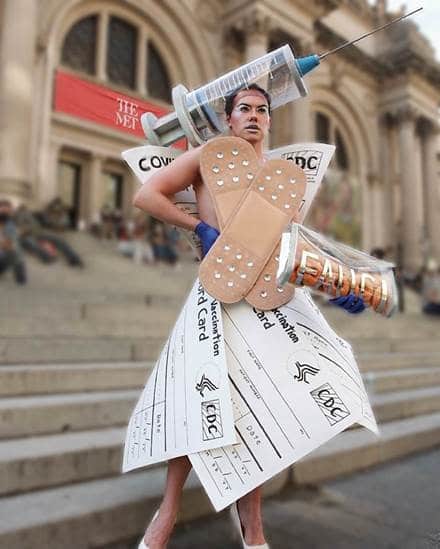
On his Instagram account @bren_bash, artist Brendan McCann writes, “It’s the First Monday in May [2021], traditionally the date of the annual Met Gala. Last year in quarantine, I made a dress with materials around my apartment inspired by the cancelled ‘About Time’ Gala. With the gala postponed again, I decided to do it again. The theme: SCIENCE. Serving you COVID vaccination couture. My ‘FAUCI’ clutch is filled with free @krispykreme donuts I got with my vaccination card. This dress is dedicated to the scientists and healthcare workers that have worked tirelessly for the last year to stop the spread & develop a vaccine. I hope I made you proud, Ms. Wintour (I’m unemployed, by the way.)”
Artist and designer Brendan McCann in his science-inspired dress for this year’s postponed Met Gala. (photo by Josh Levinson / @JKLPhoto, courtesy of Brendan McCann)
Live from WCRB’s Fraser Performance Studio on Sunday, May 24 2020, Yo-Yo Ma offered Bach’s iconic works in memory of those lost to the global pandemic and in tribute to the resilience of all who are confronting the challenges of these times.
Today’s world moves quickly. The ways we travel from place to place, or communicate with each other; the pace at which we consume news and binge-watch our favorite TV shows – everything is optimized to give us the fastest way to move from point A to point B. So there is something special about the things that endure. There is no better example of this, I think, than the music of J.S. Bach, which has enchanted us for hundreds of years, and yet still offers new discoveries.
Yo-Yo Ma understands this – not just Bach’s lasting power in history, but in his own career, too. In 2018, he released a recording of Bach’s six cello suites, called “Six Evolutions;” it was his third time recording the suites over the course of his life, and, he’s said, it will be his last.
‘Passeggiata’: A Paradigm for the Times in Which We Now Live
terry trickett
We are now caught up in a complex metabolic whirlpool where systems of free-living equilibrium have collapsed to a radically disordered state. Viruses like COVID-19 are not free-living entities; they are parasites which invade and inflict harm on life as we know it. Cosmologists believe that such chaotic states are an inevitable consequence of life on earth where, at intervals, we must suffer the consequences of parasitic disorder. Such thoughts were not in the back of my mind when, last year, I created ‘Passeggiata’, which is based on Luciano Berio’s Sequenza IXa for solo clarinet, but on reflection and although there is no comparison in terms of scale or impact, the piece does appear to represent a composer striving to present music as a continual compromise between order and chaos. When you think of it, all music is concerned with selecting, molding and refining notes and phrases that enables complexity to seemingly spontaneously generate order and beauty. Berio, as one of the last century’s most experimental composers, gives some insight into how this magic is achieved. My own contribution, in producing a visual interpretation of Sequenza IXa is to hold up a mirror to a piece which, retrospectively, appears to provide a paradigm for the times in which we now live. Berio wrote Sequenza IXa In 1980, midway through his life-long exploration into the idiomatic potential of instrumental sound. It makes extreme technical demands on the performer and, at the same time, invents a musical language that gives the clarinet a completely new mode of expression. In the piece, Berio explores, at length, one specific harmonic field but avoids repetition by springing constant surprises in terms of speed, pitch and rhythmic variety. It slips easily between moments of orderly quiet and bursts of hectic notation when virtuosity becomes an essential element of the Sequenza’s theatricality. All in all, it’s an exercise in musical discovery that has required me to dig deep in finding visual imagery that seeks to enter the mind’s eye of the composer. My approach has been to place some reliance on the use of Deep Dream artificial intelligence, inspired by neural networks in the brain and nervous system, to produce pictoralist imagery that, at least to my mind, reflects Berio’s journey of musical discovery. The resulting images, slightly out of focus and dream-like, provide moments of equilibrium and calm in an other-worldly ‘passeggiata’ in and around a mountain village in Liguria -“ the province in Italy where Berio was born and lived. By contrast, the visual patterns that I’ve used to ‘train’ my dream-like images are given free rein in providing a visual interpretation of Berio’s moments of surprise when he weaves fast and furious note patterns which collapse the piece, at intervals, into a radically disordered state. Of course, I can never know whether or not my images convey an accurate impression of the visual mental imagery that Berio experienced in his mind’s eye when composing Sequenza IXa; it’s only in my imagination that I’m putting myself into the mind of the composer. Often the creation of Visual Music demands taking such creative leaps into the unknown where, as in Passeggiata, I’ve tried to produce intimations of a natural world familiar to the composer. If, in the process, I’ve succeeded in adding to the emotional impact of the piece and aided an audience’s understanding of a formidable work, so much the better. For me, in the light of today’s parasitic invasion, a visual interpretation of Passeggiata reveals not only a work of art but, also, life itself poised precariously on the edge of chaos. When life becomes unbalanced, as now, we search for ways to restore it to a natural state somewhere nearer the order we remember although, inevitably, still finely balanced on the edge like Berio’s Sequenza IXa. Terry Trickett, May 2020.
An event exploring questions that have arisen during the co-created ASU Humanities Lab “ArtScience: COVID Responsen (link is external)” and over the past year in considering and experimenting with how to respond to COVID. Selecting from questions posed to or by students during the Lab, as well as those that remain unanswered –or perhaps unasked– we will discuss the challenges of how we determine truth and trust; how we identify or anticipate implications for policy, education, and creative collaboration; in what ways art and science address what is known and unknown. How does COVID require taking creative leaps in science and art, how can we “toggle between rigor and wonder”, and where can we find hope and healing pathways while responding to a health crisis we are still experiencing. Dr. Hartwell, Nobel Prize Winner, Center Director and Professor of the Biodesign Pathfinder Center Website: https://biodesign.asu.edu/leland-hartwell Dr. Hartwell led a research team at the Department of Genetics, University of Washington using cell biology and genetics to investigate how yeast cells divide from 1968 to 1997. They discovered two cellular pathways that are integrated by an overall control point regulating cell division and a signaling pathway that arrests cell division in response to DNA damage. Dr. Hartwell is a member of the National Academy of Sciences and he received the 2001 Nobel Prize in Physiology or Medicine. Other honors include the Albert Lasker Basic Medical Research Award, the Gairdner Foundation International Award, the Alfred P. Sloan Award in cancer research, and the Genetics Society Medal of Honor. Diana Ayton-Shenker, CEO of Leonardo/ISAST (International Society of Arts, Science, Technology) Website: https://leonardo.asu.edu/content/diana-ayton-shenker Diana Ayton-Shenker, is an award-winning social entrepreneur who connects and convenes key partnerships, resources and capital for positive global impact. She serves as the Executive Director of Leonardo’s partnership with ASU, where she is Professor of Practice jointly appointed with the School for the Future of Innovation in Society (SFIS), and the Herberger Institute of Design & Arts’ School for Arts, Media, & Engineering. Diana is also founding CEO of Global Momenta(link is external), philanthropic strategy and social innovation firm, and the Global Catalyst Senior Fellow at The New School, where she recently collaborated with XReality Center and her partner-husband, artist William T. Ayton, to produced New Babel(link is external), the largest A.R. (Augmented Reality) public art installation of its kind (Union Square, NYC).
Additional Details
Held on 23rd March 2021 at 15:30pm Arizona Time / MST.
RESPIRATION:RESTORATION is a project that began by recognizing that if the problems of police violence, pandemics, and the climate crisis are connected, then the solutions must be connected as well. Creating more green spaces with plant life leads to cleaner air. Connecting to local food source-”including our own backyards or community gardens-”reorients us towards reciprocity with non-human relatives. Defunding militarized racist police means refunding investments into Indigenous land sovereignty and stewardship, public parks, gardens, libraries, and services for the people. These solutions begin to transform an extractive and exploitative economy into a sustainable and regenerative culture. RESPIRATION:RESTORATION is an ongoing invitation to breathe together. The opening performance of music for mutual flourishing began on Saturday, September 26, 2020, when music collective Spooky Action Labs created music featuring PlantWave—a technology that converts the electromagnetic waves of plant life into musical sounds. The act of listening to plants as creative musicians encourages a radical shift in consciousness: the realization that these beings who provide us with oxygen have their own messages to share. This initial performance launched a multimedia webpage at www.makaracenterarts.org, creating a source of art and educational resources related to these intertwined themes. An ongoing call for submissions by nonprofit organization Makara Center for the Arts is now exchanging free plants for art works, creative responses and/or educational resources from members of local communities, prompted by the following question: What does it feel like to breathe in a world without police violence, pandemics, and climate disasters?
Mobile Projection Unit presents new, experimental, site specific outdoor projected video works throughout Portland by use of a mobile studio. This studio provides a cohort of new media artists tools, software, mentorship, and access to outdoor spaces in order to create and present these works to a public audience. The cohort pairs moving image artists with video mapping programmers to collaborate on works that use the city scape as its canvas. Fernanda D’Agostino and Sarah Turner are the co-founders of the Mobile Projection Unit (MPU). We began the project as a way to bridge the digital divide and to provide BIPOC artists with the means to exhibit their work at a monumental scale and to reclaim cityscapes impacted by gentrification. Both of us are artists and also occasionally present our own work through the MPU platform. Creative coding using Isadora allows us to create works that incorporate viewers presence into the work. Digital mapping using Mad Mapper allows us to occupy city spaces in ways that complicate the narratives habitually attached to them. Since the limitations that have been placed on everyone by Covid our practice has shifted to include support of the BLM movement and other social justice initiatives both through curated programs and by volunteering our gear and technical expertise to other initiatives. As quarantine loomed we geared up by buying an FM transmitter which allows us to host both drive in and walk up screenings. Our most recent drive in screening was guest curated by Ariella Tai a black media artist and film scholar. One way we’ve responded to our societal crisis has been providing a platform that allows people to gather safely outdoors in public for a shared experience. The other has been amplifying the voices and visions of historically marginalized communities. Some of the technology that makes this possible is cutting edge, some of it is turning to old school analog technologies uniquely suited to this time. Nimbleness characterizes our approach to both technology and our curatorial vision.
Liminal Performance Space is an arena for remote performance creation and exhibition created by video installation artist and creative coder Fernanda D’Agostino, using the coding platform Isadora. Fernanda was a Beta tester for new units of code developed by Mark Coniglio at Troikatronix in Berlin, that permit Isadora users to input live video from SKYPE or other NDI based online meeting platforms. Live video feeds via SKYPE allow collaborators prevented from meeting IRL to come together to create new work that pushes the boundaries of what remote spaces can be. In some cases my collaborators and I have been separated by oceans and days of the week. The intention is to use the restrictions of quarantine to open up and explore new ways of working together that cross boundaries of time, space and cultures. My work pre-Covid was in interactive sound and video installation. My history is as a performance artist and from that history springs my interest in creating spaces that viewers can interact with both digitally and by touch, movement, meals within the space etc. I’m also a frequent collaborator with dancers and other performance artists. I see the Liminal Performance Space as yet another interactive performance installation space in the series I’ve been creating for many years. There are fourteen distinct “rooms” within the space all with different coded effects and potential interactions. Most are activated by the movements of digital visitors to the space. Some are sound activated. Some allow visitors to manipulate sound or streams of particles by gesture. The showcase I have submitted is one of three experimental collaborations to date. Aside from The Kusanagi Sisters, (Tokyo) I’ve collaborated with Yunuen Rhi (Los Angeles and Mexico City) and the In/Body collective, (Portland, Oregon.) Interesting to me is how experienced performance artists will explore the properties of the different “rooms” and quickly discover creative acts the code permits that I did not fully anticipate.All the scenes in the Kusanagi Sister Showcase were created within one hour long session. The only post production was for me to cut our conversation between exploring each “room” and fine tune where the sound cuts in and out. All the effects you see in these clips happen in real time in response to the performers. Most of those performers quickly fall into a state of reverie and when working in duets into a heightened sense of awareness of “the other,” of scale, and of the potential within each “room’s” transformational properties. I’m currently working on a fourth collaboration, with artist/critic Pat Badani, where the role of both written and spoken language will be more central. That is an area of coding I am just now exploring and I’m sure I will be stretched by our work together. Keep an eye out for that work in the future as we plan to submit that as a distinct project.
Inspired by spending extended time in lockdown due to the pandemic, Ceremony Shadows is a dark ambient electronic music project. I’m currently releasing a few tracks that are part of a forthcoming album and live experience titled “Inception, Bloom, and Decline”, chronicling my creative cycle during lockdown.
The Plague Nerdalogues is a video series curated by podcast host and television writer-producer Marc Bernardin, which features a roster of actors who’ve worked in the nerd space doing something they’re all intimately familiar with: self-taping monologues. These monologues are from beloved geek films and TV shows. The monologues were viewable only after making a donation, first to No Kid Hungry, then to Black Lives Matter.
Additional Details
The Plague Nerdalogues began in May 2020 as a way for actors of all stripes to flex their geek muscles during a specific moment in time: The two-pronged assault on the status quo by the coronavirus and the uprising against systemic racism. Those performances — nerd actors doing monologues from beloved nerd media — were used to raise money, first for No Kid Hungry, then for Black Lives Matter.
The intent was always to make these monologues available to the public, free of charge, after a certain amount of time … and so we are.
Eras are divisions in the geographic time scale. I declare a new era, a post-Coronavirus paradigm, the Blue Era. We have entered it in isolation together, social distancing and with muffled voices behind face masks, with a chance for a reboot: life 2.0 I envisioned that humanity was going over a blue line, a blue linear portal set against clean, sunny blue skies. Stepping into an idyllic post coronavirus landscape, joyfully, children holding their parents hands, skipped over the blue line, en mass. Humanity was moving in unison towards a healthy new coexistence with each other and the planet. In less than six months at a global scale, and right at four months at a national scale, a pandemic has shifted our footing, and the Blue Line has formed, in the form of a portal. We have stepped through that portal to find our freedom of choice intact. The choice should be clear: recommit to caring about people, public health, education, clean waterways and oceans, animals and nature; towards a unified human race and a needed respect for the planet. To question, imagine, invent, reinvent, the world on the other side of my blue line is up to each one of us. It’s a rebooted landscape, where we can look at coexisting and connecting, with each other and with the planet. Our freedom of choice and collective power goes well beyond politics, or presidents. We are nimble, inventive, indefatigable, curious, creative, hardworking. We are survivors. My project, The Blue Line, is an artistic wormhole. The Merriam-Webster definition of the Eistein-Rosen wormhole is “a hypothetical structure of space-time envisioned as a tunnel connecting points that are separated in space and time.” The Blue Line is a giant portal of public art in every park, urban plaza, community. It marks the new awakening of the world. For me it’s a printmaking project on paper; its an installation of public art that will begin with a blue line in my neighborhood, with an explanation of the concept, for pedestrians to engage with and cross. It’s an installation that is reproduced in other’s front yards, to build consciousness about the opportunity that we are waking up to. It’s an installation inside or outside of white cubes for art, it’s a giant portal for public art in every park, urban plaza, and community. This is my moment as an artist, a woman, a human. I’ve crossed the line and am not looking back.
The “Scuffed Computer Improviser” is a new musical work for computer improviser and live improvising musician for networked performances via internet livestream or video. The separation of chamber musicians and the hiatus of playing music with others during covid-19 has heightened my desire to interact with a digital musical “other.” This project builds on two of my recent works: “Set” for Bassoon and electronics, and “Pileup” for improvising trio and computer improviser. In these two previous works, I developed computer improviser software in the MAX/MSP programming language. This software is being further developed to become more musically flexible as it encounters a variety of musical styles as well as integrate networking so that the software may be operated remotely. The computer improviser is audio-corpus based, meaning that the improviser “learns” how to improvise by analyzing incoming audio and then altering, rearranging, and creating something new from the analyzed audio. The computer improviser then reacts to a live musician with a series of musical behaviors may adapt over the course of a performance. My recent work in algorithmic music, AI composition, and computer improvisation is motivated by an exploration of musicality and an attempt to expand my aesthetic sensibilities through interaction with a digital “other” toward new musical styles. My artistic stance on the inclusion of AI is antithetical to commercial approaches as represented by Google Magenta, AIVA, Pandora, and many others that are designed to iterate on pre-existing styles. This relates to the title of the project: “scuffed computer improviser,” the term “scuffed” used to suggest a certain roughness and DIY aesthetic that stands in relief to the gloss and marketability associated with a commercial end use that is typically associated with AI and machine learning.
This micro-course aims to help teachers deal with the suspension of classes due to measures against the coronavirus (COVID-19) outbreak.
ART AND SCIENCES TOGETHER
We believe in a learning model based on the student’s active role, in contextualized knowledge, in the promotion of curiosity and in the constant integration between Science, Technology, Engineering, Arts and Mathematics (STEAM).
This site is a repository for observations, reflections and collections from this global pandemic. It hosts voices of many featuring content from familial, social, creative and scientific networks.
Additional Details
Take action in quarantine, 3 easy steps! We are a creative and multidisciplinary team developing a repository of the COVID-19 experience. As experts collect information worldwide, we are building a database for creative expression. Great Pause Project is entirely open source, available to a global community to reflect, share, and document this unique experience. Join us as we archive this story!
With the COVID-19 outbreak, many sociopolitical issues are becoming even more apparent. One of them is the dodging of responsibilities and shifting blame to government officials. It reflects the problem of our current sociopolitical mechanism and has been one of the causes of this pandemic’s out-of-control spread. The action of dodging responsibilities is called “甩锅” in Chinese, which literally means “tossing a pan.”
This whole toss-pan comedy has been played between the central government and local government, in China, the United States, and many other countries.
To inform, criticize, and warn fellow citizens, I made this Toss Pan Dance.
Since we are social distancing and in self-quarantine at the moment, Toss Pan Dance is also a very good exercise. You can easily do it at home without a gym. The equipment is right in the palm of your hand!
The music is made by typing on the computer: “abcdefg” on a Mac keyboard is mapped to notes on the piano keyboard.
This dance went viral on the Chinese internet. #tosspandance #甩锅舞
Huang Hung, “the Oprah of China,” used this dance to explain “Toss Pan” in her TED Talk on “how American and Chinese values shaped the coronavirus response.”
Additional Details
Working at the intersection of emerging technology, art, and design, Li Jiabao creates new ways for humans to perceive the world. She works across nature, humans’ designed environment, and belief structures and creates works addressing climate change, humane technology, and a just, sustainable future. Her mediums include wearable, robot, AR/VR, projection, performance, software, and installation.
In Li’s TED Talk, she uncovered how technology mediates the way we perceive reality. At Apple, she invents and explores new technologies for future products. She graduated from Harvard Graduate School of Design with a master of design in technology with a distinction and best thesis award.
Li is the recipient of numerous awards, including iF Design Award, NEA, STARTS Prize, Fast Company, Core77, IDSA, AACYF 30 Under 30. Her work has been exhibited internationally, at Ars Electronica, SIGGRAPH, Milan and Dubai Design Week, ISEA, Anchorage Museum, Codame, Primer, OCAT Contemporary Art Terminal, CHI, Donghu Shan Art Museum. Her work has been featured on Yahoo, TechCrunch, Domus, CCTV, Yanko Design, Fast Company, Harvard Political Review, The National, Business Insider, Bloomberg, Leonardo, and South China Morning Post.
In light of the COVID-19 Pandemic and restrictions placed upon public gatherings that will continue for many months, Theater of War Productions has retooled as a company to produce dynamic online performances and discussions, in the style of its live events, aimed at addressing the unique challenges posed by the Pandemic in diverse communities throughout the world. The goal of these performances will be to create free, easily-accessible opportunities for people struggling in isolation with trauma, loss, illness, and distress to communalize their experiences with others who share them, while accessing local and national resources and information. The COVID-19 Pandemic demands bold and decisive action in order to meet the needs of thousands of people who may have few outlets during this period of quarantine and isolation to engage with others in healing dialogue.
Theater of War Productions is in a unique position to take such action, by presenting its projects for large, diverse audiences online. At present, Theater of War Productions has more than twenty-five projects that address pressing public health and social issues, such as domestic violence, suicide/depression, alcohol and substance abuse, end of life care, eldercare/dementia, and the challenges of witnessing suffering—all issues that have been intensified and exacerbated by the COVID-19 Pandemic. In addition to offering these existing projects online, Theater of War Productions is developing several new projects born out of the needs of individuals, families, and communities during the pandemic.
Between March and September 2020, the Boston University Arts Administration compiled this list of media articles that chronicle the impact of the pandemic on the sector and the creative responses of the field. We are currently conducting a longitudinal research project with ArtsBoston to track the career outcomes of professional arts managers who were employed at a large sample of Greater Boston arts organizations at the time the pandemic hit in February. We will post the results of that study at regular intervals as they become available.
How COVID-19 accelerated change in design and arts education at ASU.
Liz Cohen wasn’t eager to teach online. The Guggenheim-winning associate photography professor, who considers herself a people person, didn’t think it was for her.
When COVID-19 happened, Cohen threw herself into figuring out “how to use this (ASU Sync) platform in ways that are interesting.”
To her surprise, she said, “I like it. COVID has taught us something — not that I’m going to give COVID too big a pat on the back.” She appreciates the “dynamic relationship” between herself and the students — “there’s banter, and everyone’s engaged”—and she likes the ease and convenience of teaching via ASU Sync.
Early artistic responses to Covid-19 offer fascinating insights into key issues arising from the crisis, argue ART/DATA/HEALTH researchers Elodie Marandet, Harriet Barratt, and Aristea Fotopoulou.
The Conversations program offers screenings followed by inspiring Q&A’s with leading actors and casts, as well as Career Retrospectives with preeminent actors who explore the process and profession with an audience of fellow artists. Conversations focus on personal experiences and artistic influences that inform and shape careers; discuss current and past projects; share valuable insights into the craft and industry; and preserve creative legacies.
Due to the pandemic, a Conversations at Home series has been initiated.
This Too Shall Pass: Creativity in the Time of COVID-19
The Science & entertainment exchange with Cultural programs of the national academy of sciences
This Too Shall Pass: Creativity in the Time of Covid-19 is a series of online discussions organized by Cultural Programs of the NAS and by the Science & Entertainment Exchange to explore creative responses in all disciplines to the pandemic.
Programs included:
July 1, 2020 Claudius Conrad, Andrew Janss, and Indre Viskontas
August 5, 2020 Clifford Johnson, Mike Smith and Molly Webster
October 2020 Lauren Gunderson, Deric Hughes, and Kevin O’Brien
“Through my practice I explore ways that we work with or against nature; how we react and intervene, and how nature responds back at a domestic level and beyond.”
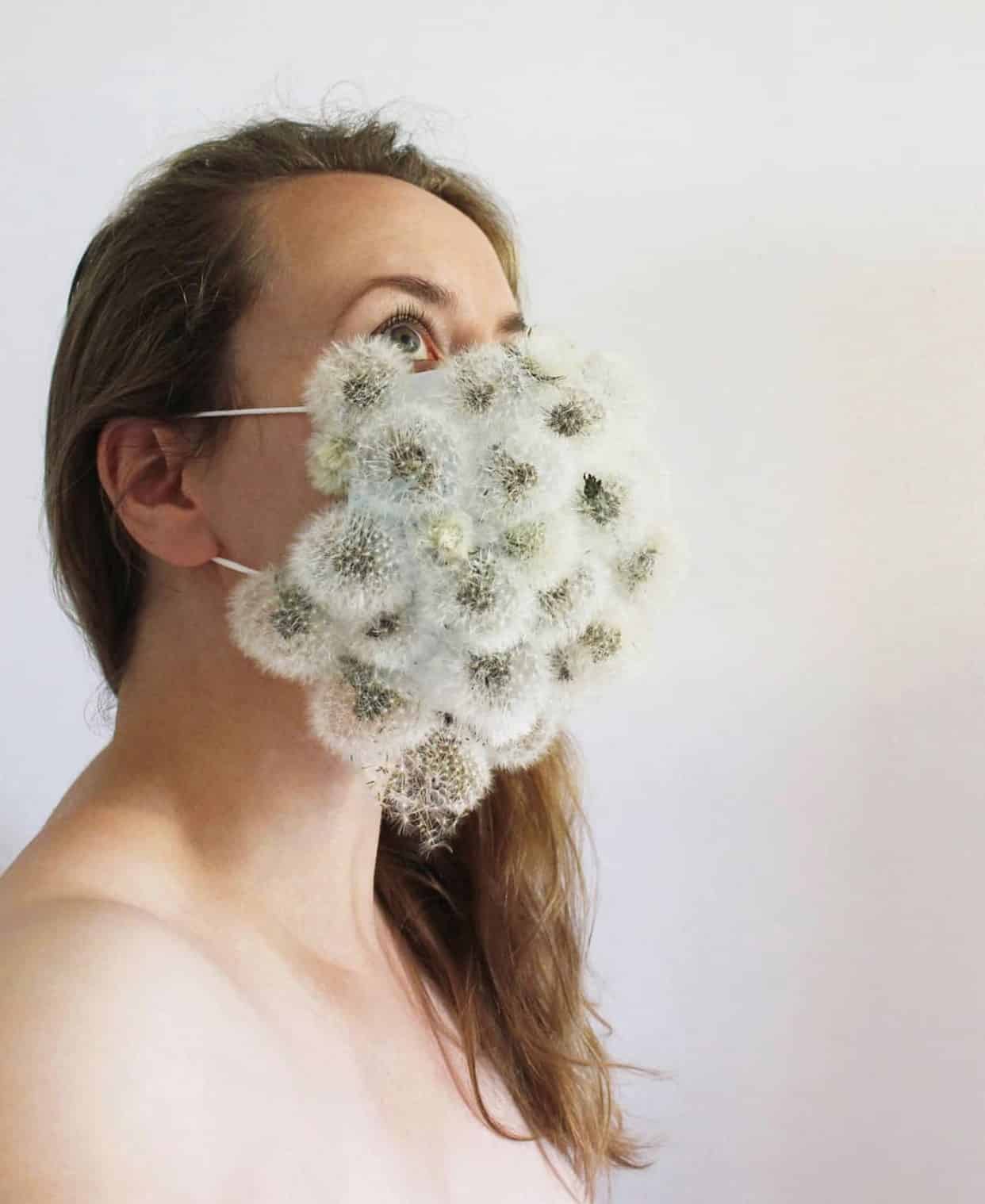
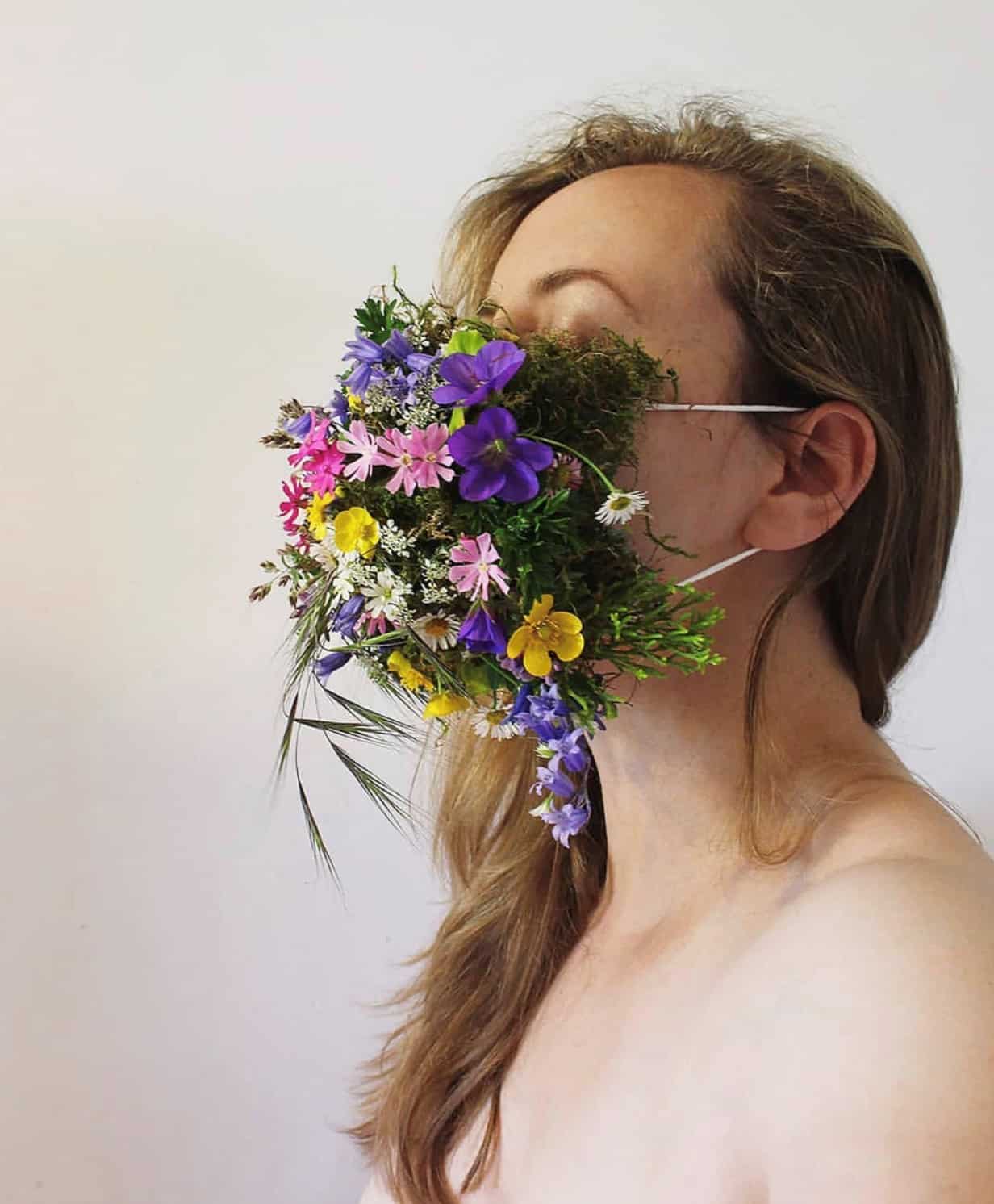
At the beginning of the initial lockdown Estelle Woolley returned to her family’s farm in Cheshire (UK), finding nature therapeutic and inspiring in adverse times. She was commissioned by Chester Virtual Bandstand to create a series of pandemic inspired facemasks from foraged, natural materials. These were collected from her daily walks, where she has been homing in on her immediate surroundings, paying close attention to the plant life coming in and out of season.
The materials chosen are collected with a sense of purpose. A colourful rainbow meadow represents the amazing work of the National Health Service during the pandemic; Dandelion clocks delicately parallel the invisible nature of the virus spreading; Nettles and thistles remind us to keep our distance otherwise there will be consequences. Plants act as a natural filter; they give us oxygen so that we can breathe through them; they give us life. The masks also aim to question whether the spread of the virus is nature’s way of retaliating and teaching us to care for our environment more, to slow down and pay attention to the world.
The images have since gained a lot of national and international recognition, from being featured on the front cover of The Sustainability First Art Prize where she gained Highly Commended, featured in The Wales Arts Review, selected as Axis art highlight of the week, selected as the poster image for the Ty Pawb Open Exhibition, and featured in the New York Magazine, and the Danish newspaper Politiken. She won first place in The Art of The Mask exhibition with Bluegirl Gallery, and gained the Ty Pawb Open People’s Choice Prize. The self portraits have been exhibited both online and in New York, Denver, Miami and London.