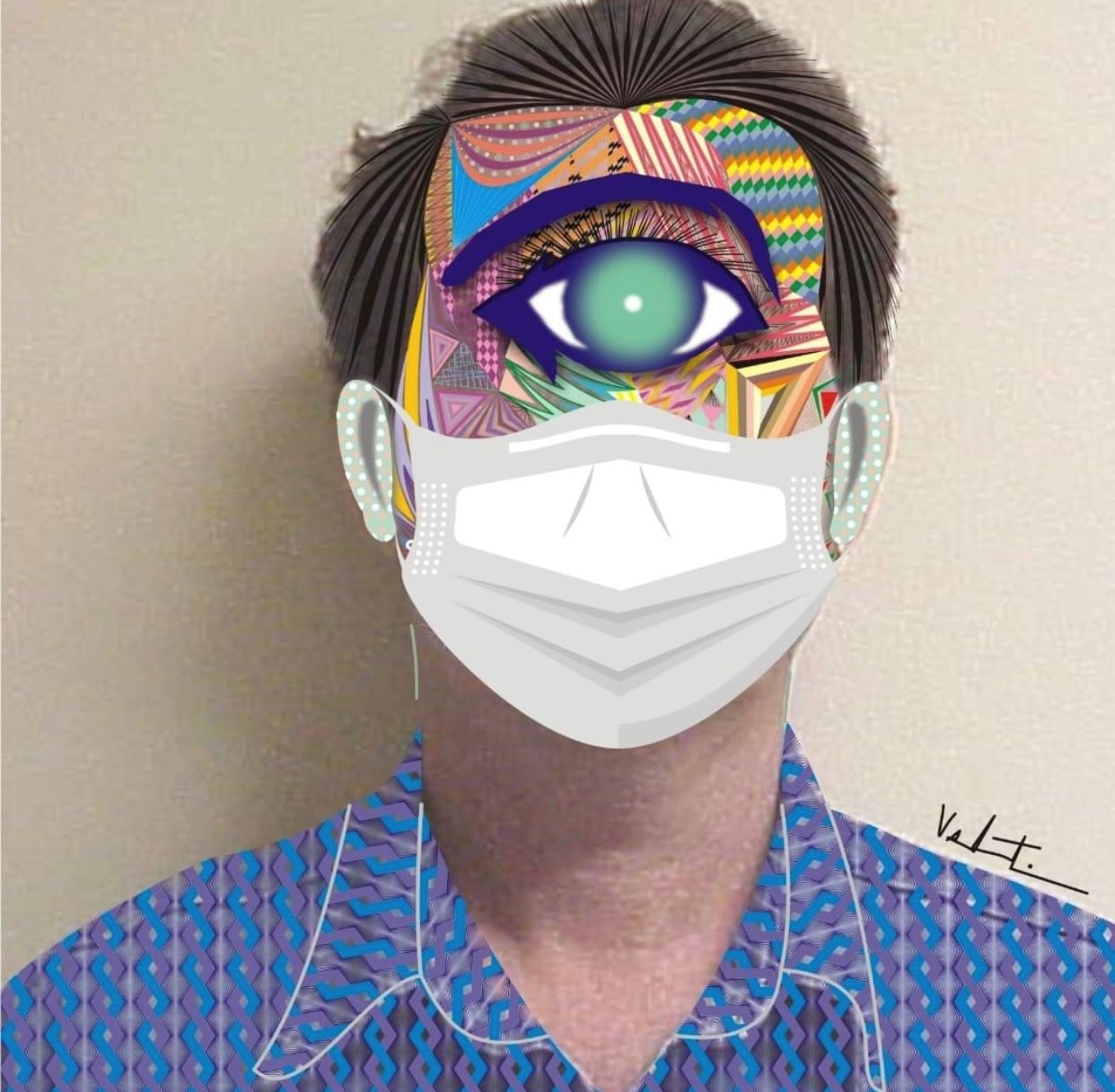
Alexandre Valentim is a digital artist Rio de Janeiro – Brazil. He writes, “In times of seclusion, I realized the great opportunity that I was given to pay a visit to my interior. A trip inside, another angle of observation (multidimensional, maybe …). Sometimes pleasurable, sometimes painful. Sometimes enlightening, sometimes disturbing. Reflect on the act of observing more and talking less. To be more attentive to perceptions, to the information that arrives via our intuition. Allow our connection to the Universe to guide us in our actions.”
Longevicity: Social Inclusion for the Elderly Through Walkability
University of Milano-Bicocca
The LONGEVICITY project is based on a strong collaboration among Artificial Intelligence and Design, developing new research and solutions allowing an active aging through the fruition of walkable cities. Because of the Covid 19 emergency, many elderly have been forced to stop an active fruition of the cities. The purpose of the project is to extend our research on affective walkability issues, measuring the level of stress (via wearable sensors and an Affective Computing approach) of aged walkers during the preservation of interpersonal distances, joint with the design of new public areas coming from architecture and design.
This project involves a team of about 25 art, medical and instructional support faculty and staff plus art students. The project lead is Lynsey Ekema. Initially we 3D printed 1000 face shields. Now we are printing a version of the reusable (can be sterilized) Montana Mask for the health care workers at Augusta University Hospital.
Additional Details
Link to the project page: https://www.augusta.edu/innovation/covid19
Link to 2nd story in campus online newspaper: https://jagwire.augusta.edu/augusta-university-and-local-companies-team-up-to-develop-500-reusable-medical-masks/
The Arts & Design Research Incubator (ADRI) at Penn State seeks to improve lives through research and application of arts and design practices to health and well-being. The ADRI is part of the College of Arts and Architecture at Penn State. We constructed this repository of arts-based wellness activities and resources in response to the COVID-19 global pandemic, as many of us struggle to navigate the uncertainties of this reality, now and into the future. This is a work in progress. Please look around, download and share, and do feel welcome to reach out to us with feedback, questions, and additional content suggestions. We hope you stay safe and well.
While NASA’s Jet Propulsion Laboratory usually works on Mars Rover Perseverance and redirection of asteroids, in times of crisis they focus their collective energy for the greater good. Learn about what it was like when NASA had to pivot during the pandemic. Dan Goods is passionate about creating moments in people’s lives where they are reminded of the gift and privilege of being alive. He leads an extraordinary team of creatives, called The Studio, at NASA’s Jet Propulsion Laboratory transforming complex concepts into meaningful stories that can be universally understood. Their work is seen in public spaces, art museums, and is in outer space.
Additional Details
Dan Goods was recently honored with NASA’s Exceptional Public Service Award. In the past he was selected as “One of the most interesting people in Los Angeles” by the LA Weekly. In 2002, he graduated valedictorian from the graphic design program at Art Center College of Design. He currently lives in Altadena, CA with his wife and three kids. This talk was given at a TEDx event using the TED conference format but independently organized by a local community. Learn more at https://www.ted.com/tedx
Performing Public Health: Remote Cultures Conversation Series
Center for Arts in Medicine, University of Florida
The Remote Cultures Conversation Series documents various interpretations and practices of how artists and arts communities are supporting public health efforts. We recently hosted our first conversation centered on experiences of uniquely precarious artists in performing public health (please see project website for further details), i.e. the lived-experiential knowledges they possess of how best to combat social isolation, shifts in social routines, creative practices to engage and maintain well-being, and/or statements/discussion of the lack of any change to routine whatsoever. This project is part of a larger effort in collaboration with the University of Florida’s Center for Arts in Medicine’s COVID-19 Arts Response, which houses the Performing Public Health initiative, as well as a COVID-19 Arts Repository, advisory briefs, and links to a white paper entitled “Creating Healthy Communities: Arts and Public Health in America.”
Additional Details
What are “Remote Cultures”?
In this context, “Remote Cultures” refer to the cultures evolving in response to the public health measures implemented due to the Coronavirus pandemic. Remote Cultures vary among different populations and communities, including Unique Precarities (particular experiences, knowledges, needs, and abilities of marginalized groups) and individuals’ adaptations to the novel public health measures implemented during this pandemic.
Minibinders, Small Antiviral Proteins for SARS-CoV-2 Therapeutics
Baker Lab, Institute of Protein Design
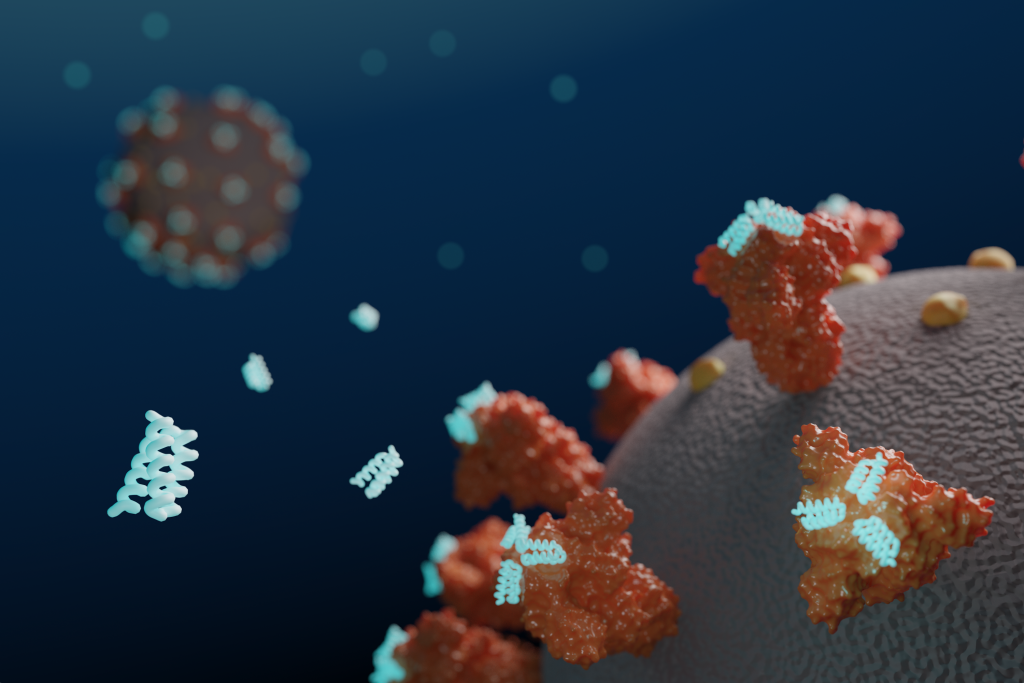
This artwork shows a comparison between minibinders (small antiviral proteins, shown in shades of red) and antibodies (blue) that bind to the spike proteins on the surface of the SARS-CoV-2 virus. Prof David Baker’s group at the Institute of Protein Design commenced the computational design of minibinders in January 2020 around the time when community transmission of the virus began. By the end of May, they had identified minibinders that were able to strongly bind the spike proteins and neutralize the virus. Minibinders are 20-fold smaller than antibodies, and can be scaled up in production at a lower cost. While antibodies have only two binding sites to its target, minibinders in an equal mass offer 20-fold more potential neutralizing sites. The small size and higher stability of minibinders offer a possible advantage of nasal formulations for drug delivery and eliminating the need for refrigeration during storage and transport. These minibinders are currently in development for their potential use as SARS-CoV-2 therapeutics. This example highlights the power of computer-generated protein design, especially during a pandemic when time is critical.For more information refer to https://www.bakerlab.org/index.php/2020/09/09/covid-minibinders/
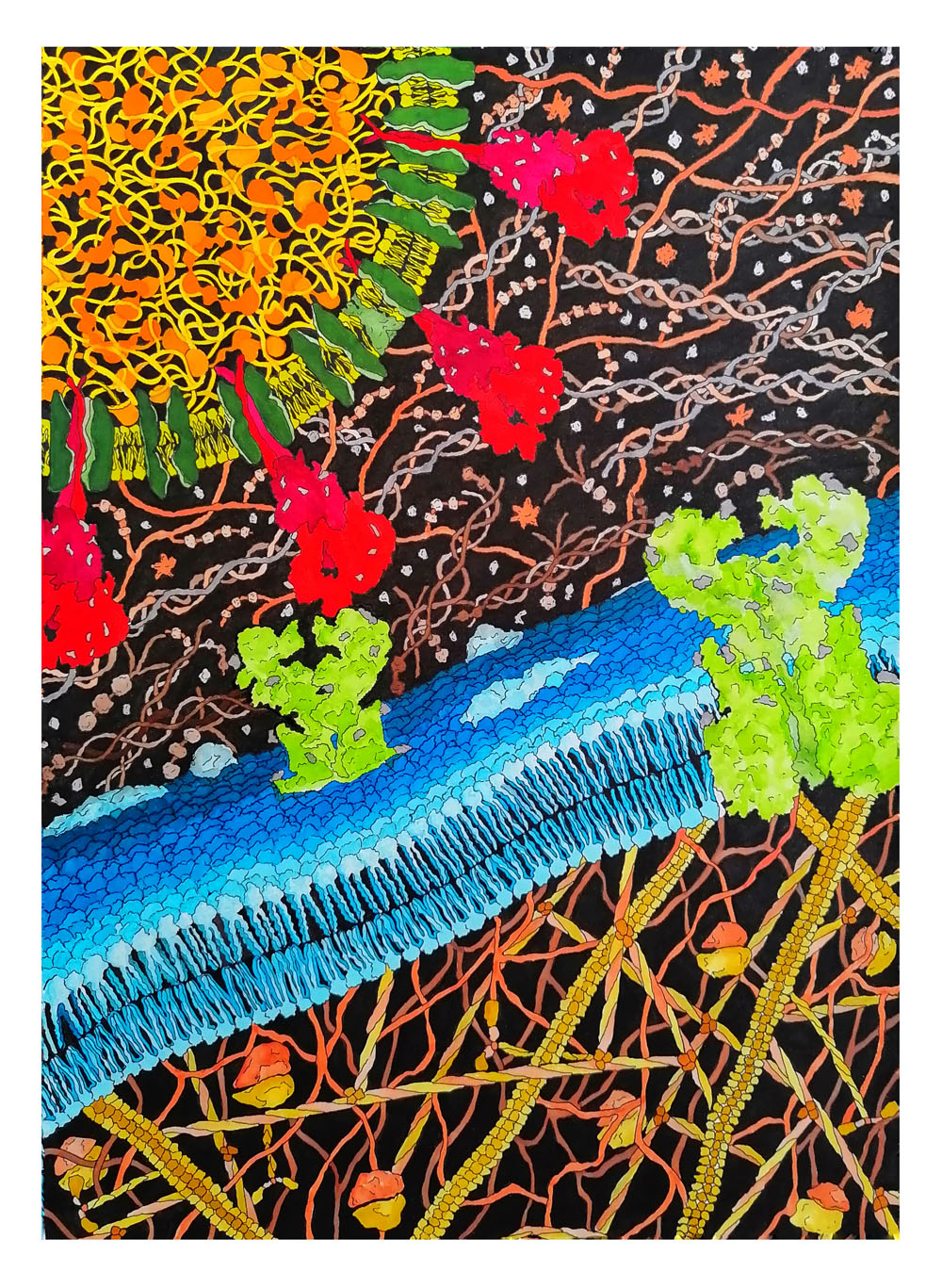
The creative response is a watercolor painting showing the SARS-CoV-2 entry into the cell. The painting illustrates the viral spike protein coming in contact with the ACE-2 receptor in the plasma membrane of a lung cell.
The UF Center for Arts in Medicine, along with arts and public health leaders from across the U.S., created an array of resources designed to support arts-based responses to COVID-19. They call for and enable cross-sector collaboration between the public health, arts and culture, and community development sectors to drive high-impact responses to COVID-19 across diverse communities. The resources include advisory briefs, webinars, an evidence-based framework, and a robust resource repository.