The MIT Press & UC Berkeley launched an open access, rapid-review overlay journal that accelerates peer review of COVID-19-related research and delivers real-time, verified scientific information that policymakers and health leaders can use. Scientists and researchers are working overtime to understand the SARS-CoV-2 virus and are producing an unprecedented amount of preprint scholarship that is publicly available online but has not been vetted yet by peer review for accuracy. Traditional peer review can take four or more weeks to complete, but RR:C19’s editorial team, led by editor-in-chief, Stefano M. Bertozzi, Professor of Health Policy and Management and Dean Emeritus of the School of Public Health at University of California Berkeley, produces expert reviews in a matter of days. Using artificial intelligence tools, a global team identifies promising scholarship in preprint repositories, commission expert peer reviews, and publishes the results on an open access platform in a completely transparent process. The journal strives for disciplinary and geographic breadth, sourcing manuscripts from all regions and across a wide variety of fields, including medicine; public health; the physical, biological, and chemical sciences; the social sciences; and the humanities.
Authentic Learning of Clinical Skills Through AIMST University Model of Ambulatory Care and In-patient Care Simulation.
AIMST University, Malaysia
The lockdown in Malaysia since 18th March 2020 has created a sudden vacuum in the face to face learning opportunity of clinical skills. We had to design and deliver authentic learning of clinical-skills in a simulated environment in the faculty of Medicine, AIMST University, for the under-grad medical students studying in the MBBS program. This is a gist of the principles we have followed to achieve that to the best of the collective ability of the faculty. Guiding Principles in Brief: Structuring of Clinical Teaching-Learning (through years 3 to 5 of MBBS) has been done by adopting RIME framework. We have been following the RIME model since 2019. Briefly, it is to teach and learn, — recording (R) clinical history and physical examination in year-3; — interpreting (I) the clinical case details and the investigation reports in year-4; and — planning management (M) of the case; — how to give follow up advice by patient education (E) in year-5 of the MBBS course. Choice of the Mode of Teaching-Learning: This has been based on the predominant domain as per the revised Bloom’s taxonomy and Miller’s prism/pyramid. Academic freedom was given to each clinical unit to base their choice of the level of clinical experience based on availability of resources, feasibility and priorities. The guiding principle for the choice of learning experience was Dale’s cone of experience. For example, the clinical units with access to real ambulatory cases arranged to get the cases to the simulated bedside discussions. Other units, used hybrid models to the extent possible combining, i) standardized patients, who could give clinical history in a consistent manner, ii) normal volunteers for the students to practice physical examination, and iii) high fidelity simulators to learn perceptual skills of visual, auditory and tactile senses. Ambulatory Care Simulation: Ambulatory (outpatient) care is medical care provided on an outpatient basis, including diagnosis, observation, consultation, treatment, intervention, and rehabilitation services. The goal is to learn the skills of focused case assessment and advising the patient on home based management of the problem. It is feasible to use some of the clinical students to play the roles of ambulatory cases with a bit of guidance and coaching on key features of the case scenario. The others would then interact with them in layperson’s language to elicit the case history. Several symptoms do not have any abnormal physical findings and are diagnosed based on history alone. These are easy to begin the program of ambulatory care simulation. “AIMST University Model” of simulated In-patient environment: Cognitive realism is more important than physical realism in creating authentic learning environment. Therefore, each clinical unit has planned sustainable and practicable in-patient simulation based on the principles of design stated earlier. We have created a 4 bedded in-patient cubicle to create a realistic milieu. On day-0, the briefing is done on the objectives of the in-patient simulation exercises, which would spread over 3 to 5 days. The students who play the roles of in-patient cases will be initially coached on case details. From day-1, they would plan to narrate their daily progress until they are discharged. The clinical conditions are chosen from the common diseases prevalent in Malaysia. On day-1, the rest of the students are allotted a new patient for clerking. Appropriate Mannequins or videos will be supplemented to present the physical findings of the patient allotted. After an hour of clerking, the clinical instructor will take ward rounds and analyze each case presentation in detail, especially focusing on differential diagnosis, further investigations and initial treatment plan. On day-2, the daily progress report, and the lab reports & images will be the basis for discussions. The focus will be narrowing the diagnostic possibilities, planning further work up if needed, and modifying treatment plan based on test results. This may go on for a day or two more as planned by the unit. On the final day of the simulation exercise, the students will discuss discharge plans and instructions to the patients. Evaluation of the Ambulatory and In-patient simulation: Evaluation of the learning outcomes are assessed daily, using the RIME evaluation format already available with the major clinical units. In addition, feedback has been obtained from the students, from the role-players and from the clinical instructors on the usefulness of the simulated clinical environment in achieving the expected outcomes. The encouraging feedback has consolidated our efforts to persist with the AIMST-model during 2021, the second year of pandemic-associated disruption in face-to-face learning in real-life clinical settings. In conclusion, to the best of our knowledge, our model of longitudinal clinical-clerkship simulation over 4 to 5 days, is an original contribution to Medical Education.
Despite the perceptibility of the effects they impart on their hosts, the most incredible capacity of viruses is in their invisibility. Invisibility is the most frightening side of the current pandemic, and invisible is also the work of the scientists striving to find a solution. This proposal presents a data visualization that aims to give visibility to those scientists working on COVID-19. Their scientific publications have been computationally analyzed and transformed into a relational structure based on lexical similarity. The result is a network of scientists whose proximity is given by their closeness in writing. An innovative visual method that hybridizes network visualizations and word clouds presents the scientists in deep space, explorable through keywords. In such a space, individuals are situated according to their lexical similarity, and keywords are used to clarify their proximity. By zooming, the visualization reveals more information about scientists and their clusters. While a lot of visualizations during the pandemic focused on showing the spread of infection, causing anxiety among the readers, this visualization reveals the efforts of science in eradicating the virus. Making visible the enormous number of scientists working on COVID-19 research will contribute to coping more positively with the pandemic.
During the lockdowns of the COVID-19 pandemic in 2020, technologies that were not particularly new or innovative were rediscovered as a means to communicate during social distancing. Video conferencing in particular quickly became the standard adopted means of work, education, and collaboration. In a sense, old became new again and was presented as if it never was; the technologies were quickly integrated as part of essential communication infrastructures and their use became a key skill.
Networked performance practices have, for many years, been defined by these networked technologies and their form. Consequently, the pandemic brought to the fore several questions about this type of artistic practice. If the use of networked technologies is now a key everyday skill widely employed, can networked performance truly align itself with technology art (as it often has been), or does it revert to a closer relationship with the performance art of the twentieth century? If the latter is the case—and for many it is highly contentious that it qualifies as having any relationship with those art forms—has networked performance become isolated within art history? Is it pushed to irrelevance by the current popularization of its technological forms, doomed to be haunted by its artistic predecessors?
In response to these questions and the condition of performance in confinement, during lockdown I began to model a series of scenes in 3D that recreate the locations of landmark performance art. All performances selected occurred in the interior spaces of an artist’s home, studio, or residency to reflect on the confined circumstances artists were now required to create within during the pandemic. The result is a series of scenes for networked performance that consist of 3D-rendered images and models created from video and photographic documentation of the original performances. The artist who originally performed is absent from each scene, allowing new artists to “virtually” occupy the spaces and create new performances.
Distributed through GitHub under a Creative Commons by Attribution license, the scenes are created “after”—or in the manner of—the original artists. They constitute a form of instruction, guide, or performance media kit that enables new artists to reenact performances or create new works inspired by the originals within the context of digital technology and networked performance. The media kits can be employed within various networked environments, such as through Zoom or Skype’s virtual backgrounds or as imported models in Second Life, Unity, or various other 3D/VR/AR applications.
The series is intended to facilitate the exploration of what can be achieved when spatial and corporeal possibilities are on the one hand limited or simplified but the necessity of technology to view performance is on the other a way to move beyond those limitations. This is most obviously demonstrated in how artists can appear out of their actual living or studio spaces and in another. The spaces/props and the bodies/actions of the performances, however, are only “virtually” copresent: technically in image, through bluescreening, 3D rendering, interpretation, etc. and conceptually through the concept of “hautology.”
While employed network technologies remove the limitations of an occupied space, artists have to refer to what they know, such as landmark performances, or what their current frame of reference lets them imagine—perhaps a performance in a space they know. This existing awareness of performances and spaces known in a sense haunts all new performances by artists, a condition that spans all creative practices in postmodernism and beyond.
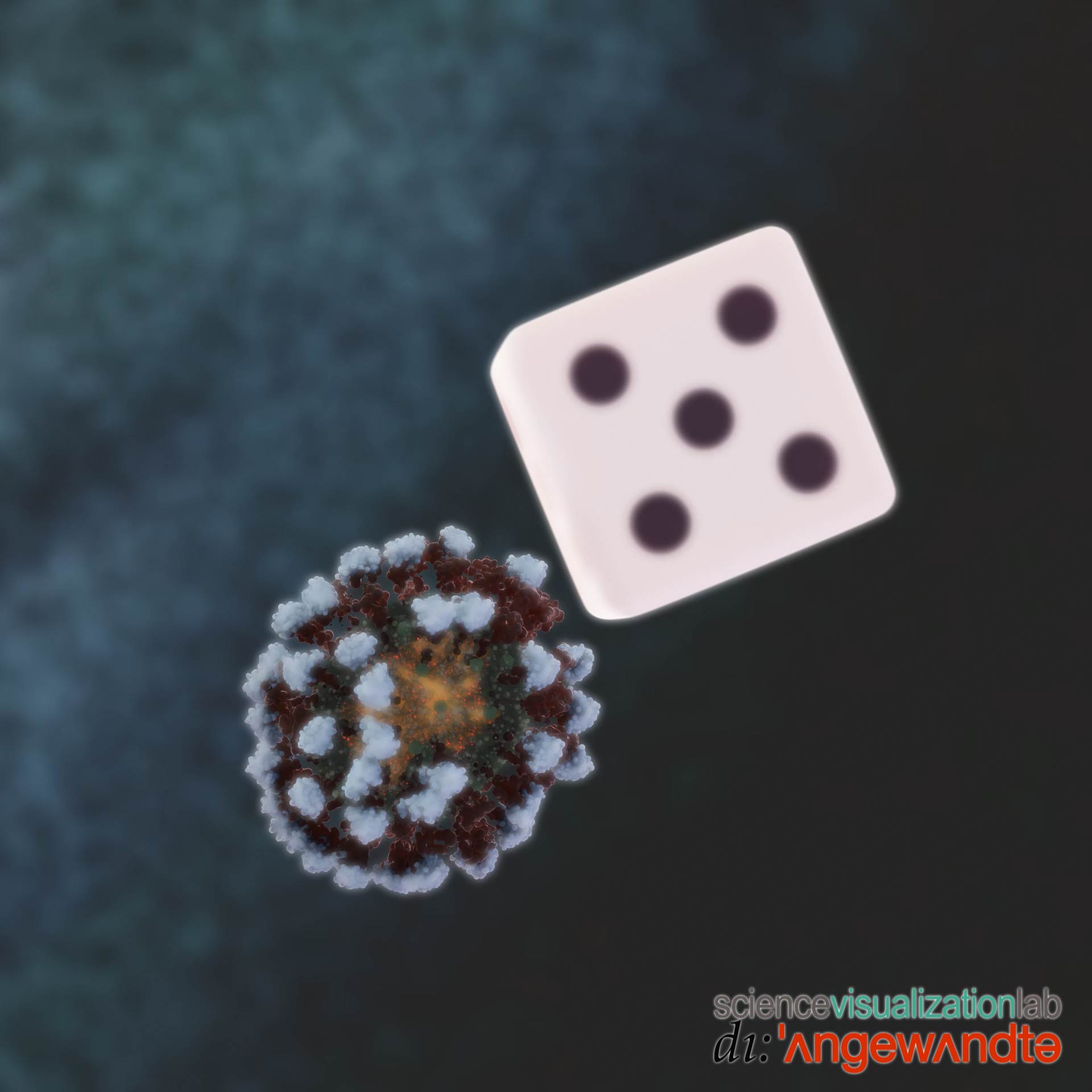
Virus Dice is an artistic and scientific visualization project. It features videos and an interactive installation. The project informs about the infection pathway and how medications work. The project makes the delicate, extremely vulnerable state of human health visible in a metaphorical way.
How Pratt Students Met the Pandemic With Creativity and Reshaped Their Practices for the Future
Pratt institue
The ongoing pandemic has changed everything, from the way we learn and create to how we think about the future. At Pratt Institute, students have used their creativity to adapt to these shifts, while addressing isolation, grief, uncertainty, hope, and community into their work. Eight of these students shared how their processes evolved over the past year and what they will carry forward into their future practices.
In response to the limited availability of personal protective equipment in Ecuador, the designer developed a method for making low-cost but effective COVID masks at home using algae as a filter.
Viruses are invisibly small and some, including SARS-CoV-2, can be dangerous to us. The role of viruses as an ‘invisible enemy’ can make it hard to form a clear mental image of them, or to understand how they behave as part of our natural environment. This papercraft exercise adapts traditional paper snowflake designs to introduce the natural world at the scale of a virus. It explores the often beautiful symmetries of a wide variety of virus structures, and explains how understanding virus structures has guided the design of the vaccines that are now being used to control SARS-CoV-2.
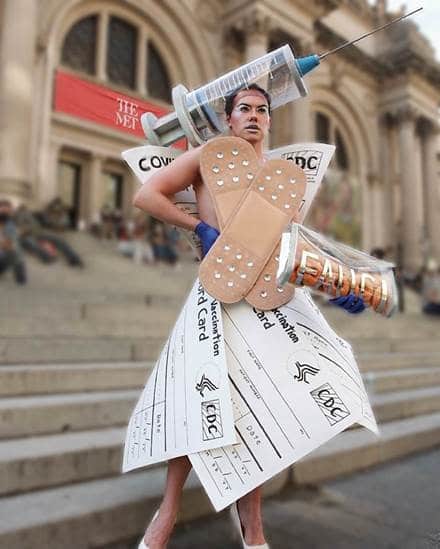
On his Instagram account @bren_bash, artist Brendan McCann writes, “It’s the First Monday in May [2021], traditionally the date of the annual Met Gala. Last year in quarantine, I made a dress with materials around my apartment inspired by the cancelled ‘About Time’ Gala. With the gala postponed again, I decided to do it again. The theme: SCIENCE. Serving you COVID vaccination couture. My ‘FAUCI’ clutch is filled with free @krispykreme donuts I got with my vaccination card. This dress is dedicated to the scientists and healthcare workers that have worked tirelessly for the last year to stop the spread & develop a vaccine. I hope I made you proud, Ms. Wintour (I’m unemployed, by the way.)”
Artist and designer Brendan McCann in his science-inspired dress for this year’s postponed Met Gala. (photo by Josh Levinson / @JKLPhoto, courtesy of Brendan McCann)
Design Innovation Initiative Uses Creativity to Help Medical Proffesionals Fight COVID-19
Kent State Today
Kent State University’s Design Innovation (DI) Initiative is responding to the COVID-19 crisis by prototyping and producing face shields and masks to help fill the gap being experienced by medical personnel on the front lines.
The team is utilizing the 3D printing and laser-cutting resources in place at Kent State to produce much-needed and increasingly scarce personal protective equipment (PPE) to donate to Kent State’s first responders at the Kent State Police Department and DeWeese Health Center. The remainder will go to the Cleveland-based nonprofit MedWish International, which will distribute the supplies to Northeast Ohio’s hospital workers and first responders who are in dire need. MedWish repurposes medical supplies and equipment.
Eras are divisions in the geographic time scale. I declare a new era, a post-Coronavirus paradigm, the Blue Era. We have entered it in isolation together, social distancing and with muffled voices behind face masks, with a chance for a reboot: life 2.0 I envisioned that humanity was going over a blue line, a blue linear portal set against clean, sunny blue skies. Stepping into an idyllic post coronavirus landscape, joyfully, children holding their parents hands, skipped over the blue line, en mass. Humanity was moving in unison towards a healthy new coexistence with each other and the planet. In less than six months at a global scale, and right at four months at a national scale, a pandemic has shifted our footing, and the Blue Line has formed, in the form of a portal. We have stepped through that portal to find our freedom of choice intact. The choice should be clear: recommit to caring about people, public health, education, clean waterways and oceans, animals and nature; towards a unified human race and a needed respect for the planet. To question, imagine, invent, reinvent, the world on the other side of my blue line is up to each one of us. It’s a rebooted landscape, where we can look at coexisting and connecting, with each other and with the planet. Our freedom of choice and collective power goes well beyond politics, or presidents. We are nimble, inventive, indefatigable, curious, creative, hardworking. We are survivors. My project, The Blue Line, is an artistic wormhole. The Merriam-Webster definition of the Eistein-Rosen wormhole is “a hypothetical structure of space-time envisioned as a tunnel connecting points that are separated in space and time.” The Blue Line is a giant portal of public art in every park, urban plaza, community. It marks the new awakening of the world. For me it’s a printmaking project on paper; its an installation of public art that will begin with a blue line in my neighborhood, with an explanation of the concept, for pedestrians to engage with and cross. It’s an installation that is reproduced in other’s front yards, to build consciousness about the opportunity that we are waking up to. It’s an installation inside or outside of white cubes for art, it’s a giant portal for public art in every park, urban plaza, and community. This is my moment as an artist, a woman, a human. I’ve crossed the line and am not looking back.
Virtual REU Site: Neurotechnologies to Help the Body Move, Heal, and Feel Again
Jose Contreras-Vidal / university of Houston
In response to the need for social distancing and campus closures, we converted our NSF Research Experiences for Undergraduates (REU) Site to a Virtual Experience to support the research, social and creativity needs of talented students from around the nation.
The “Scuffed Computer Improviser” is a new musical work for computer improviser and live improvising musician for networked performances via internet livestream or video. The separation of chamber musicians and the hiatus of playing music with others during covid-19 has heightened my desire to interact with a digital musical “other.” This project builds on two of my recent works: “Set” for Bassoon and electronics, and “Pileup” for improvising trio and computer improviser. In these two previous works, I developed computer improviser software in the MAX/MSP programming language. This software is being further developed to become more musically flexible as it encounters a variety of musical styles as well as integrate networking so that the software may be operated remotely. The computer improviser is audio-corpus based, meaning that the improviser “learns” how to improvise by analyzing incoming audio and then altering, rearranging, and creating something new from the analyzed audio. The computer improviser then reacts to a live musician with a series of musical behaviors may adapt over the course of a performance. My recent work in algorithmic music, AI composition, and computer improvisation is motivated by an exploration of musicality and an attempt to expand my aesthetic sensibilities through interaction with a digital “other” toward new musical styles. My artistic stance on the inclusion of AI is antithetical to commercial approaches as represented by Google Magenta, AIVA, Pandora, and many others that are designed to iterate on pre-existing styles. This relates to the title of the project: “scuffed computer improviser,” the term “scuffed” used to suggest a certain roughness and DIY aesthetic that stands in relief to the gloss and marketability associated with a commercial end use that is typically associated with AI and machine learning.
This site is a repository for observations, reflections and collections from this global pandemic. It hosts voices of many featuring content from familial, social, creative and scientific networks.
Additional Details
Take action in quarantine, 3 easy steps! We are a creative and multidisciplinary team developing a repository of the COVID-19 experience. As experts collect information worldwide, we are building a database for creative expression. Great Pause Project is entirely open source, available to a global community to reflect, share, and document this unique experience. Join us as we archive this story!
National Academy of Engineering (NAE) President John Anderson sat down to talk about some of the engineering challenges posed by the pandemic and how engineers — and the NAE in particular — are working to meet them.
Troubleshooting the Pandemic – Engineers Pitch Innovative Solutions to Help Address COVID-19
National Academies
While the world waits for a vaccine to prevent COVID-19 infection, international and multigenerational teams of engineers have come together through the National Academy of Engineering’s COVID-19 Call for Engineering Action to find creative solutions to problems caused by the pandemic. Their ideas aim to prevent the spread of the virus, help people most at risk, and make life easier under social distancing protocols.
“This is why the NAE was created — to bring creative engineering expertise to bear in order to address vital needs of society,” said John L. Anderson, president of the National Academy of Engineering, during the first pitch showcase of the Call for Engineering Action last week.
The Call for Engineering Action was launched to facilitate crowdsourcing and brainstorming of ideas that could protect public health and the economy during the pandemic. The initiative has attracted individuals ranging from university-level students enrolled in NAE Grand Challenges Scholars Programs to seasoned engineers and other experts. This first showcase consisted of five teams pitching their concepts to an Expert Review Committee of NAE members who provided feedback and advice on how best to advance the ideas that were presented.
Designers from around the world are putting forth rapid-fire creative solutions for battling COVID-19 and its aftermath. Here are some of the most noteworthy so far—from pop-up clinics to morale-boosting posters
Between March and September 2020, the Boston University Arts Administration compiled this list of media articles that chronicle the impact of the pandemic on the sector and the creative responses of the field. We are currently conducting a longitudinal research project with ArtsBoston to track the career outcomes of professional arts managers who were employed at a large sample of Greater Boston arts organizations at the time the pandemic hit in February. We will post the results of that study at regular intervals as they become available.
How COVID-19 accelerated change in design and arts education at ASU.
Liz Cohen wasn’t eager to teach online. The Guggenheim-winning associate photography professor, who considers herself a people person, didn’t think it was for her.
When COVID-19 happened, Cohen threw herself into figuring out “how to use this (ASU Sync) platform in ways that are interesting.”
To her surprise, she said, “I like it. COVID has taught us something — not that I’m going to give COVID too big a pat on the back.” She appreciates the “dynamic relationship” between herself and the students — “there’s banter, and everyone’s engaged”—and she likes the ease and convenience of teaching via ASU Sync.
Almost overnight, circles and shoe pads became our ubiquitous governing:
Social distancing, also called “physical distancing,” means keeping a safe space between yourself and other people who are not from your household. To practice social or physical distancing, stay at least 6 feet (about 2 arms’ length) from other people who are not from your household in both indoor and outdoor spaces
CDC, Social Distancing “Keep a Safe Distance to Slow the Spread” Updated July 15th 2020
Additional Details
Savannah Walker is a visual designer based in NYC. She crafts identity systems, is fascinated by digitally converted experiences, draws a lot of buildings, and has 18,729 photos on her phone, some of which are shared here.
One morning, I woke in the middle of a lucid dream where I was playing this game. The object is to use medical supplies to fight the covid virus particles before time runs out. To develop the game, which runs in a browser, I integrated a javscript physics engine (matter.js) into my code. I drew the particles illustrations with a glass dipping pen, scanned the drawings, and integrated them into the graphics of the game.
3-D Simulation Shows Why Social Distancing Is So Important
New York Times
Simulation, created using research data from the Kyoto Institute of Technology, offers one view of what can happen when someone coughs indoors. A cough produces respiratory droplets of varying sizes. Larger droplets fall to the floor, or break up into smaller droplets.
Humanizing Epidemiology: Non-medical Investigations into Epi/Pandemic Phenomena
Nature
Since the current global outbreak has emerged, most of the prestigious scientific publishers including ours (Springer Nature) have raised open-calls and free material in order to fight COVID-19. all these efforts logically are addressed to the medical societies and related disciplines. However, we are convinced that the contributions of academics, policymakers and other stakeholders from other areas, including the humanities, arts and social sciences (HASS), should not be overlooked. Therefore, I am pleased to announce this open call for research article collection that aims to examine the innovative role and contributions of Humanities, Arts, and Social Sciences -HASS- disciplines, as well as interdisciplinary efforts, in shaping the global response to public health crises. To this end, this collection intends to bring together a range of perspectives, empirical and theoretical, qualitative and quantitative, which draw on methods and approaches from, among other areas: cultural studies, new-media arts, history, digital humanities, law, media and communication studies, political sciences, psychology, sociology, social policy, science and technology studies. Further, Interdisciplinary perspectives are welcomed, whether between HASS disciplines, or at the interface between HASS scholarship and the physical and clinical sciences, or engineering, mathematics, computer science.
Additional Details
Prospective authors should submit a 200-word abstract and a short biography to the Collection Editors in the first instance. Authors whose proposals are deemed suitable will be invited to submit full papers at any point up until the end of June 2021.
Guest Editor: Diaa Ahmed Mohamed Ahmedien (Faculty of Art Education, Helwan University, Cairo, Egypt)
Co-Guest Editor: Michael Ochsner (ETH, Zurich, Switzerland)
Advisory board: Jon Hovi (University of Oslo, Norway), Adele Langlois (University of Lincoln, UK), Tony Waters (California State University, Chicago, USA), Merryn McKinnon (Australian National University, Australia), Chisomo Kalinga (University of Edinburgh, Scotland, UK), Ann H Kelly (King’s College London, UK), Jochen Buechel (Charite Berlin, Germany), Lin Wang (University of Cambridge, UK), Shinichi Egawa (Tohoku University, Japan).
Pandemic outbreaks as public health crises have the potential to reshape human life, from herpes, and Legionnaires’ disease to HIV and Ebola. Each virus or bacteria has its unique biological properties by which it interacts with and affects populations. Human coronaviruses, for instance, have been known since the 1960s. In the past two decades, however, several new dangerous human coronaviruses have emerged, namely, SARS-CoV in 2002, MERS-CoV in 2012, and currently, SARS-CoV-2 is the cause of the disease known as COVID-19, which has put global public health institutions on high alert. Each pandemic brings its own political, economic, cultural, social and ethical challenges. Although efforts to combat such outbreaks are primarily driven by clinical and medical professionals, the contributions of academics, policymakers and other stakeholders from other arenas, including the humanities, arts and social sciences (HASS), should not be overlooked.
Against this backdrop, this research collection aims to examine the role and contributions of the HASS disciplines, as well as interdisciplinary efforts, in shaping the global response to public health crises. To this end, this collection intends to bring together a range of perspectives, empirical and theoretical, qualitative and quantitative, which draw on methods and approaches from, among other areas: cultural studies, new-media arts, history, digital humanities, law, media and communication studies, political sciences, psychology, sociology, social policy, science and technology studies.
How Artists Are Trying to Solve the World’s Problems
New York times
A cohort of 30 artists have received funding to find creative solutions to 21st-century problems like surveillance, digital inequality and inherited trauma.
‘Window Swap’ Lets You Watch A Stranger’s View And It’s Incredibly Calming
(Reported by) Huffpost, Rachel Moss
‘Window Swap’ Lets You Watch A Stranger’s View And It’s Incredibly CalmingPeople around the world are sharing video footage taken from their windows, “ and it’s just what we need after months of lockdown.”
Bored of the view from your window? Why not swap it for grazing cows in the rural fields of the Philippines or the dazzling lights of the Manhattan skyline?
Travel may still be restricted, but a new video project will virtually transport you around the world, allowing you to watch the view from someone else’s window. The relaxing footage is just the thing you need after months of lockdown.
The project, titled Window Swap, was created by Sonali Ranjit and her husband Vaishnav Balasubramaniam, two advertising creatives based in Singapore.
Between them, they’ve previously lived and worked in India, Shanghai, Singapore, San Francisco and Stockholm, so spent lockdown wondering how their friends abroad were getting on.
AIDS Quilt and Masks for COVID-19: A Brief but Spectacular Take on Turning COVID-19 Grief Into Action
PBS News hour
Mike Smith co-founded the Names Project AIDS Memorial Quilt in 1987. Now living through his second pandemic, Smith is finding ways to help out amid COVID-19 — and to inspire others to do the same. He shares his Brief But Spectacular take on turning grief into action.
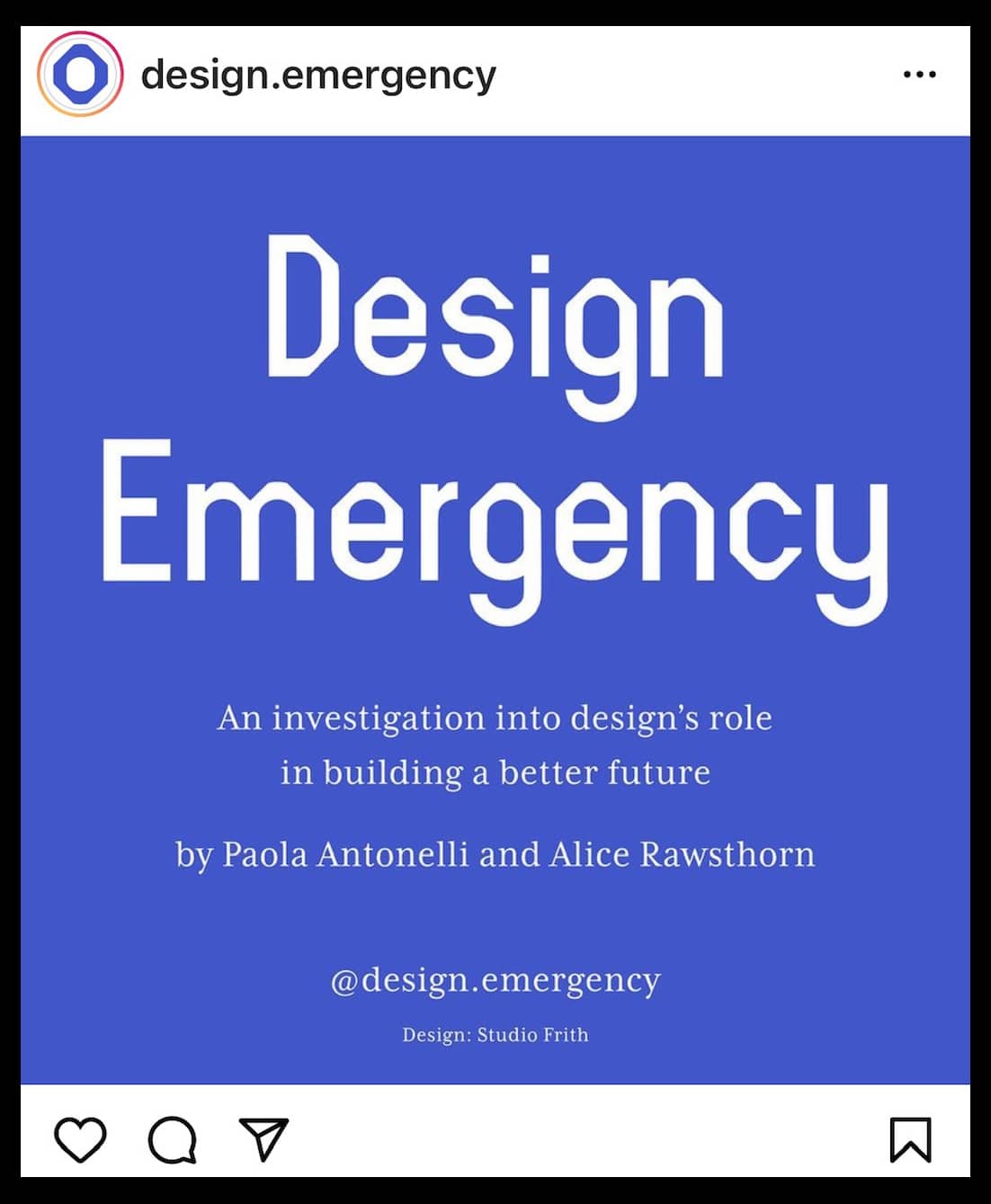
The project is by design curator Paola Antonelli and design critic Alice Rawsthorn. Paola and Alice plan to publish a book on Design Emergency and are streaming weekly Instagram Live talks with leading figures in the design response to Covid-19.