
VII Deadly Vices and VII Cardinal Virtues
Brandon Ballengée / University of Houston’s Cynthia Woods Mitchell Center for the Arts
In his newsletter of April 2021, Brandon Ballengée wrote:
Since last fall, I have been an Artists-in-Residence at University of Houston’s Cynthia Woods Mitchell Center for the Arts. Here I have been working on a new series entitled VII.
VII explores Houston’s urban species through the lens of VII deadly vices (unsustainable practices) and VII cardinal virtues (sustainable actions) in relation to the COVID-19 epidemic (a zoonotic disease thought to be brought on by environmental degradation).
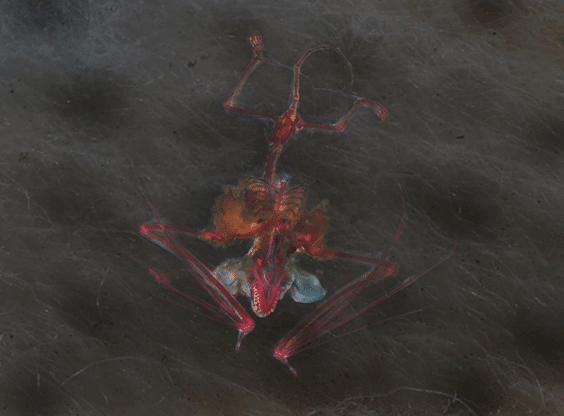
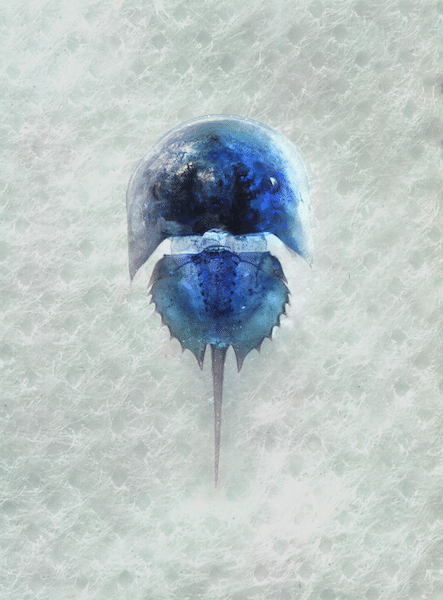
In total 14 species are depicted, each telling the story of ecosystem functionality through their population health and numbers, or lack thereof. For example, some species represent degradation and loss such as the Atlantic horseshoe crab, a species vital to modern medicine because of its use in antibody testing, but which has been missing from Texas waters since the 1990’s. Others offer a message of hope because they have rebounded such as Big Brown bats, one of several bat species found in Houston with stable populations.
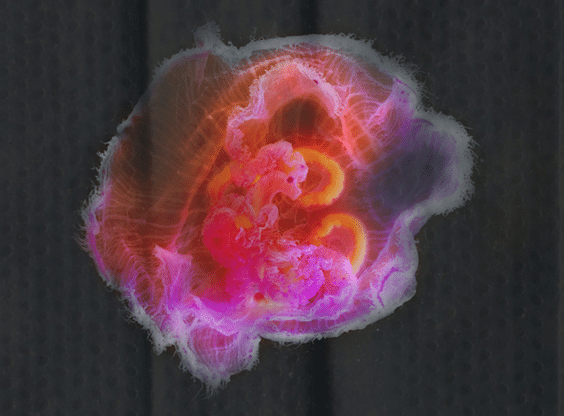
Some species reflect adaptation to environmental challenges such as the hybridization of Gulf and Atlantic killifish populations in the Houston Ship Channel that have become resistant to pollutants, or the Moon jellyfish “infesting” Galveston bay as they can thrive in low-oxygen waters and are tolerant to petrochemicals.
Symbolically, each of these species has a story to tell about environmental virtue or vice and such stories are increasingly relevant as they relate to the current COVID 19 pandemic and overall human health. COVID-19 is a zoonotic disease, one which has passed from non-human animals to humans to create the largest global pandemic in modern history. Although diseases are natural, the transmission of Coronavirus from animal to human due to wildlife trade as well as its rapid global spread can be considered preternatural. Moreover, COVID-19 as well as 60% of emerging infectious diseases have recently been described as symptomatic of environmental degradation.
Following this logic, our treatment of ecosystems may be seen in terms of good (virtues moving towards sustainability) or evil (vices, selfish acts of consumption moving us closer to environmental collapse). Furthermore, actions of environmental virtue decrease our risk of zoonotic disease, while behaviors of environmental vice increase our risk.
For VII, I individually photographed natural history specimens to create portraits and used photoshop to juxtapose these depictions onto high-resolution scans of PPE masks worn during my time in Houston. They were then printed at a scale to recall human children, a size that is familiar and not threatening, to draw us towards instead of away from the image, so that we may further think about how we approach ecosystems and other species, systems that are important to our survival yet to some are not considered, while being cherished by others.”
The new works will be exhibited at the Blaffer Art Museum on the University of Houston Campus, April 17—25, 2021.
Additional Details
Brandon Ballengée (American, born 1974) is a visual artist, biologist and environmental educator based in Louisiana.
Ballengée creates transdisciplinary artworks inspired from his ecological field and laboratory research. Since 1996, a central investigation focus has been the occurrence of developmental deformities and population declines among amphibians. In 2001, he was nominated for membership into Sigma XI, the Scientific Research Society. In 2009, Ballengée and SK Sessions published “Explanation for Missing Limbs in Deformed Amphibians” in the Journal of Experimental Zoology and received international media attention from the BBC and others. This scientific study was the inspiration for the book Malamp: The Occurrence of Deformities in Amphibians (published by Arts Catalyst & Yorkshire Sculpture Park, UK) and a solo exhibition at the Royal Institution of Great Britain (London, England: 2010). From 2009 through 2015 he continued his amphibian research as a Visiting Scientist at McGill University (Montréal, Canada) and, in 2011, he was awarded a conservation leadership fellowship from the National Audubon Society’s TogetherGreen Program (USA). In 2014 he received his Ph.D. in Transdisciplinary Art and Biology from Plymouth University (UK) in association with Zürich University of the Arts and Applied Sciences (Switzerland). In 2015, he was the recipient of a fellowship from the New York Foundation for the Arts (NYFA).