Almost overnight, circles and shoe pads became our ubiquitous governing:
Social distancing, also called “physical distancing,” means keeping a safe space between yourself and other people who are not from your household. To practice social or physical distancing, stay at least 6 feet (about 2 arms’ length) from other people who are not from your household in both indoor and outdoor spaces
CDC, Social Distancing “Keep a Safe Distance to Slow the Spread” Updated July 15th 2020
Additional Details
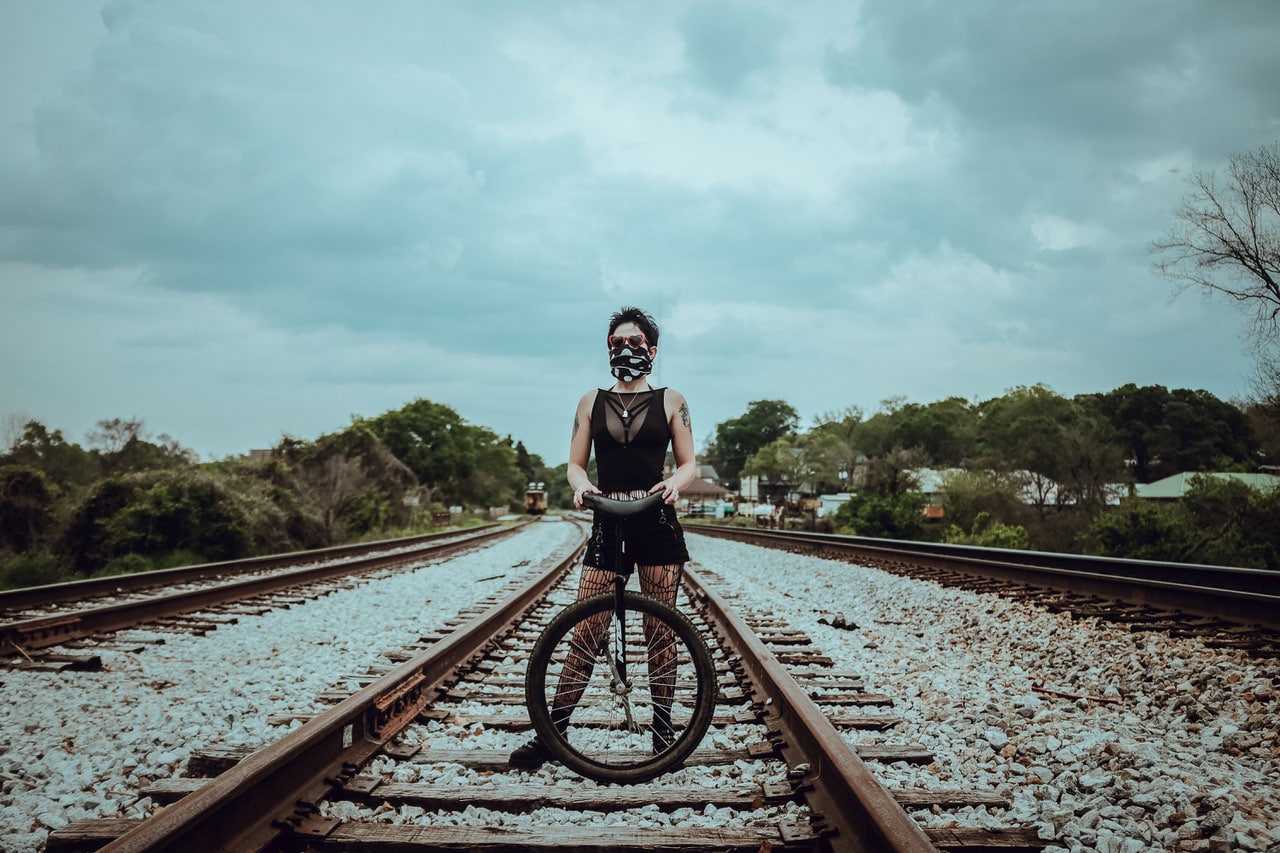
Savannah Walker is a visual designer based in NYC. She crafts identity systems, is fascinated by digitally converted experiences, draws a lot of buildings, and has 18,729 photos on her phone, some of which are shared here.
The Social Distance Art Project (TSDAP) was set up in the wake of Covid-19 by a small group of 2020 Fine Art graduates hoping to offer a platform to showcase and discuss graduate work in the absence of Degree Shows.
Our mission doesn’t stop here. As emerging artists, we need more than just a degree show alternative. At TSDAP our goal is to provide a digital community for artists, providing them with the exposure they need to make it in the art world. We want to create a more diverse and equal model for our artists by encouraging a spread of shared opportunities, both digital and physical, not based upon nepotism.
Translations: Chains of Positive Energy (c.o.p.e.)
Tova Speter
Translations: chains of positive energy (c.o.p.e.) was launched in April 2020 in direct response to the isolating effects of the Covid-19 crisis. After experiencing the powerful connections created by participating in chains of art as part of a physical art exhibit), I started this project to help others connect as well. We may be socially distancing, but we can still be connected. Participants are invited to sign up to be a part of a chain of art where they can receive work created by someone else and then create work in response in order to then inspire someone else in the chain. Each chain in Translations: chains of positive energy (c.o.p.e.) was started by someone offering a word/phrase/quote that describes a quality or mindset they have that allows them to move forward through these challenging times. The word was then sent to another artist to “translate” into their own modality. Once complete, that new artwork was sent to a different artist to translate into a different modality, and on and on, with each artist ONLY seeing the one translation immediately prior to their own. The seven links in the completed chain are a nod to the seven days in each week that feel so long right now.
We are developing a virtual exchange for our summer writing program for high school students, creating digital learning courses on creative writing and disabilities and creative writing and dance, and exploring ways to bring together our pedagogical interests and public health. We have just published a range of reactions from IWP alumni to The Situation, as we call the pandemic, which can be found here:
The CAPE Network Forum is a place where our artists, teachers, program staff, and researchers share their inquiries, ideas, reflections, and video instructions in response to the pandemic and school closures.
In response to the Covid-19 surge, Boston Hope Hospital was created. This field hospital based at the Boston Convention Center was designed to care for patients recovering from Covid after hospital discharge, as well as homeless patients who were Covid+ in need of respite care and isolation. Boston Hope Music project brought over 100 musicians from the around the city together who submitted “musical doses” of electronically. These were curated into over 25 playlists that patients could access via Samsung tablets three times a day to promote healing. These playlists are now available to the general public on a dedicated website. In addition, musicians visited the Boston Hope Hospital to play music for the healthcare providers to help promote wellness and wellbeing for the front line.
One morning, I woke in the middle of a lucid dream where I was playing this game. The object is to use medical supplies to fight the covid virus particles before time runs out. To develop the game, which runs in a browser, I integrated a javscript physics engine (matter.js) into my code. I drew the particles illustrations with a glass dipping pen, scanned the drawings, and integrated them into the graphics of the game.
A fast moving musical journey made on 3 continents by a diverse team of actors, dancers, musicians, cinematographers, and regular folks sending their made in quarantine/social distance videos from around the world. Then assembled into a unique film. An incredible array of talent on display to raise spirits and bring a smile. Creative within science guidelines. Building community through art.
Additional Details
Directed by Ashley Maria Composed by David Raiklen Edited by Crystal Lentz Cinematography by Autumn Palen Produced by David Raiklen and Ashley Maria
(social distancing and PPE used during production and post)
In these days of quarantine, when a touch is a wave from six masked feet away, we turn again to language, to the essence of language, to the art of language, to poetry.
The “Poetry Is Like Bread” Ghazal is a collaborative poem created by a world of poets to nourish us all through the Pandemic and to envision the world After. We take our inspiration from Pablo Neruda: “On our earth, before writing was invented, before the printing press was invented, poetry flourished. That is why we know that poetry is like bread, it should be shared by all, by scholars and by peasants, by all our vast , incredible, extraordinary family of humanity.” This collaborative poem was created with the idea that each poet’s unique voice would join together as one, and that the result would be shared by all. There is no poetic form better suited to do this than the Ghazal.
“POETRY IS LIKE BREAD” GHAZAL.
If, as Neruda thought, poetry is like bread, Then let it leaven this dark time and be my bread. [ Christopher Merrill ]
Struggling (and losing) in this Antipoem, ghosted thread, Spreading cool butter, sweet jam on homemade toasted bread. [ Bob Holman ]
No one waits to forgive the dead don’t pardon the dirt, nor the psalm palms, this celebration of bread [ Mahogany L. Browne ]
Distracted by detonating deadlines and demonstrations, I couldn’t meet your request for peaceful bread. [ Sandra Cisneros ]
3-D Simulation Shows Why Social Distancing Is So Important
New York Times
Simulation, created using research data from the Kyoto Institute of Technology, offers one view of what can happen when someone coughs indoors. A cough produces respiratory droplets of varying sizes. Larger droplets fall to the floor, or break up into smaller droplets.
Willson Center Micro-fellowships in the Arts and Humanities
The University of Georgia Willson Center for Humanities and Arts, in partnership with the UGA Graduate School, Arts Council, Franklin College of Arts and Sciences, and Flagpole magazine, awarded 34 micro-fellowships in its Shelter Projects program. The $500 fellowships supported graduate students and community-based artists and practitioners in the creation of shareable reflections on their experience of the pandemic through the arts and humanities. Projects were shared publicly in a virtual exhibition, and continuing phases of the program have provided further support for UGA graduate student research in the arts and humanities.
Sean Dunn is a photographer and musician originally from New Orleans and currently based in Athens, GA. View “Everyone In My Dream Is You,” Coronavirus Portraits 2020 Athens GA
Principal Turns ‘U Can’t Touch This’ Into COVID-19 Safety Video
CNN
CNN’s Anderson Cooper talks to Childersberg High School Principal Quentin Lee, the principal behind the viral “U Can’t Touch this” parody video meant to help students deal with Covid-19 ahead of his school reopening.
Covid-19 – I can’t live without you 36×36” Nihonga Pigment Painting on Kozo Washi paper wrapped on birch panel. During my quarantine days.
Additional Details
This painting is Japanese style distemper on paper. The colors are from organic dye and mineral pigments. The binding agent is collagen (glue) called nikawa, which usually comes from deer or rabbit, and then leveled with water. The paper surface is treated with alum and nikawa leveled with water and then as gesso, sun dried oyster shell white that is calcium carbonate is used to treat the surface before paint colors. The pigment gives its own personality. The colors are from velvet mat finish to dazzling sparkles, which are best seen under lights. Each color and texture is mixed with nikawa, by hand with fingers in small dish, and leveled with water to change its strength of luminance. This method has been traditional way in large area of Asia, but the method has particularly been preserved by Japanese art culture for over 1000 years. The substrate is durable hand-skimmed paper Kozo Washi. This Washi is made from mulberry bark, wrapped twice on a birch wood panel. If you wish, you can separate the art from the wood panel and use a different kind of framing.
Like the 1st-century sacred Buddhist text that inspired it, the latest project from renowned theater director Peter Sellars is a call to community to learn and heal together during a time of sickness. In the Vimalakirti Sutra, Buddha sends his disciples to the sickbed of an enlightened lay person to hear his reflections on the fragility of physical being and the liberation of conscious awareness. A foundational scripture of Zen Buddhism, it is the resonant center of this body is so impermanent…, a multi-disciplinary performance film born of a remarkable international collaboration between Sellars and a trio of acclaimed artists as COVID-19 washed over the globe. Working virtually across continents under quarantine, South Indian devotional singer Ganavya, master calligrapher Wang Dongling and improvisatory dancer Michael Schumacher engaged with the Sutra and each other in an ensemble act of creation and healing. Sellars orchestrates breath and brushstroke, movement and mindfulness into a visual poem of stunning power. At a moment when grief persists and hope seems more possible, UCLA Film & Television Archive is honored to present the world premiere of this timely work in collaboration with the producers and UCLA program partners. Digital, color, 79 min. Director: Peter Sellars. With: Wang Dongling, Ganavya, Michael Schumacher.
Going Viral is an interactive artwork that invites people to share COVID-19 informational videos featuring algorithmically generated celebrities, social media influencers, and politicians that have previously spread misinformation about coronavirus. In the videos, the influencers deliver public service announcements or present news stories that counter the misinformation they have spread. Viewers are invited to share the videos on social media to help intervene in the current infodemic that has developed alongside the coronavirus.
Going Viral was commissioned by the NEoN Digital Arts festival. It was created by Derek Curry and Jennifer Gradecki as part of their research into the spread of misinformation and neural networks.
Mary Savig, the Lloyd Herman Curator of Craft at SAAM’s Renwick Gallery, has been collecting firsthand accounts of the dual pandemics, COVID-19 and systemic racism, from artists working with craft-based materials and techniques. In this series, “Making the Most: Craft Practice during the Dual Pandemics,” artists share personal insight into how they responded to the cascade of canceled or delayed programs, workshops, and exhibitions, as well as the demands of social distancing and social justice. Each account brings new understanding to the import of the studio as a space of reflection, creation, and collaboration.
We’re kicking off the series with Julia Kwon, an artist who sews interpretative bojagi—Korean object-wrapping cloths—and wraps figures with them to comment on the objectification of Asiatic female bodies. The museum recently acquired a face mask by Kwon from her series Unapologetically Asian. Kwon, whose studio is located in Northern Virginia, stitched a vibrant patchwork of Korean silk to honor her ethnic identity during the rise of anti-Asian racism in the United States, and emphasize the importance of public mask wearing to stop the spread of COVID-19. Unapologetically Asian is an extension of Kwon’s interactive art projects that facilitate solidarity and community in the throes of violent social and political unrest.
How do you plan for a catastrophe? Virologist Nathan Wolfe, named one of TIME’s 100 Most Influential People in the World for his work tracking viral pandemic outbreaks, proposed pandemic insurance years before the novel coronavirus outbreak. No one bought it. Now, in a post-COVID world, we hear his story. A time-jumping tale based on the life and work of Nathan Wolfe (who also happens to be the playwright’s husband). Though not a play about COVID19, it is a true story of a pandemic expert. An deep dive into the profundities of scientific exploration, the lengths one goes for love and family, the bracing truths of fatherhood and discovery, and the harrowing realities of facing your own mortality, The Catastrophist is a world premiere theatrical experience built of and for this moment in time.
100,000: They Were Not Simply Names on a List, They Were Us
Anna Foer
collage A decision was made, as a first in “modern times” that there would be no picture on the front page of the New York Times on Sunday, 24 May, 2020. The significance of the moment was the number of Covid deaths in the United States reached 100,000. The list of names and brief descriptions represents only a one-hundredth of the deaths, as there are only 1000 names on the page. I obtained a hard copy of the front section of the paper to use for a collage. The use of newspaper copy to commemorate this moment connects my new work to the collage I made as a memorial to 9.11.01, also incorporating a newspaper list of the victims. In lieu of basing the composition on hand drawn interior spaces, I opted to work more directly on photos, a first for my approach to collage. The choice of photos represents the ubiquity of the coronavirus’ spread and those spaces that are off limits to the public; the New York subway, a morgue, a library and an art gallery. The upper floors are a home environment and at the top are hospital ICU units, complete with ventilators. The interior spaces we inhabit now are reflected with an overlay of virtual viewing commands, superimposed on those rooms. The commands of “Next”, “Previous”, “Read More” and “Share” take on new meaning and significance in these confines. At the time of this writing, six weeks after 24 May, the number of deaths in the US is 130,000.
I am doing two narrative responses. First is Vintage Card Tiny Stories. Being isolated and alone, I decided that mail was a way to give a unique narrative experience and for me to connect in a meaningful way to a reader. I found a bag of vintage postcards and I write a unique short micro story and mail it off to an audience of one. This unique story for an individual is akin to a message in a bottle both for myself and for the reader. The other project is the Exquisite Birth, which I have instigated as a collaborative narrative game based on the surrealist Exquisite Corpse game. Only this story goes from End to Start. I’ve recruited novelists and comics creators to contribute a paragraph or art panel to the story game. It’s a way of connecting creatively with colleagues in a time when we are flung apart. Collaboration and conversation are key to artistic nourishment.
I used the colors and patterns of flowers of this captured by my this year on my long pandemic walks to create energetic mosaics containing hundreds of images. I use the energy contained within these mosaics to merge with photographic portraits of people amidst the pandemic to help restore balance, calm and peace. This is a form of quantum energetic alchemy. The responses for those who have contributed their portraits have been incredible. I have used mostly those wearing masks, from all walks of life; homeless, local political leaders, protestors, and friends. I offer the service for free, but ask for a donation to the project.
How Artists Are Trying to Solve the World’s Problems
New York times
A cohort of 30 artists have received funding to find creative solutions to 21st-century problems like surveillance, digital inequality and inherited trauma.
AIDS Quilt and Masks for COVID-19: A Brief but Spectacular Take on Turning COVID-19 Grief Into Action
PBS News hour
Mike Smith co-founded the Names Project AIDS Memorial Quilt in 1987. Now living through his second pandemic, Smith is finding ways to help out amid COVID-19 — and to inspire others to do the same. He shares his Brief But Spectacular take on turning grief into action.
The Magik Theatre is a professional theatre in San Antonio and one that is dedicated to youth and promoting literacy through the arts.
With our theatre closed due to COVID-19 and with many children at home due to school closures, Magik made the pivot to creating online materials for our young audiences. This has ranged from online story time and Madlibs to full-scale videos of our productions. On the 4th of July, we launched the premiere of “Jack and the Beanstalk.”
Our goal is to identify specific domains of pandemic preparedness and response that benefit from an applied medical humanities approach, and produce detailed descriptions of the forms of output that result from this engagement. Applied Medical Humanities for Public Health will identify, synthesize, and translate humanities-based responses to COVID-19 from around the world so that these projects may together provide a blueprint for education and research on pandemic preparedness and response in humanities disciplines.
Kirsten Ostherr (reported by Inside Higher Education)
In times of crisis, when we face complex challenges like global pandemics, we need a collaborative response that transcends disciplinary boundaries and offers novel approaches to vexing problems. In the current moment, biologists, engineers and others in fields with established pipelines for translational research have sprung into action, working together to create life-saving diagnostics and therapeutics to help with the COVID-19 pandemic. Yet it isn’t always so obvious how scholars in the humanities can contribute to the front-line response.
Additional Details
Kirsten Ostherr, PhD, MPH is the Gladys Louise Fox Professor of English at Rice University in Houston, Texas, where she is a media scholar, health researcher, and technology analyst. Her research on trust and privacy in digital health ecosystems has been featured in Slate, The Washington Post, Big Data & Society, and Catalyst. She has recently published research on medical humanities and artificial intelligence in The Journal of Medical Humanities, and her writing on COVID-19 has been featured in Inside Higher Ed and in American Literature. She is currently leading a multidisciplinary project called “Translational Humanities for Public Health” that will identify humanities-based (and humanities-inspired) responses to the COVID-19 pandemic, to document and help others build upon these creative efforts. Kirsten is the author of Medical Visions: Producing the Patient through Film, Television and Imaging Technologies (Oxford, 2013) and Cinematic Prophylaxis: Globalization and Contagion in the Discourse of World Health (Duke, 2005). She is editor of Applied Media Studies (Routledge, 2018), and co-editor of Science/Animation, a special issue of the journal Discourse (2016). Kirsten is currently writing a book called Quantified Health: Learning from Patient Stories in the Age of Big Data.
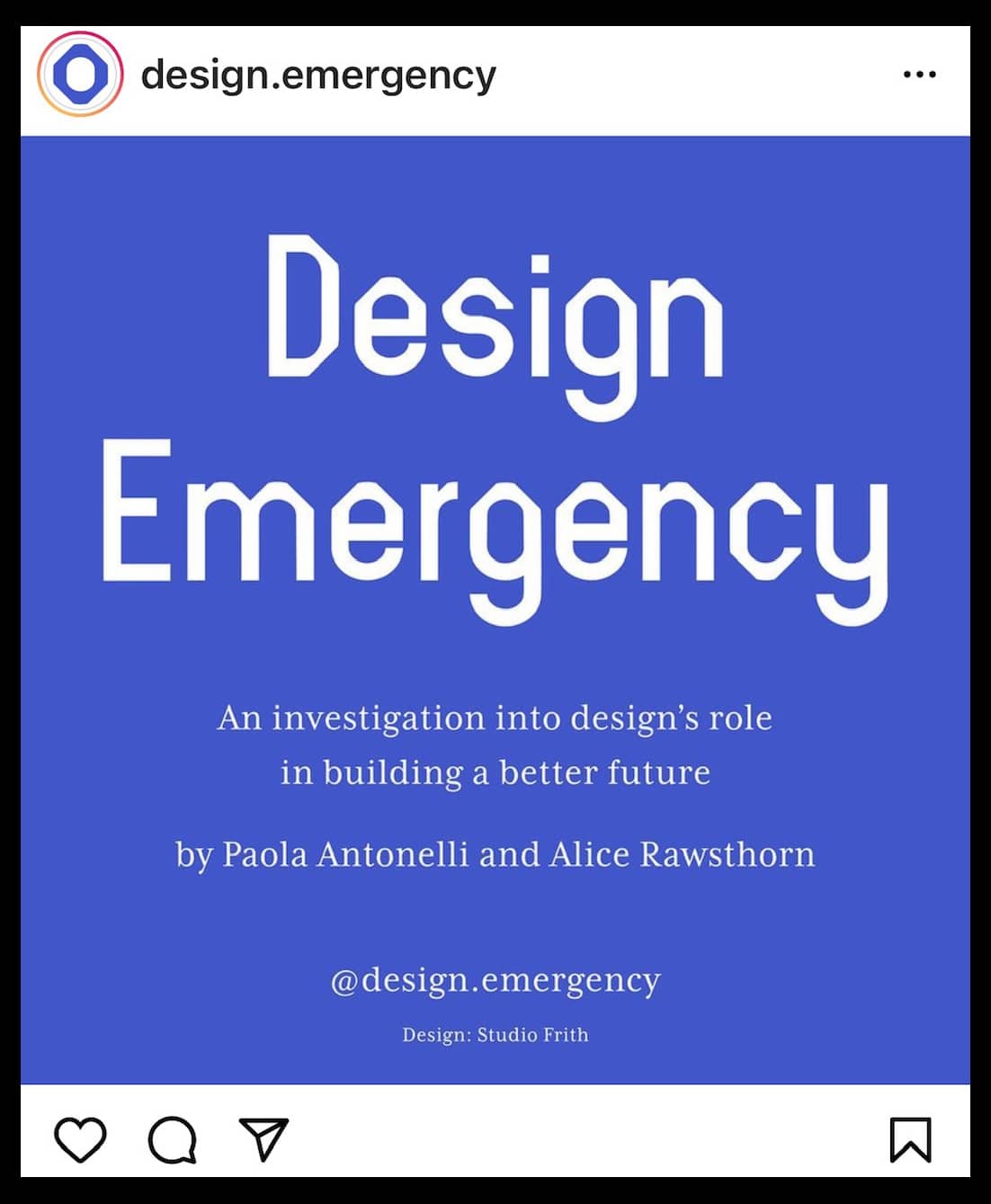
The project is by design curator Paola Antonelli and design critic Alice Rawsthorn. Paola and Alice plan to publish a book on Design Emergency and are streaming weekly Instagram Live talks with leading figures in the design response to Covid-19.
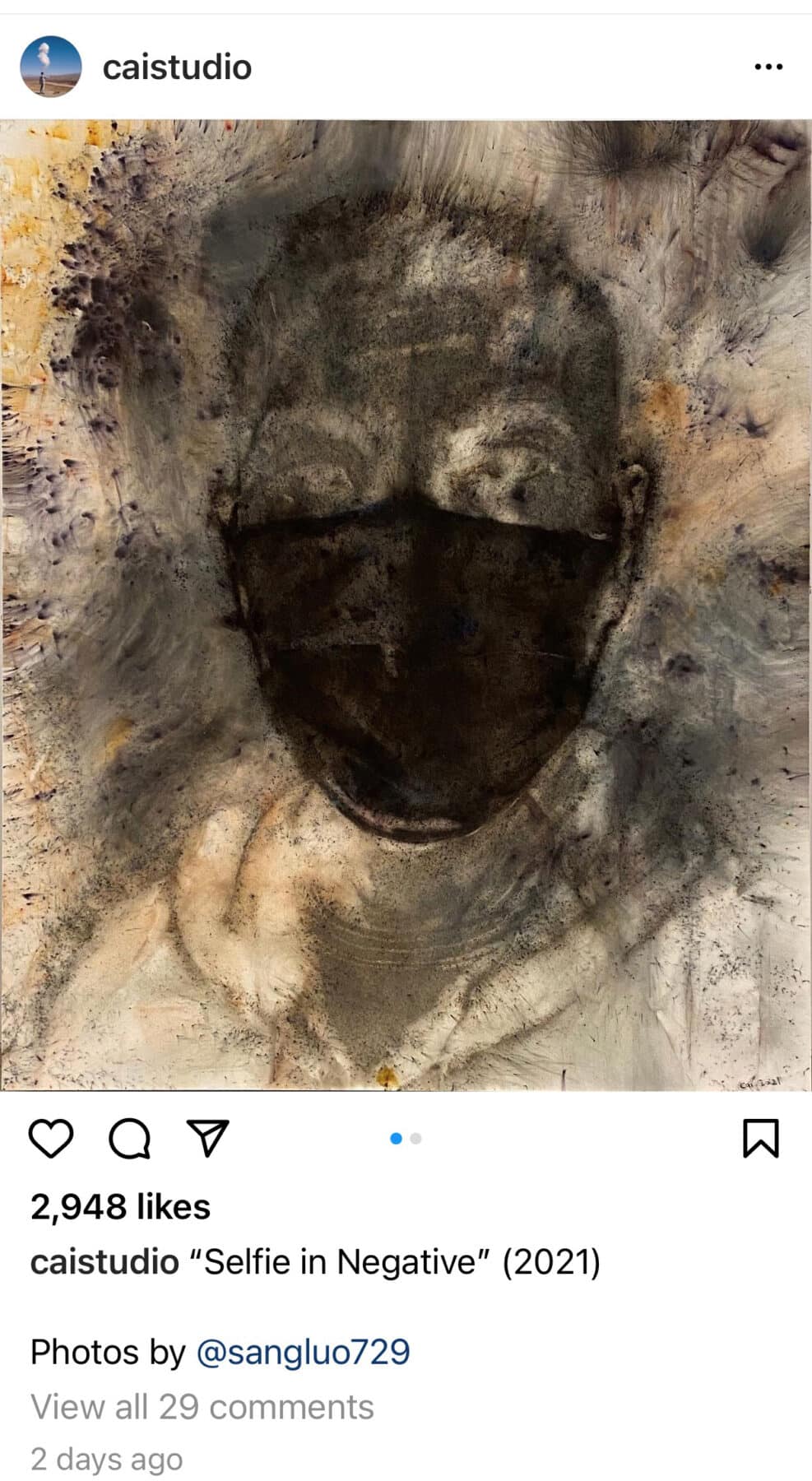
This selfie, done in Cai’s signature style using gunpowder was posted by @caistudio instagram account.
Cai Guo-Qiang (b. 1957, Quanzhou, China) was trained in stage design at the Shanghai Theatre Academy, and his work has since crossed multiple mediums within art including drawing, installation, video, and performance. Cai began to experiment with gunpowder in his hometown Quanzhou, and continued exploring its properties while living in Japan from 1986 to 1995, which led to the development of his signature outdoor explosion events. Drawing upon Eastern philosophy and contemporary social issues as a conceptual basis, his often site-specific artworks respond to culture and history and establish an exchange between viewers and the larger universe around them. His explosion art and installations are imbued with a force that transcends the two-dimensional plane to engage with society and nature.
PARIS — For much of the last two months, Paris has been empty — its shops and cafes shuttered, its streets deserted, its millions of tourists suddenly evaporated.
Freed of people, the urban landscape has evoked an older Paris. In particular, it has called up the singular Paris of Eugène Atget, an early 20th-century father of modern photography in his unsentimental focus on detail.
In thousands of pictures, Atget shot an empty city, getting up early each morning and lugging his primitive equipment throughout the streets. His images reduced Paris to its architectural essence.
Mauricio Lima has followed in Atget’s footsteps, shooting images of the same scenes his famous predecessor captured. But this time those streets are deserted because of the coronavirus pandemic. Mr. Lima’s recreations offer new insight into Atget’s work — and into the meaning of a city unique in its beauty but also in its coldness.