Translations: Chains of Positive Energy (c.o.p.e.)
Tova Speter, Maya Bernstein, Emily Bhargava, and Maria Beatriz Arvelo
Translations: chains of positive energy (c.o.p.e.) was launched in April 2020 in direct response to the isolating effects of the Covid-19 crisis. After experiencing the powerful connections created by participating in chains of art as part of a physical art exhibit), I started this project to help others connect as well. We may be socially distancing, but we can still be connected. Participants are invited to sign up to be a part of a chain of art where they can receive work created by someone else and then create work in response in order to then inspire someone else in the chain. Each chain in Translations: chains of positive energy (c.o.p.e.) was started by someone offering a word/phrase/quote that describes a quality or mindset they have that allows them to move forward through these challenging times. The word was then sent to another artist to “translate” into their own modality. Once complete, that new artwork was sent to a different artist to translate into a different modality, and on and on, with each artist ONLY seeing the one translation immediately prior to their own. The seven links in the completed chain are a nod to the seven days in each week that feel so long right now.
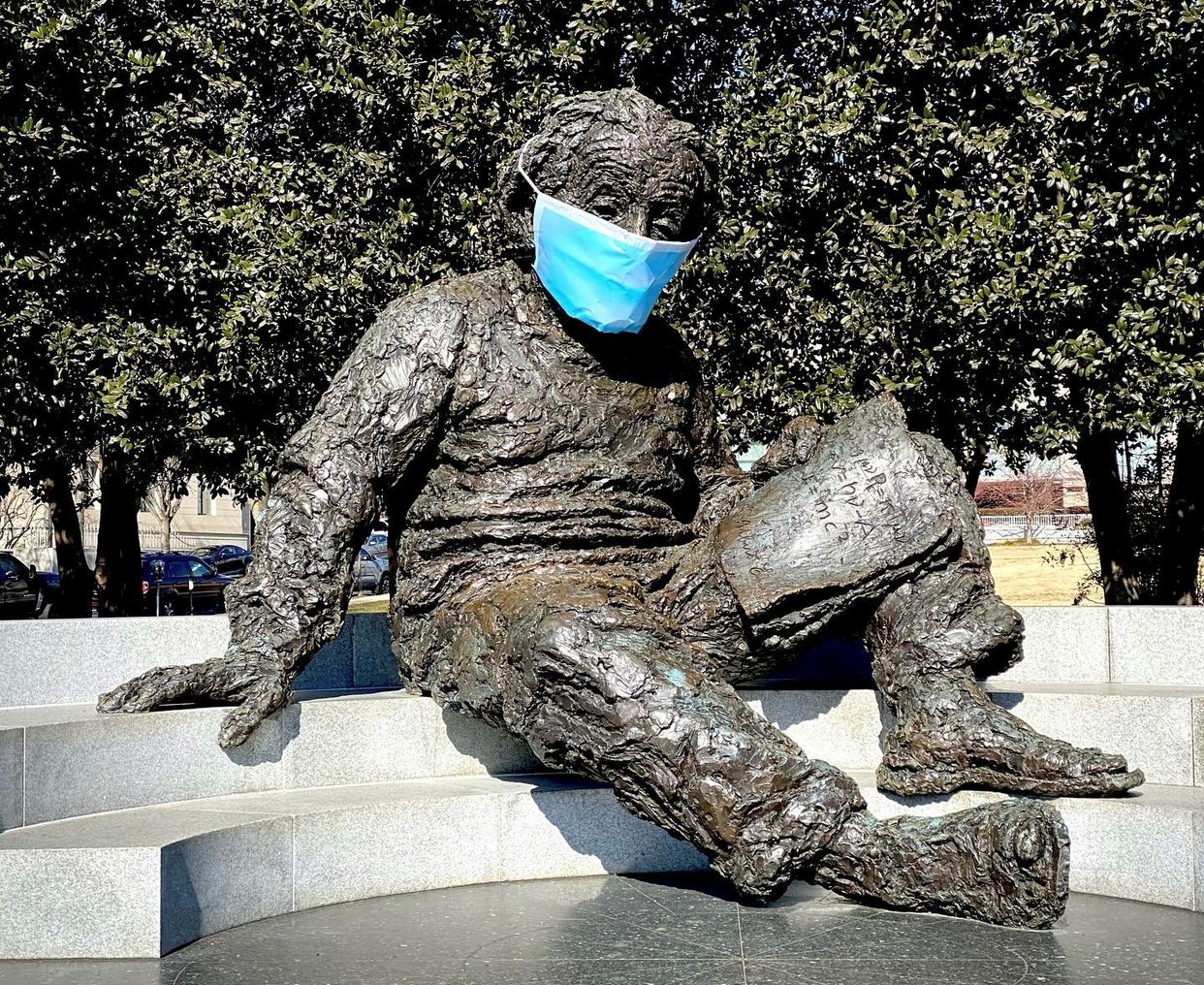
In late 2020 and early 2021, the National Academy of Sciences fabricated a large mask for the Einstein Memorial to promote the wearing of masks to reduce the spread of COVID-19. Visitors were encouraged to post images of themselves wearing masks with the hashtag #MaskUpwithEinstein
An event exploring questions that have arisen during the co-created ASU Humanities Lab “ArtScience: COVID Responsen (link is external)” and over the past year in considering and experimenting with how to respond to COVID. Selecting from questions posed to or by students during the Lab, as well as those that remain unanswered –or perhaps unasked– we will discuss the challenges of how we determine truth and trust; how we identify or anticipate implications for policy, education, and creative collaboration; in what ways art and science address what is known and unknown. How does COVID require taking creative leaps in science and art, how can we “toggle between rigor and wonder”, and where can we find hope and healing pathways while responding to a health crisis we are still experiencing. Dr. Hartwell, Nobel Prize Winner, Center Director and Professor of the Biodesign Pathfinder Center Website: https://biodesign.asu.edu/leland-hartwell Dr. Hartwell led a research team at the Department of Genetics, University of Washington using cell biology and genetics to investigate how yeast cells divide from 1968 to 1997. They discovered two cellular pathways that are integrated by an overall control point regulating cell division and a signaling pathway that arrests cell division in response to DNA damage. Dr. Hartwell is a member of the National Academy of Sciences and he received the 2001 Nobel Prize in Physiology or Medicine. Other honors include the Albert Lasker Basic Medical Research Award, the Gairdner Foundation International Award, the Alfred P. Sloan Award in cancer research, and the Genetics Society Medal of Honor. Diana Ayton-Shenker, CEO of Leonardo/ISAST (International Society of Arts, Science, Technology) Website: https://leonardo.asu.edu/content/diana-ayton-shenker Diana Ayton-Shenker, is an award-winning social entrepreneur who connects and convenes key partnerships, resources and capital for positive global impact. She serves as the Executive Director of Leonardo’s partnership with ASU, where she is Professor of Practice jointly appointed with the School for the Future of Innovation in Society (SFIS), and the Herberger Institute of Design & Arts’ School for Arts, Media, & Engineering. Diana is also founding CEO of Global Momenta(link is external), philanthropic strategy and social innovation firm, and the Global Catalyst Senior Fellow at The New School, where she recently collaborated with XReality Center and her partner-husband, artist William T. Ayton, to produced New Babel(link is external), the largest A.R. (Augmented Reality) public art installation of its kind (Union Square, NYC).
Additional Details
Held on 23rd March 2021 at 15:30pm Arizona Time / MST.
RESPIRATION:RESTORATION is a project that began by recognizing that if the problems of police violence, pandemics, and the climate crisis are connected, then the solutions must be connected as well. Creating more green spaces with plant life leads to cleaner air. Connecting to local food source-”including our own backyards or community gardens-”reorients us towards reciprocity with non-human relatives. Defunding militarized racist police means refunding investments into Indigenous land sovereignty and stewardship, public parks, gardens, libraries, and services for the people. These solutions begin to transform an extractive and exploitative economy into a sustainable and regenerative culture. RESPIRATION:RESTORATION is an ongoing invitation to breathe together. The opening performance of music for mutual flourishing began on Saturday, September 26, 2020, when music collective Spooky Action Labs created music featuring PlantWave—a technology that converts the electromagnetic waves of plant life into musical sounds. The act of listening to plants as creative musicians encourages a radical shift in consciousness: the realization that these beings who provide us with oxygen have their own messages to share. This initial performance launched a multimedia webpage at www.makaracenterarts.org, creating a source of art and educational resources related to these intertwined themes. An ongoing call for submissions by nonprofit organization Makara Center for the Arts is now exchanging free plants for art works, creative responses and/or educational resources from members of local communities, prompted by the following question: What does it feel like to breathe in a world without police violence, pandemics, and climate disasters?
Mason is engaging with our students and community by highlighting the scholarly work of our faculty through the lens of the ongoing coronavirus pandemic. UNIV 391: COVID-19 and the Mason Impact is a free one-credit course offered to Mason students this summer, and each presentation is also being shared with the public. During each session, a different Mason faculty or staff member is featured and leads conversational presentation about an aspect of COVID-19 that has intersected with their scholarly work. The recorded presentation is posted below for the general public after the live session is completed.
Mobile Projection Unit presents new, experimental, site specific outdoor projected video works throughout Portland by use of a mobile studio. This studio provides a cohort of new media artists tools, software, mentorship, and access to outdoor spaces in order to create and present these works to a public audience. The cohort pairs moving image artists with video mapping programmers to collaborate on works that use the city scape as its canvas. Fernanda D’Agostino and Sarah Turner are the co-founders of the Mobile Projection Unit (MPU). We began the project as a way to bridge the digital divide and to provide BIPOC artists with the means to exhibit their work at a monumental scale and to reclaim cityscapes impacted by gentrification. Both of us are artists and also occasionally present our own work through the MPU platform. Creative coding using Isadora allows us to create works that incorporate viewers presence into the work. Digital mapping using Mad Mapper allows us to occupy city spaces in ways that complicate the narratives habitually attached to them. Since the limitations that have been placed on everyone by Covid our practice has shifted to include support of the BLM movement and other social justice initiatives both through curated programs and by volunteering our gear and technical expertise to other initiatives. As quarantine loomed we geared up by buying an FM transmitter which allows us to host both drive in and walk up screenings. Our most recent drive in screening was guest curated by Ariella Tai a black media artist and film scholar. One way we’ve responded to our societal crisis has been providing a platform that allows people to gather safely outdoors in public for a shared experience. The other has been amplifying the voices and visions of historically marginalized communities. Some of the technology that makes this possible is cutting edge, some of it is turning to old school analog technologies uniquely suited to this time. Nimbleness characterizes our approach to both technology and our curatorial vision.
Liminal Performance Space is an arena for remote performance creation and exhibition created by video installation artist and creative coder Fernanda D’Agostino, using the coding platform Isadora. Fernanda was a Beta tester for new units of code developed by Mark Coniglio at Troikatronix in Berlin, that permit Isadora users to input live video from SKYPE or other NDI based online meeting platforms. Live video feeds via SKYPE allow collaborators prevented from meeting IRL to come together to create new work that pushes the boundaries of what remote spaces can be. In some cases my collaborators and I have been separated by oceans and days of the week. The intention is to use the restrictions of quarantine to open up and explore new ways of working together that cross boundaries of time, space and cultures. My work pre-Covid was in interactive sound and video installation. My history is as a performance artist and from that history springs my interest in creating spaces that viewers can interact with both digitally and by touch, movement, meals within the space etc. I’m also a frequent collaborator with dancers and other performance artists. I see the Liminal Performance Space as yet another interactive performance installation space in the series I’ve been creating for many years. There are fourteen distinct “rooms” within the space all with different coded effects and potential interactions. Most are activated by the movements of digital visitors to the space. Some are sound activated. Some allow visitors to manipulate sound or streams of particles by gesture. The showcase I have submitted is one of three experimental collaborations to date. Aside from The Kusanagi Sisters, (Tokyo) I’ve collaborated with Yunuen Rhi (Los Angeles and Mexico City) and the In/Body collective, (Portland, Oregon.) Interesting to me is how experienced performance artists will explore the properties of the different “rooms” and quickly discover creative acts the code permits that I did not fully anticipate.All the scenes in the Kusanagi Sister Showcase were created within one hour long session. The only post production was for me to cut our conversation between exploring each “room” and fine tune where the sound cuts in and out. All the effects you see in these clips happen in real time in response to the performers. Most of those performers quickly fall into a state of reverie and when working in duets into a heightened sense of awareness of “the other,” of scale, and of the potential within each “room’s” transformational properties. I’m currently working on a fourth collaboration, with artist/critic Pat Badani, where the role of both written and spoken language will be more central. That is an area of coding I am just now exploring and I’m sure I will be stretched by our work together. Keep an eye out for that work in the future as we plan to submit that as a distinct project.
Inspired by spending extended time in lockdown due to the pandemic, Ceremony Shadows is a dark ambient electronic music project. I’m currently releasing a few tracks that are part of a forthcoming album and live experience titled “Inception, Bloom, and Decline”, chronicling my creative cycle during lockdown.
The Plague Nerdalogues is a video series curated by podcast host and television writer-producer Marc Bernardin, which features a roster of actors who’ve worked in the nerd space doing something they’re all intimately familiar with: self-taping monologues. These monologues are from beloved geek films and TV shows. The monologues were viewable only after making a donation, first to No Kid Hungry, then to Black Lives Matter.
Additional Details
The Plague Nerdalogues began in May 2020 as a way for actors of all stripes to flex their geek muscles during a specific moment in time: The two-pronged assault on the status quo by the coronavirus and the uprising against systemic racism. Those performances — nerd actors doing monologues from beloved nerd media — were used to raise money, first for No Kid Hungry, then for Black Lives Matter.
The intent was always to make these monologues available to the public, free of charge, after a certain amount of time … and so we are.
Brandon Ballengée / University of Houston’s Cynthia Woods Mitchell Center for the Arts
In his newsletter of April 2021, Brandon Ballengée wrote:
Since last fall, I have been an Artists-in-Residence at University of Houston’s Cynthia Woods Mitchell Center for the Arts. Here I have been working on a new series entitled VII.
VII explores Houston’s urban species through the lens of VII deadly vices (unsustainable practices) and VII cardinal virtues (sustainable actions) in relation to the COVID-19 epidemic (a zoonotic disease thought to be brought on by environmental degradation).
Kindness, 2020-2021, unique Giclée print, 44 X 33.5 in.
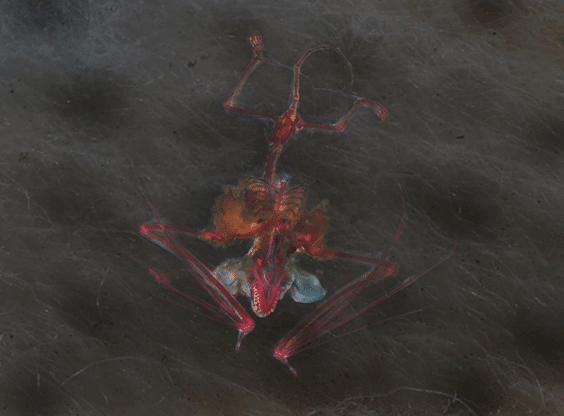
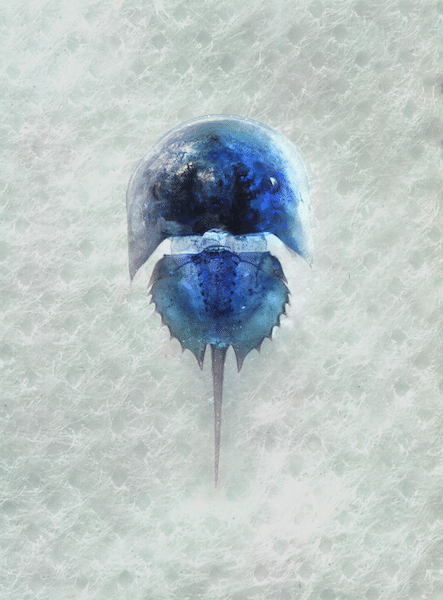
In total 14 species are depicted, each telling the story of ecosystem functionality through their population health and numbers, or lack thereof. For example, some species represent degradation and loss such as the Atlantic horseshoe crab, a species vital to modern medicine because of its use in antibody testing, but which has been missing from Texas waters since the 1990’s. Others offer a message of hope because they have rebounded such as Big Brown bats, one of several bat species found in Houston with stable populations.
Humility, 2020-2-21, unique Giclée print, 44 X 33.5 in.
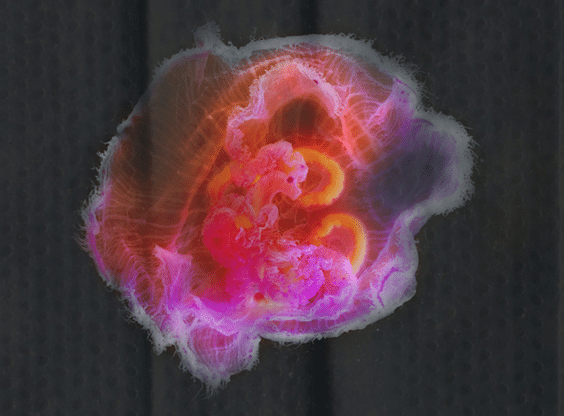
Some species reflect adaptation to environmental challenges such as the hybridization of Gulf and Atlantic killifish populations in the Houston Ship Channel that have become resistant to pollutants, or the Moon jellyfish “infesting” Galveston bay as they can thrive in low-oxygen waters and are tolerant to petrochemicals.
Sloth, 2020-2-21, unique Giclée print, 44 X 33.5 in
Symbolically, each of these species has a story to tell about environmental virtue or vice and such stories are increasingly relevant as they relate to the current COVID 19 pandemic and overall human health. COVID-19 is a zoonotic disease, one which has passed from non-human animals to humans to create the largest global pandemic in modern history. Although diseases are natural, the transmission of Coronavirus from animal to human due to wildlife trade as well as its rapid global spread can be considered preternatural. Moreover, COVID-19 as well as 60% of emerging infectious diseases have recently been described as symptomatic of environmental degradation.
Following this logic, our treatment of ecosystems may be seen in terms of good (virtues moving towards sustainability) or evil (vices, selfish acts of consumption moving us closer to environmental collapse). Furthermore, actions of environmental virtue decrease our risk of zoonotic disease, while behaviors of environmental vice increase our risk.
For VII, I individually photographed natural history specimens to create portraits and used photoshop to juxtapose these depictions onto high-resolution scans of PPE masks worn during my time in Houston. They were then printed at a scale to recall human children, a size that is familiar and not threatening, to draw us towards instead of away from the image, so that we may further think about how we approach ecosystems and other species, systems that are important to our survival yet to some are not considered, while being cherished by others.”
Brandon Ballengée (American, born 1974) is a visual artist, biologist and environmental educator based in Louisiana.
Ballengée creates transdisciplinary artworks inspired from his ecological field and laboratory research. Since 1996, a central investigation focus has been the occurrence of developmental deformities and population declines among amphibians. In 2001, he was nominated for membership into Sigma XI, the Scientific Research Society. In 2009, Ballengée and SK Sessions published “Explanation for Missing Limbs in Deformed Amphibians” in the Journal of Experimental Zoology and received international media attention from the BBC and others. This scientific study was the inspiration for the book Malamp: The Occurrence of Deformities in Amphibians (published by Arts Catalyst & Yorkshire Sculpture Park, UK) and a solo exhibition at the Royal Institution of Great Britain (London, England: 2010). From 2009 through 2015 he continued his amphibian research as a Visiting Scientist at McGill University (Montréal, Canada) and, in 2011, he was awarded a conservation leadership fellowship from the National Audubon Society’s TogetherGreen Program (USA). In 2014 he received his Ph.D. in Transdisciplinary Art and Biology from Plymouth University (UK) in association with Zürich University of the Arts and Applied Sciences (Switzerland). In 2015, he was the recipient of a fellowship from the New York Foundation for the Arts (NYFA).
Burko writes, “working on multiple projects, with various combinations of materials, using images from past and present – reflecting my personal struggle as I vacillate from a sense of morass/anxiety to a struggle to hold onto hope for a more positive future – sharing such with fellow creatives for mutual support.”
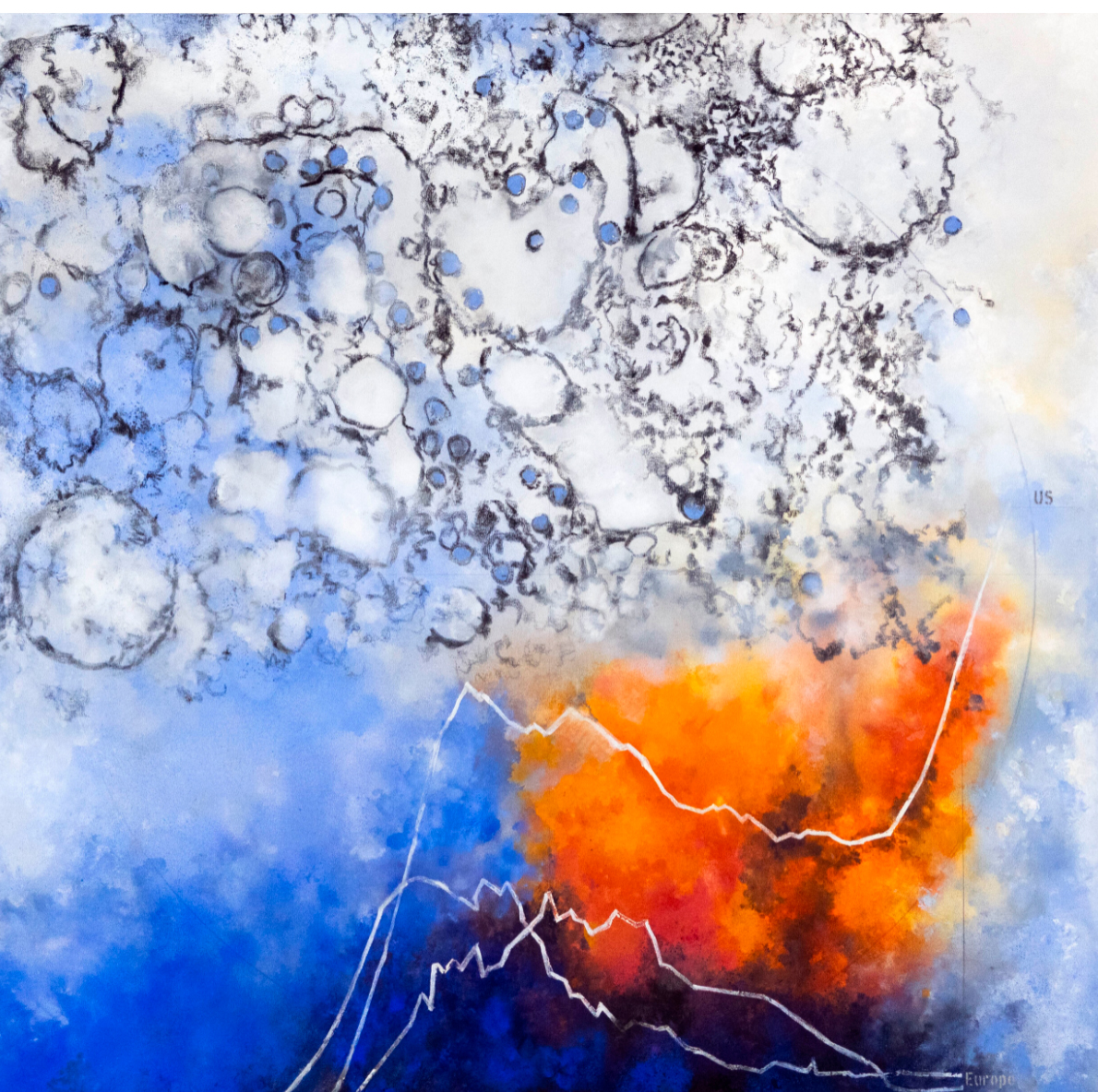
Diane Burko, July 2020, Mixed Media on Canvas, 60″X60″, 2020
All the pieces here were made between March and July 2020, so they were all shaped by the extraordinary events of the past few months. The beginning of 2020 was marked by a growing anxiety about the pandemic which was taking shape in Asia and Europe. Life went on somewhat normally here in DC, except for the swelling sense that the pandemic would soon arrive here and that we were not prepared. All I could think about was coronavirus, so that’s what I painted dozens of ink paintings of the pathogen that was suddenly the focus of the whole world’s attention. When lockdown was imposed in mid-March, normal life came to an abrupt halt. All my art exhibitions, science meetings and trips were canceled. I stayed home as instructed, only going out for long daily walks around my neighborhood. I’ve lived in DC for more than 20 years, and this was the first year I was unable to see the cherry blossoms at the Tidal Basin. Fortunately, there are some cherry trees in Rose Park, near my home. And by visiting those trees daily, instead of seeing a dramatic, once-a-year show, I witnessed the gradual transformation of the trees, from bare branches to buds to blossoms to fruit – tiny, inedible cherries, but fruit nonetheless! The tree paintings reflect this loss and gain: the trees under strain, but standing, flowering, producing; the roots digging deep and seeking nourishment and connection. The Mandala, Vessel, and Connectome paintings explore similar themes enclosure, isolation and connection expressed as neurons, blood vessels, roots and branches, and the patterns of contact-tracing diagrams. And then, into this time of anxiety and isolation but also of quiet contemplation, came the murder of George Floyd, unleashing a torrent of rage and grief across the country and through my city. The Trauma Brain paintings are a piece of my response to the other epidemic we confronted this year – police brutality. Finally, as the epidemic worsened in the US, I painted “Covid Lungs,” which is a sad, simple reflection on illness and death.
Michele Banks, Indigo Coronavirus, Ink on Yupo, Spring 2020, Collection of the National Academy of Sciences
We have adapted our Joy of Creative Engagement program to an online format to reach the affected population of isolated caregivers and their senior clients.
We teach caregivers how to use music and storytelling with seniors who may suffer from memory impairment, depression, and feelings of isolation during the COVID-19 pandemic.
Eras are divisions in the geographic time scale. I declare a new era, a post-Coronavirus paradigm, the Blue Era. We have entered it in isolation together, social distancing and with muffled voices behind face masks, with a chance for a reboot: life 2.0 I envisioned that humanity was going over a blue line, a blue linear portal set against clean, sunny blue skies. Stepping into an idyllic post coronavirus landscape, joyfully, children holding their parents hands, skipped over the blue line, en mass. Humanity was moving in unison towards a healthy new coexistence with each other and the planet. In less than six months at a global scale, and right at four months at a national scale, a pandemic has shifted our footing, and the Blue Line has formed, in the form of a portal. We have stepped through that portal to find our freedom of choice intact. The choice should be clear: recommit to caring about people, public health, education, clean waterways and oceans, animals and nature; towards a unified human race and a needed respect for the planet. To question, imagine, invent, reinvent, the world on the other side of my blue line is up to each one of us. It’s a rebooted landscape, where we can look at coexisting and connecting, with each other and with the planet. Our freedom of choice and collective power goes well beyond politics, or presidents. We are nimble, inventive, indefatigable, curious, creative, hardworking. We are survivors. My project, The Blue Line, is an artistic wormhole. The Merriam-Webster definition of the Eistein-Rosen wormhole is “a hypothetical structure of space-time envisioned as a tunnel connecting points that are separated in space and time.” The Blue Line is a giant portal of public art in every park, urban plaza, community. It marks the new awakening of the world. For me it’s a printmaking project on paper; its an installation of public art that will begin with a blue line in my neighborhood, with an explanation of the concept, for pedestrians to engage with and cross. It’s an installation that is reproduced in other’s front yards, to build consciousness about the opportunity that we are waking up to. It’s an installation inside or outside of white cubes for art, it’s a giant portal for public art in every park, urban plaza, and community. This is my moment as an artist, a woman, a human. I’ve crossed the line and am not looking back.
Virtual REU Site: Neurotechnologies to Help the Body Move, Heal, and Feel Again
Jose Contreras-Vidal / university of Houston
In response to the need for social distancing and campus closures, we converted our NSF Research Experiences for Undergraduates (REU) Site to a Virtual Experience to support the research, social and creativity needs of talented students from around the nation.
Yoko Ono Inspired Scores (In the time of COVID-19)
Jennifer Karson
After an introduction to the work of Yoko Ono through examples from her book “Grapefruit” and watching the film “Above Us Only Sky” students (receiving our class teachings through remote learning and quarantined in their homes) created unique written scores and then engaged their communities of friends and family to act out the scores written by their peers in the class. Sometimes they distributed the scores to their roommates and sometimes they did it over Microsoft Teams to distant friends and family. Participants included grandparents, parents, siblings and roommates – many who had previously little exposure to the work of Ono or this strain of contemporary art.
STEAM challenges designed for my grandchildren, but adaptable to many age groups. Intended to stimulate creative and critical thinking, and problem-solving skills. Blog was taken on and promoted by Leonardo.
Vaccines & US: Cultural Organizations for Community Health
Smithsonian
Everyone has a right to accurate and trusted information, especially around health. Vaccination affects you, your family, and your community.
The Smithsonian has collaborated with cultural organizations in communities across the nation to create Vaccines & US. The resources here will help you make an informed decision about COVID‑19 vaccines and help you discuss the vaccines with your family, friends, and community.
By sharing the science, history, and cultural impact of infectious disease and vaccines, we hope to build understanding of our current moment, where we’ve been, and where we go from here.
With the COVID-19 outbreak, many sociopolitical issues are becoming even more apparent. One of them is the dodging of responsibilities and shifting blame to government officials. It reflects the problem of our current sociopolitical mechanism and has been one of the causes of this pandemic’s out-of-control spread. The action of dodging responsibilities is called “甩锅” in Chinese, which literally means “tossing a pan.”
This whole toss-pan comedy has been played between the central government and local government, in China, the United States, and many other countries.
To inform, criticize, and warn fellow citizens, I made this Toss Pan Dance.
Since we are social distancing and in self-quarantine at the moment, Toss Pan Dance is also a very good exercise. You can easily do it at home without a gym. The equipment is right in the palm of your hand!
The music is made by typing on the computer: “abcdefg” on a Mac keyboard is mapped to notes on the piano keyboard.
This dance went viral on the Chinese internet. #tosspandance #甩锅舞
Huang Hung, “the Oprah of China,” used this dance to explain “Toss Pan” in her TED Talk on “how American and Chinese values shaped the coronavirus response.”
Additional Details
Working at the intersection of emerging technology, art, and design, Li Jiabao creates new ways for humans to perceive the world. She works across nature, humans’ designed environment, and belief structures and creates works addressing climate change, humane technology, and a just, sustainable future. Her mediums include wearable, robot, AR/VR, projection, performance, software, and installation.
In Li’s TED Talk, she uncovered how technology mediates the way we perceive reality. At Apple, she invents and explores new technologies for future products. She graduated from Harvard Graduate School of Design with a master of design in technology with a distinction and best thesis award.
Li is the recipient of numerous awards, including iF Design Award, NEA, STARTS Prize, Fast Company, Core77, IDSA, AACYF 30 Under 30. Her work has been exhibited internationally, at Ars Electronica, SIGGRAPH, Milan and Dubai Design Week, ISEA, Anchorage Museum, Codame, Primer, OCAT Contemporary Art Terminal, CHI, Donghu Shan Art Museum. Her work has been featured on Yahoo, TechCrunch, Domus, CCTV, Yanko Design, Fast Company, Harvard Political Review, The National, Business Insider, Bloomberg, Leonardo, and South China Morning Post.
National Academy of Engineering (NAE) President John Anderson sat down to talk about some of the engineering challenges posed by the pandemic and how engineers — and the NAE in particular — are working to meet them.
Troubleshooting the Pandemic – Engineers Pitch Innovative Solutions to Help Address COVID-19
National Academies
While the world waits for a vaccine to prevent COVID-19 infection, international and multigenerational teams of engineers have come together through the National Academy of Engineering’s COVID-19 Call for Engineering Action to find creative solutions to problems caused by the pandemic. Their ideas aim to prevent the spread of the virus, help people most at risk, and make life easier under social distancing protocols.
“This is why the NAE was created — to bring creative engineering expertise to bear in order to address vital needs of society,” said John L. Anderson, president of the National Academy of Engineering, during the first pitch showcase of the Call for Engineering Action last week.
The Call for Engineering Action was launched to facilitate crowdsourcing and brainstorming of ideas that could protect public health and the economy during the pandemic. The initiative has attracted individuals ranging from university-level students enrolled in NAE Grand Challenges Scholars Programs to seasoned engineers and other experts. This first showcase consisted of five teams pitching their concepts to an Expert Review Committee of NAE members who provided feedback and advice on how best to advance the ideas that were presented.
Designers from around the world are putting forth rapid-fire creative solutions for battling COVID-19 and its aftermath. Here are some of the most noteworthy so far—from pop-up clinics to morale-boosting posters
In light of the COVID-19 Pandemic and restrictions placed upon public gatherings that will continue for many months, Theater of War Productions has retooled as a company to produce dynamic online performances and discussions, in the style of its live events, aimed at addressing the unique challenges posed by the Pandemic in diverse communities throughout the world. The goal of these performances will be to create free, easily-accessible opportunities for people struggling in isolation with trauma, loss, illness, and distress to communalize their experiences with others who share them, while accessing local and national resources and information. The COVID-19 Pandemic demands bold and decisive action in order to meet the needs of thousands of people who may have few outlets during this period of quarantine and isolation to engage with others in healing dialogue.
Theater of War Productions is in a unique position to take such action, by presenting its projects for large, diverse audiences online. At present, Theater of War Productions has more than twenty-five projects that address pressing public health and social issues, such as domestic violence, suicide/depression, alcohol and substance abuse, end of life care, eldercare/dementia, and the challenges of witnessing suffering—all issues that have been intensified and exacerbated by the COVID-19 Pandemic. In addition to offering these existing projects online, Theater of War Productions is developing several new projects born out of the needs of individuals, families, and communities during the pandemic.
Between March and September 2020, the Boston University Arts Administration compiled this list of media articles that chronicle the impact of the pandemic on the sector and the creative responses of the field. We are currently conducting a longitudinal research project with ArtsBoston to track the career outcomes of professional arts managers who were employed at a large sample of Greater Boston arts organizations at the time the pandemic hit in February. We will post the results of that study at regular intervals as they become available.
How COVID-19 accelerated change in design and arts education at ASU.
Liz Cohen wasn’t eager to teach online. The Guggenheim-winning associate photography professor, who considers herself a people person, didn’t think it was for her.
When COVID-19 happened, Cohen threw herself into figuring out “how to use this (ASU Sync) platform in ways that are interesting.”
To her surprise, she said, “I like it. COVID has taught us something — not that I’m going to give COVID too big a pat on the back.” She appreciates the “dynamic relationship” between herself and the students — “there’s banter, and everyone’s engaged”—and she likes the ease and convenience of teaching via ASU Sync.
The Conversations program offers screenings followed by inspiring Q&A’s with leading actors and casts, as well as Career Retrospectives with preeminent actors who explore the process and profession with an audience of fellow artists. Conversations focus on personal experiences and artistic influences that inform and shape careers; discuss current and past projects; share valuable insights into the craft and industry; and preserve creative legacies.
Due to the pandemic, a Conversations at Home series has been initiated.
This Too Shall Pass: Creativity in the Time of COVID-19
The Science & entertainment exchange with Cultural programs of the national academy of sciences
This Too Shall Pass: Creativity in the Time of Covid-19 is a series of online discussions organized by Cultural Programs of the NAS and by the Science & Entertainment Exchange to explore creative responses in all disciplines to the pandemic.
Programs included:
July 1, 2020 Claudius Conrad, Andrew Janss, and Indre Viskontas
August 5, 2020 Clifford Johnson, Mike Smith and Molly Webster
October 2020 Lauren Gunderson, Deric Hughes, and Kevin O’Brien