
Perspectives on Science’s “Social Contract”
Over four decades, Issues has hosted many articles discussing science’s “social contract”—the idea, as physicist Harvey Brooks articulated it in 1988, that the scientific enterprise would provide “social benefits in exchange for an unusual degree of self-governance and financial support free of strings.” Today, this contract is clearly defunct: The federal government has cut funding for science, cast doubt on scientific findings, and prioritized investment in research outside the university system. Whatever the future of federally funded science is, it’s no longer “free of strings.” As the scientific enterprise tries to decide how to respond, it first needs to figure out what happened.
This collection is part of an exploration of science’s social contract that is generously supported by The Kavli Foundation, Rita Allen Foundation, and Dana Foundation.

April 29, 2026
A Science Funding System Beyond the Linear Model
To improve the relationship between science and the public, funders should embrace a new ontology of scientific work that aligns incentives with society’s goals.
All Posts in this Collection
-

September 02, 2026
Is It Time to Say Bye-Bye to Bayh-Dole?
Even though the 1980 Bayh–Dole Act is widely considered a success, the modern research enterprise operates under new tensions that the legislation was not built to address.
-
July 17, 2026
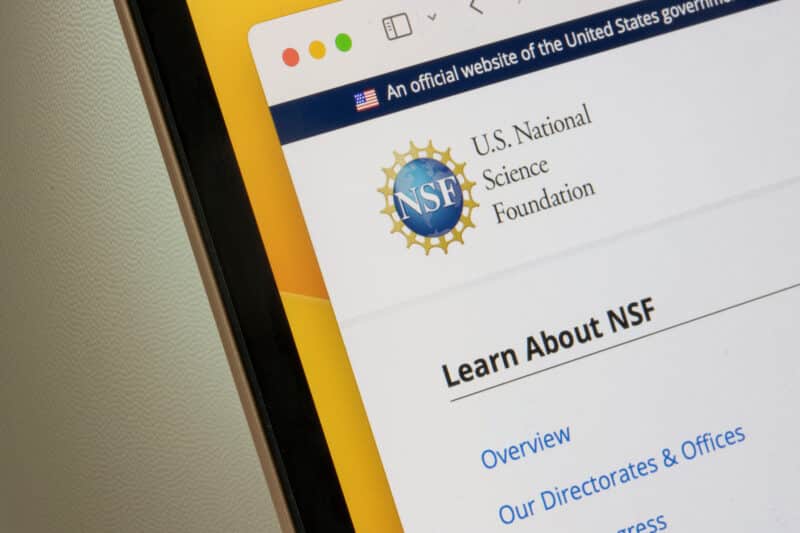
Who Should Decide How to Use Taxpayer Dollars to Fund Scientific Research?
After the firing of the National Science Board, legislators have an opportunity to establish a new balance between democratic accountability and protection from partisan meddling.
-

June 08, 2026
Merton Redux: Re-Confronting the Norms of Science in Democracy
Although public attention is focused on the federal government’s efforts to slash funding for scientific research, the decimation of the democratic institutional processes that undergird state-sponsored scientific research is far more consequential.
-

April 15, 2026
How the American Research University Survives
University leadership needs to shift attention from chasing prestige to crafting strategies for long-term success.
-

November 20, 2025
Discussing Science’s “Social Contract”
If the public funds science and gives it autonomy to govern itself, then benefits such as economic growth, innovation, and national security will follow. This unwritten social contract was long thought to underpin policymakers’ relationship to the scientific enterprise, but recent events suggest those days are over.
-

October 22, 2025
No Longer Free of Strings
Why has the idea of an implicit social contract between society and science had a hold on scientists’ imaginations for so long? And what does it mean now that the relationship has frayed?
-

July 09, 2025
It’s Time for Universities to Redesign Their 75-Year-Old Contract
American research universities have unleashed an age of massive technical innovation—but they’ve failed to innovate their own designs to meet the changing needs of society.
-

January 03, 2023
“The More Inclusion We Have in Science, the Better Outcomes We’ll Get.”
Congresswoman Eddie Bernice Johnson spent five decades in public service, during which she ushered through landmark science and technology legislation and helped to advance opportunities for all Americans.
-

October 19, 2021
“Science and Technology Now Sit in the Center of Every Policy and Social Issue”
Alondra Nelson, the first deputy director for science and society in the White House Office of Science and Technology Policy, talks about “a new social compact for science and technology policy” that would make innovation more inclusive and equitable, reckon with the nation’s past, and use social science to improve policymaking.