
A Vision for America’s Next Era in Space
For more than half a century, the United States has pushed the boundaries of exploration beyond Earth. From Mercury to Apollo to the International Space Station, our progress in space has never been accidental. Rather, it has been the result of deliberate strategy, sustained investment, and a national commitment to science, technology, and human ingenuity.
Related Reading
Today, that position stands at a moment of transition.
Industry is advancing rapidly. Commercial actors are expanding into domains once reserved for governments. National security considerations are intensifying. China continues to advance its long-term ambitions. Within the space community itself, there are competing visions for what comes next—how quickly to move, what to prioritize, and how to balance civil, commercial, and defense interests.
At a time when so much is in flux, clarity of purpose matters more than ever. The responsibility of the House Committee on Science, Space, and Technology is to provide that clarity—through consistent authorization, disciplined oversight, and a coherent national approach that aligns civil exploration, commercial growth, and long-term competitiveness.
As chair of the committee, my priority is straightforward: The United States must remain the world’s leading spacefaring nation. But ambition alone is not enough. Maintaining the country’s leadership in space requires discipline, continuity, and a clear division of responsibilities between government and industry.
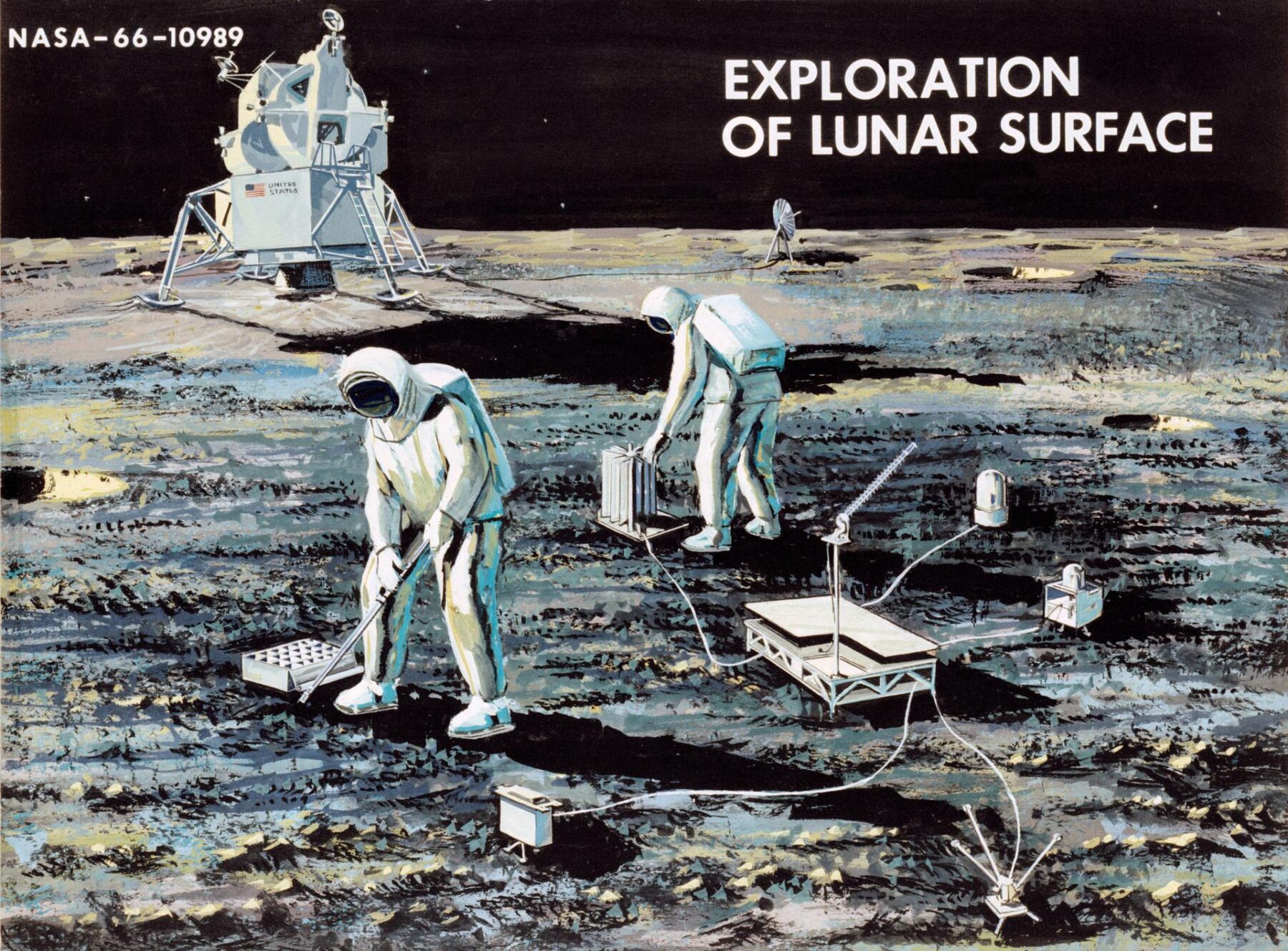
The Artemis program forms the backbone of our deep space approach. Returning astronauts to the Moon is not an exercise in nostalgia. It is a deliberate step toward building the capabilities necessary for sustained exploration. The Moon is a proving ground. Surface power systems, advanced propulsion, in-space manufacturing, and long-duration habitation technologies will all be tested there—capabilities that are prerequisites for reaching Mars.
At a time when so much is in flux, clarity of purpose matters more than ever.
The NASA Reauthorization Act of 2026, passed unanimously by our committee, reinforces this path. It provides continuity of purpose for NASA and ensures that the United States does not drift while other nations press forward. China has made clear its intention to land taikonauts on the Moon before the end of the decade. The nation that arrives first does more than plant a flag—it establishes norms, expectations, and long-term influence.
Arriving first matters.
NASA, however, cannot—and should not—do everything alone. While the agency pushes outward into deep space, the commercial sector must expand and mature closer to Earth. The International Space Station has anchored our presence in low-Earth orbit (LEO) for more than two decades. But the future of LEO will increasingly be commercial. NASA should focus its resources on exploration beyond Earth orbit while private companies build and operate commercial stations, provide in-space services, and expand orbital infrastructure.
This is not privatization for its own sake. It is a disciplined division of labor. Public-private partnerships such as NASA’s Commercial Crew Program and Commercial Lunar Payload Services have demonstrated how private-sector innovation can accelerate exploration goals while reducing long-term costs.
Reinforcing that commercial foundation strengthens the entire architecture of our space enterprise and improves resilience across the system. Our forthcoming commercial space legislation will build on that framework. As I have said before, we can either be tethered to Earth by red tape while competitors move ahead or we can act decisively. We must choose action.
Equally important, NASA’s strength lies in its breadth. It is not solely a human exploration agency. Science, aeronautics, and technology development are foundational capabilities that enable everything else. Investments in propulsion, lunar surface power, next-generation aircraft, and breakthrough science missions ensure that the United States retains technological depth and flexibility. Exploration, research, and innovation reinforce one another and underpin national strength.
Science, aeronautics, and technology development are foundational capabilities that enable everything else.
The competitive dimension cannot be ignored. China has expanded its capabilities across the board—from lunar ambitions to LEO operations and reusable launch systems. Long-standing US preeminence in space cannot be assumed. It must be maintained—and earned again in every generation.
If the United States hesitates, other players will determine how activity beyond Earth is governed. Those decisions will influence commercial access, international partnerships, and security architecture for years to come. Continued US engagement ensures that expansion beyond Earth reflects principles that have long defined this nation—freedom, accountability, the rule of law, and opportunity—not coercion or control.
The stakes extend far beyond prestige. They touch our economic strength, our technological edge, workforce development, and national security. Space is not a luxury or a side endeavor; it is a strategic domain that will influence the global balance of power in the years ahead.
When history looks back on this decade, it will not measure us by the debates we had, but by whether we had the resolve to act. Did we invest in the capabilities necessary to secure America’s position? Did we remove barriers that held back innovation? Did we provide clear direction and the stability that our space program and commercial sector require to thrive?
Space is not a luxury or a side endeavor; it is a strategic domain that will influence the global balance of power in the years ahead.
America must lead—not for symbolism, but for principle. Setting the pace allows us to ensure that humanity’s expansion into the solar system reflects the enduring values of a free people and the entrepreneurial spirit that has always driven American progress.
This moment is not simply about returning to the Moon. It is about shaping the trajectory of American innovation for decades to come—and ensuring that the frontier ahead reflects the character of the nation that first walked upon it.
The engineers, scientists, entrepreneurs, and innovators across this country are ready. The talent is here. The ingenuity is here. What is required now is direction, stability, and resolve from those entrusted with governing.
The path forward is clear. The sky is not the limit, but merely a threshold. And the responsibility—firmly and unmistakably—is ours.