
Addiction Revisited
Review of
What Is It Like to Be an Addict? Understanding Substance Abuse
New York, NY: Oxford University Press, 2025, 320 pp.
On Addiction: Insights from History, Ethnography, and Critical Theory
Durham, NC: Duke University Press, 2024, 200 pp.
My go-to exercise is biking outdoors, delighting in the sights and sounds of early morning. When inclement weather keeps me indoors, I make do with an exercise bike. It gets the cardiovascular job done even if it’s not much fun; to stay motivated, I watch movies. Recently I watched the film adaptation of Evelyn Waugh’s novel of alcoholic dissolution, Brideshead Revisited. At the same time—by what, in retrospect, can only be a cosmic juxtaposition—I had just begun reading two books on alcoholism and addiction.
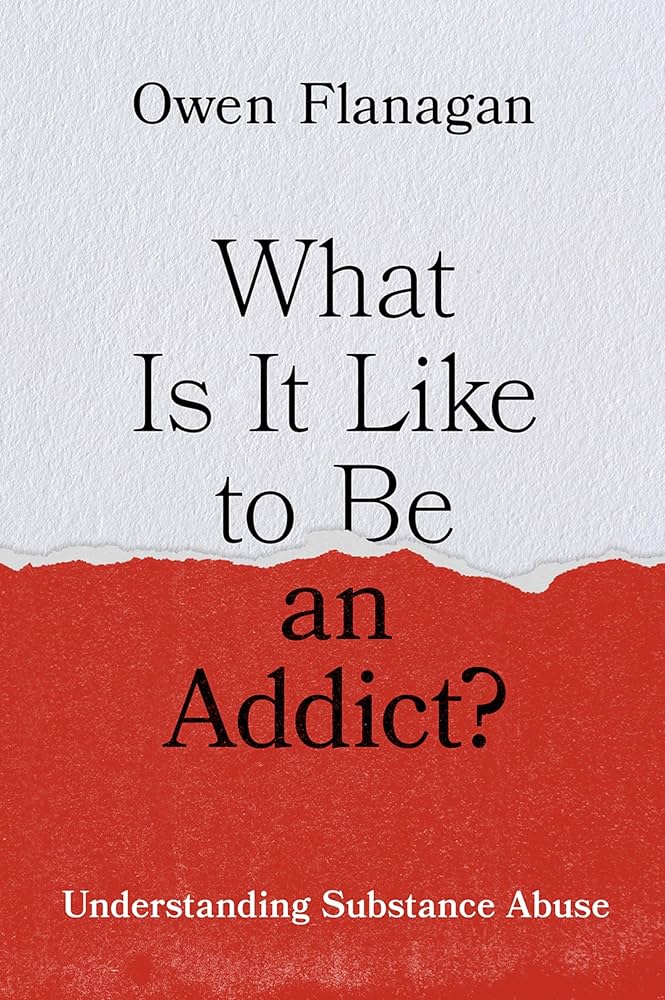
Both books are profoundly scholarly while also being deeply personal. What Is It Like to Be an Addict? by Owen Flanagan, a prominent philosopher of mind, recounts the author’s experiences with alcohol and substance addiction, intertwined with his analysis of the failures of modern-day addiction science. His critique focuses, most notably, on “addiction as brain disease,” an influential scientific movement introduced in the late 1990s. The brain disease idea argued that addiction resulted from disordered brain function, especially disrupted neurotransmitter systems and cellular metabolism, and that progress in addressing addiction would require a decidedly neurocentric approach.
On Addiction, by sociologist Darin Weinberg, is motivated by the author’s desire to cohere 25 years of his scholarship on addiction. This includes his fieldwork with addicts, particularly those in recovery programs, and his contributions to the ongoing debates within sociology on theories of addiction—contributions that offer meaningful guidance to the therapeutic community.
I expected these books to be quite different, if not in conflict. I anticipated that by reading both books simultaneously I would be challenged to consider thought-provoking departures concerning what addiction is when viewed and studied through the disparate disciplinary lenses of cognitive neuroscience, philosophy, and sociology. I was wrong.
In essence, the books share many common threads that weave an overlapping synthesis of the current state of addiction scholarship. Importantly, they identify where Flanagan and Weinberg find that such scholarship falls short. Furthermore, the two authors articulate similar goals in their rationales for why they published their books. As he notes in his preface, Flanagan’s motivation is to provide readers with a comprehensive and informed explanation of what substance addictions are, based on the best philosophy and science; he then uses that explanation to inform a more humane and sensible ethics and politics of addiction. In turn, Weinberg describes his purpose as delineating how the different schools of thought within sociology, medicine, psychology, psychiatry, and other disciplines have atomized addiction studies, and thus failed to explain addiction or meaningfully inform how addiction therapies are designed and delivered. I found both books illuminating on this disconnect between studies and therapies. The gap between research and practice is both wide and common in biopsychosocial fields.
Complex biopsychosocial disorders cannot be reduced to a single cause, no matter how much we might wish otherwise.
Flanagan could be writing for them both when he states, “Theorists who study the genetic, psychological, social, or neural features of addiction study an aspect of addiction. One cannot claim to know, from the perspective of any single discipline, what addiction is or what causes or comprises it.” The two books convincingly argue that studying what addiction “is” asks the wrong question. Complex biopsychosocial disorders cannot be reduced to a single cause, no matter how much we might wish otherwise. This stance underlies both authors’ disagreement with the hugely influential, and in their analysis problematic, National Institute on Drug Abuse’s 2020 report, which focused addiction research squarely in the realm of brain disease.
Neither Flanagan nor Weinberg have much patience with how, in their view, academic scholars use addicts and addiction as tools for probing questions of free will, consciousness, determinism, self-control, ethics, and morality—while at the same time they seem uninterested in the lived experience of addicts and the challenges faced by the therapeutic communities seeking to help them. Both authors harshly criticize the attempt to medicalize addiction by declaring it a “brain disease,” since doing so has neither destigmatized addiction as intended nor improved addiction therapies. Perhaps most importantly, they grapple with a major point of contention among addiction scholars: the extent to which addiction results from a loss of self-control. As Weinberg writes of the essentialist position of addiction as brain disease, “How can people who are, by definition, chronically affected by a disease beyond their personal control be empowered to master this disease by participation in a therapeutic community?”
While pedaling indoors, absorbed in Brideshead Revisited but thinking about these books on addiction, I found myself increasingly focused on the aristocratic and captivating Sebastian Flyte’s descent into alcoholism. Although Flyte was always a central component of Waugh’s storyline, reading Flanagan and Weinberg heightened my sensitivity to our cultural contradictions toward individuals who use alcohol and other substances. There is hardly a scene in the movie where the drinks cart isn’t center stage. The Brideshead characters imbibe (and smoke) all the time. I began to notice, in scene after scene, that everyone spends a fair amount of time drunk (socially acceptable), but only Sebastian becomes a drunk (socially unacceptable). Despite the efforts of friends and family to help him, Flyte’s life falls apart as a result of his alcoholism. But why? Central to the question of addiction is why only a small percentage of individuals who drink or use drugs become addicts.
Central to the question of addiction is why only a small percentage of individuals who drink or use drugs become addicts.
An answer of sorts is implied by the title of Flanagan’s book. What Is It Like to Be an Addict? plays off the question posed by the philosopher Thomas Nagel in his highly influential 1974 paper “What Is It Like to Be a Bat?” Nagel argues that no matter how much detailed information one can acquire about a bat’s biology and behavior, humans can never experience what batness is really like. Likewise, Flanagan asserts, nonaddicts cannot truly know what it is like to be an addict: “Addiction … has an ineliminable subjective dimension.” We nonaddicts can know what it is like to be the friend, loved one, or caretaker of an addict, but the addict’s phenomenal experience escapes and frustrates us.
Flanagan argues—successfully, in my view—that for much of “addiction studies,” this phenomenal experience of addiction is missing. The years Flanagan spent addicted to alcohol and benzodiazepines give authority and authenticity to his insights. (Although he is unsure on “whether I was an addict or whether I am still an addict who doesn’t use,” he tellingly eschews the preferred therapeutic term “recovering.”) At the same time, Flanagan’s career as a leading academic philosopher of mind gives him an expert’s facility for describing complex problems clearly, and he demonstrates a philosopher’s surefooted reasoning when evaluating the evidence supporting the neurobiological basis of addiction.
Flanagan covers substantial personal, scientific, and philosophical ground in his valuable introductory material and the eight chapters that follow. These chapters are a mix of old and new work, and a few are difficult going despite Flanagan’s skill as a writer. Chapter 1 sets the stage, and even provides a detailed list of the ten main points of the book. In a brilliant illustration of his argument about the “ineliminable subjective dimension” of addiction, Flanagan explores the explanatory gaps between objective facts (alcohol alters membrane properties in brain cells) and the subjective experience (what is it like to be drunk?). Chapter 6, on “the shame of addiction,” should be assigned to everyone working at the interface of biology and behavior, as its deeper message about challenging common wisdom is relevant far beyond addiction.
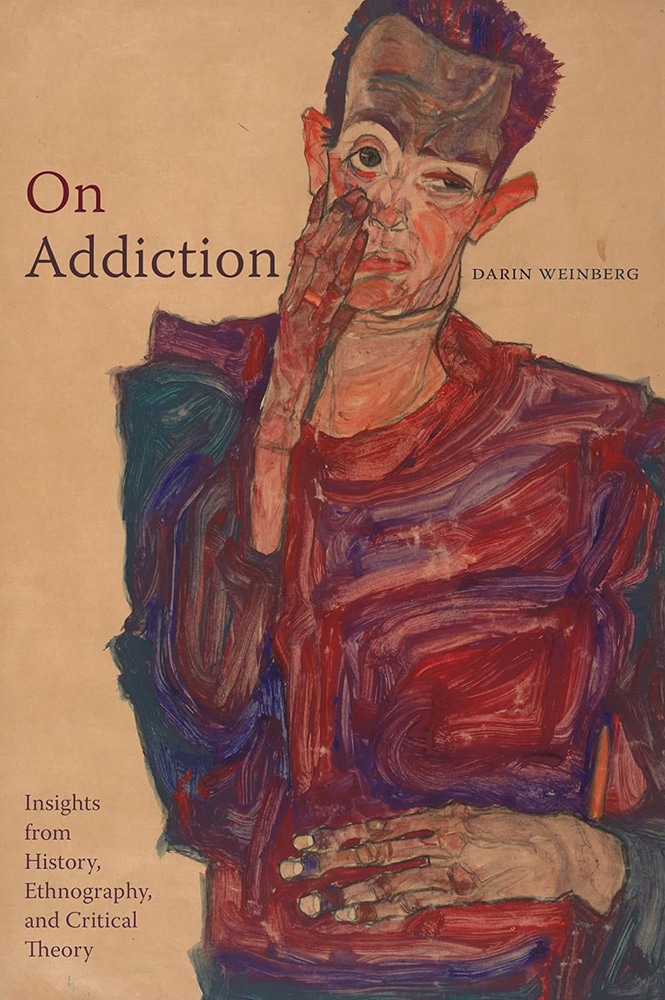
Weinberg’s seven essays in On Addiction are drawn from a quarter century of scholarship on addiction, beginning with his doctoral dissertation. Although written for fellow researchers, his prose is clear, and he offers honest, deeply personal reflections—much of it drawn from his fieldwork alongside addicts. This renders the essays accessible to readers who aren’t steeped in the jargon of academic sociology but who are eager to be intellectually challenged about their own understanding of addiction.
The essays can be read as stand-alone pieces. As is common with collections of previously published work, the reader does encounter repetition. I considered this a strength of On Addition rather than a weakness, since my unfamiliarity with some of the scholarship was helped by the introduction and reintroduction of ideas and concepts. Weinberg engages with many of the same topics as Flanagan, and for the most part any differences in their conclusions about the current state of addiction studies is of degree, not kind. Weinberg similarly explores questions around the problem of attributing everything to neurons— yielding to the contemporary temptation for neurologizing—and goes on to probe the muddled thinking around self-control in understanding addiction (that is, that addicts have lost self-control, but paradoxically the only path to recovery is through self-mastery).
At the heart of Weinberg’s essays is his willingness to engage thoughtfully with the legacy of Alfred Lindesmith. Lindesmith was a twentieth-century scholar whose theories of addiction—and arguments in favor of care and treatment for addicts rather than punishment—were widely influential, if not without controversy, in shaping sociology’s conception of addiction. One difficulty arising from Lindesmith’s work is that he advocated for treatment that focused on what “works,” rather than relying on medicalization. The problem is figuring out what works. Most addicts have limited treatment options outside self-help groups or therapeutic communities such as Alcoholics Anonymous or other “twelve-step” programs. Despite skepticism and criticism, there is evidence that these programs can be more effective than other interventions. As I see it, the advent of new pharmaceuticals, such as GLP-1 agonists or buprenorphine, do not obviate the need for access to such treatment or continued participation and commitment on the part of the addict.
In the final essay of On Addiction, Weinberg describes how, in the nineteenth century, social status determined how one’s addiction would be viewed. For a rich person, the diagnosis was “neurasthenia,” and the treatment consisted of protecting the individual from the triggering “stressors” of life. For the poor, addiction was a sign of degeneracy, and the response was to protect society from the havoc such degenerates wreaked.
Most addicts have limited treatment options outside self-help groups or therapeutic communities such as Alcoholics Anonymous or other “twelve-step” programs.
In the interwar period in which Waugh set Brideshead Revisited, the aristocratic Sebastian Flyte joins a monastic community, thus protecting himself from “stressors” while also protecting his loved ones from the havoc he wreaks on his life and theirs. Today, even as many people now perceive addiction as a medical condition rather than a personal failing, society’s approach to the problem hasn’t dramatically improved: The wealthy check themselves into luxury rehab centers while the poor are subject to criminal penalties, predatory for-profit residential programs, and limited health care and treatment options. Despite decades of research and scholarship, it does not seem like we’ve made much progress in ameliorating the suffering caused by addiction.
Flanagan ends his book with policy proposals and treatment options based on sound science and compassion, a conclusion that recognizes addiction as a complex biopsychosocial condition requiring an equally complex, multilevel response. Unsurprisingly, Weinberg also calls for a more integrated approach to addiction studies, one that understands the individual in an ecosystem. Having long worked at the interface of biology, behavior, and environment, I can only endorse these recommendations—with the knowledge that accomplishing such an approach will require drastic alterations in the kind of research that is valued, incentivized, and rewarded.