In “What a Coin From 1792 Reveals About America’s Scientific Enterprise” (Issues, Fall 2023), Michael M. Crow, Nicole K. Mayberry, and Derrick M. Anderson make an adroit analogy between the origins of the Birch Cent and the two sides of the nation’s research endeavors, namely democracy and science. The noise and seeming dysfunction in the way science is adjudicated and revealed is, they say, a feature and not a bug.
I agree. I have written extensively about how scientists should embrace their humanity. That means we express emotions when we are ignored by policymakers, we have strong convictions and therefore are subject to motivated reasoning, and we make both intentional and inadvertent errors. Efforts to curb this humanity have all failed. We are not going to silence those who are passionate about science—nor should we. Why would someone study climate change unless they are passionate about the fact that it’s an existential crisis? We want and need that passion to drive effort and creativity. Does this make scientists outspoken and subject to—at least initially—looking for evidence that supports their passion? Of course. And does that same humanity mean that errors can appear in scientific papers that were missed by the authors, editors, and reviewers? Also yes.
We are not going to silence those who are passionate about science—nor should we. Why would someone study climate change unless they are passionate about the fact that it’s an existential crisis?
There’s a solution to this that also embraces the messy and glorious vision presented by Crow et al. And that is not to quell scientists’ passion and humanity, but rather to better explain and demonstrate that science operates within a system that ultimately corrects for human frailty. This requires better explaining the fact that scientists are competitive—another human trait—and that leads to arguments about data and papers that converge on the right answer, even when motivated reasoning may have been there to start with. It also requires courageous and forthright correction of the scientific record when errors have been made for any reason. Science is seriously falling short on this right now. The correction and retraction of scientific papers has become far too contentious—often publicly—and stigma is associated with these actions. This stigma arises from the perception that all errors are due to deliberate misconduct, even when journals are explicit that correction of the record does not imply fraud.
This must change. The public must experience—and perceive—that science is honorably self-correcting. That will require hard changes in scientists’ attitude and execution when concerns are raised about published papers. But fixing this is going to be a lot easier than lowering the noise level. And as the authors point out, that noise is a feature, not a bug, and therefore should be celebrated.
H. Holden Thorp
Editor-in-Chief of Science
Professor of Chemistry and Medicine
George Washington University
In their engaging article, Michael M. Crow, Nicole K. Mayberry, and Derrick M. Anderson rightly point to the centrality of science in US history—and to how much “centrality” has meant entanglement in controversy, not clarity of purpose.
The motto on the Birch Cent, “Liberty, Parent of Science and Industry,” brings out the importance of freedom of inquiry. This is not readily separable from freedom of interpretation and even freedom to disregard. The authors quote the slogan “follow the science” that attempts to counter the recent waves of distrust and denial. But while science may inform policy, it doesn’t dictate it. Liberty signals also the importance of political debate over whether and how to follow science.
Science and technology developed in a dialectical relationship between centralization and decentralization, large-scale and small, elite domination and democratic opportunities.
In 1792, science was largely a small-scale craft enterprise. Over time, universities, corporations, government agencies, and markets all became crucial. A science and technology system developed, greatly increasing support for science but also shaping which possible advances in knowledge were pursued. Potential usefulness was privileged, as were certain sectors, such as defense and health, and potential for profit. Different levels of risk and “disutility” were tolerated. The patent system developed not only to share useful knowledge but, as Crow and his coauthors emphasize, to secure private property rights. All this complicated and limited the liberty of scientific inquiry.
Comparing the United States to the United Kingdom, the authors sensibly emphasize the contrast of egalitarian to aristocratic norms. But the United States was not purely egalitarian. The Constitution is full of protections for inequality and protections from too much equality. Conversely, UK science was not all aristocratic nor entirely top-down and managed. Though the Royal Society secured formal recognition under King Charles II, it was created in the midst of (and influenced by) the English Civil War. Bottom-up self-organization among scientists was important. Most were elite, but not all statist. And the same went for a range of other self-organized groups, such as Birmingham’s Lunar Men, who shared a common interest in experiment and invention. These groups joined in creating “invisible colleges” that contributed to state power but were not controlled by it. Even more basically, perhaps, the authors’ contrast of egalitarian to aristocratic norms implies a contrast of common men to elites that obscures the rising industrial middle class. It was no accident the Lunar Men were in the English Midlands.
Crow and his coauthors correctly stress that neither scientific knowledge nor technological innovation has simply progressed along a linear path. In both the United States and the United Kingdom, science and technology developed in a dialectical relationship between centralization and decentralization, large-scale and small, elite domination and democratic opportunities. Universities, scientific societies, and indeed business corporations all cut both ways. They were upscaling and centralizing compared with autonomous, local craft workshops. They worked partly for honor and partly for profit. But they also formed intermediate associations in relation to the state and brought dynamism to local communities and regions. Universities joined science productively to critical and humanistic inquiry. Liberty remained the parent of science and industry because institutional supports remained diverse, allowing for creativity, debate, and exploration of different possible futures. There are lessons here for today.
Craig Calhoun
University Professor of Social Sciences
Arizona State University
Seizing the Opportunity to Lead in Sustainable Chemistry
This year, the United States has the opportunity to become a leader in an area of science too often overlooked as a key part of the green economy: sustainable chemistry, which is essentially the design and manufacture of chemicals so that both processes and products do not negatively impact human health or the environment. This spring, the White House will release a strategic plan for sustainable chemistry, which comes on the heels of a landscape analysis released in August 2023. Sustainable chemistry will have its time in the spotlight, but policymakers will have to make it count by using the strategic plan as a launchpad to greater awareness and action—or else risk squandering a golden opportunity that may not come again.
First, we need to understand how vital sustainable chemistry can be to our broader climate efforts, the plastics crisis, and the struggle for environmental justice. That’s why I worked hard to advance the Sustainable Chemistry Research and Development Act and secured its eventual inclusion in the fiscal year 2021 National Defense Authorization Act (NDAA). Among other things—including coordinating government-wide support for sustainable chemistry—the legislation directed the White House to create the interagency committee charged with writing the landscape analysis and strategic plan so that the federal government can assess, and take advantage of, opportunities to lead the transition to healthier, greener chemistry.
Transitioning a sector as enormous as the chemical industry, which comprises nearly half a trillion dollars annually, is like steering a slow-moving freighter. But the potential benefits are enormous.
Transitioning a sector as enormous as the chemical industry, which comprises nearly half a trillion dollars annually, is like steering a slow-moving freighter. But the potential benefits are enormous. Chemical manufacturing is the industrial sector’s largest source of US greenhouse gas emissions, which means any effective climate change action must go through chemistry. Increasing awareness of per- and polyfluoroalkyl substances, or PFAS, might require a targeted response to these harmful “forever chemicals” by way of a comprehensive sustainable chemistry strategy. Polluting industries frequently operate near low-income communities and people of color, so building a sustainable future for chemistry would go a long way toward addressing environmental inequities.
Aside from the environmental and health benefits, there are also good economic reasons to pursue sustainable chemistry. The chemical industry directly employs more than a half-million Americans and supports a total of 4.1 million jobs across all industries. A retooling toward sustainable chemistry can bolster the economy and create even more high-wage jobs, continuing the revitalization of US manufacturing that has begun under President Biden. In addition, there is increasing consumer demand for sustainable products as the public becomes more concerned about the processes that produce the items they buy.
There’s another reason why the United States must assert itself in sustainable chemistry: our global economic competitiveness depends on it. Europe has set in motion a number of policies to reduce toxicity and give its chemical industry a road map to a cleaner, greener future. Much like the European Union’s planned Carbon Border Adjustment Mechanism, which penalizes foreign polluters who undercut Europe’s cleaner manufacturers, if the United States continues to play catch-up—or doesn’t play at all—American workers and manufacturers will pay the price through reduced exports and revenues.
Let’s take a look at the compounds beneath the surface—and do something about the way they’re made.
It’s important to note that a lot has changed in the years since the Sustainable Chemistry R&D Act was passed. Last Congress, we passed sweeping, landmark legislation, such as the Inflation Reduction Act and the Bipartisan Infrastructure Law, that affirmed the United States’ commitment to a greener future. Many federal agencies were given new roles, which could help further coordinate a national vision for sustainable chemistry across the federal government. Currently, jurisdiction over chemistry is diffuse and spread between agencies including the Environmental Protection Agency, the US Department of Agriculture, and the Department of Energy. The forthcoming White House strategic plan should reflect the changed environment and lay out opportunities for increased coordination and a cohesive path forward. I look forward to the recommendations laid out in the plan, which should present strategic opportunities for developing new standards and metrics, commercializing cleaner chemical alternatives, sharing data among various groups and agencies, and promoting education across all levels of the chemical industry.
Because government oversight and regulation of chemistry is shared by a number of agencies, sustainable chemistry has often lacked the single, critical champion needed to get it the attention it deserves—something other scientific fields, like biotechnology, have enjoyed. The White House’s forthcoming strategic plan will chart a course for a healthier, safer, and more sustainable future for chemistry. Chemical processes or products are behind almost every product sold in the United States, so if we want to get serious about our environment and our health, let’s take a look at the compounds beneath the surface—and do something about the way they’re made.
“Libraries Are That Safe Place for Discussion of Ideas.”
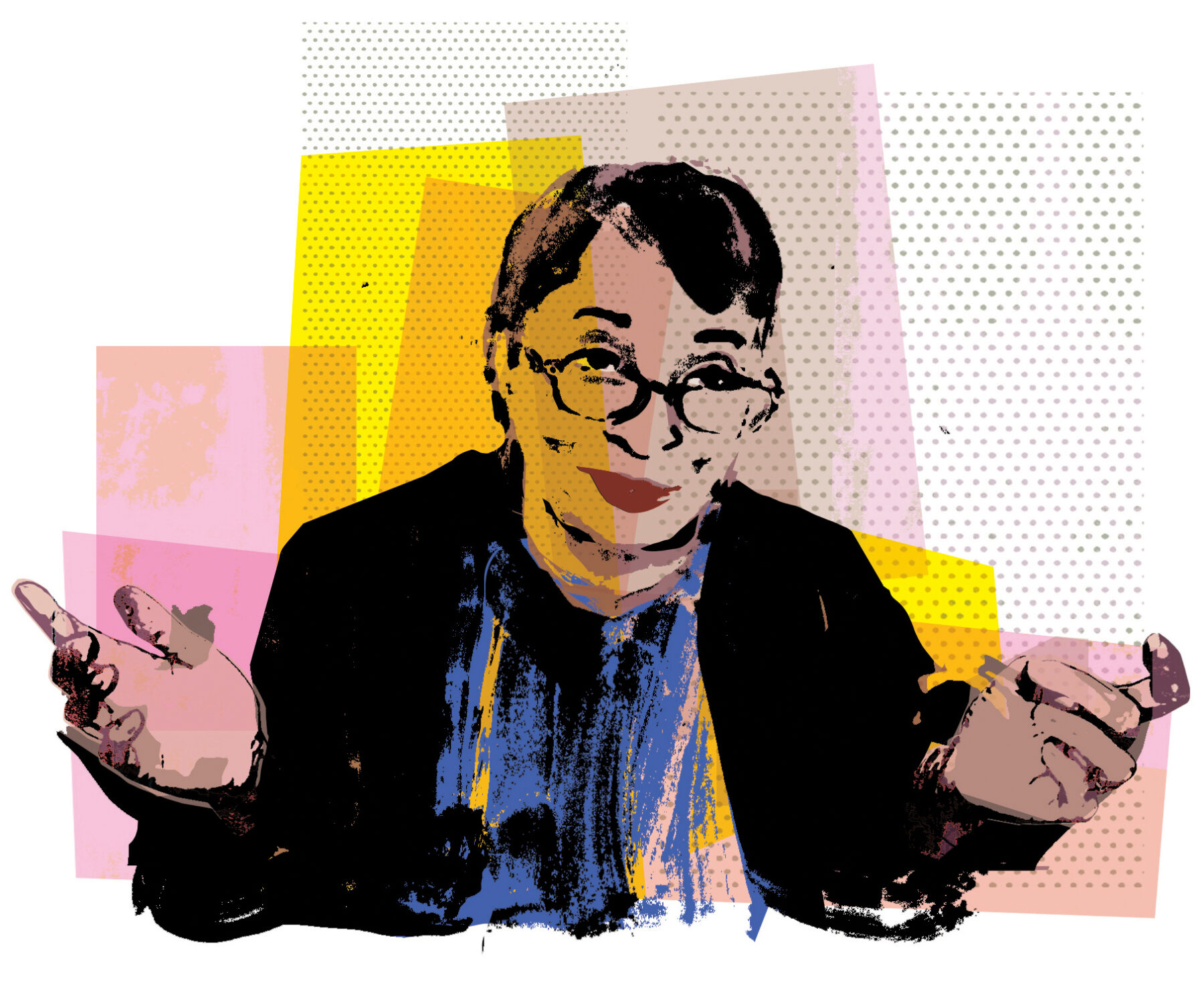
Carla Hayden is the first woman and the first African American to lead the Library of Congress. In addition to preserving millions of books, newspapers, films, photographs, audio recordings, maps, and manuscripts in its collections, the library—the world’s largest—also serves as the main research arm of the US Congress and houses the US Copyright Office. Before being sworn in as the fourteenth librarian of Congress in 2016, Hayden held leadership roles in libraries for decades, including at the Enoch Pratt Free Library in Baltimore, the Museum of Science and Industry in Chicago, and the Chicago public library system. In an interview with Issues contributing editor Molly Galvin, Hayden discusses the library’s role in informing public policy, how artificial intelligence is challenging notions of copyright, and how libraries can help fight misinformation and disinformation, strengthen communities, and maintain democracy.
Illustration by Shonagh Rae
You sometimes refer to yourself as an accidental librarian. What do you mean by that?
Hayden: Even though I grew up loving to read, and loving books and libraries, I didn’t really know about the profession of librarianship. I graduated with a major in history and minor in political science from Roosevelt University. I was thinking about what to do next. In between job interviews, I went to my favorite place, the central library in Chicago. Someone who had graduated with me came in and said, “Hey, you here for those library jobs? They’re hiring anybody.” I applied.
That’s what libraries still do. We bring in people with any type of undergrad degree through library technician or other entry-level positions, and we introduce them to the profession.
I got put together with a young lady who was going to graduate library school. She would do story time with children with autism. She wore jeans. It showed me that being a librarian was more than just, “Here’s a book.” I applied to graduate library school too. That’s how it all started. I’ve been a librarian ever since.
A primary mission of the Library of Congress is, of course, to serve Congress. How has the library helped inform public policy historically?
Hayden: The first librarian of Congress was appointed in 1802. The library started with about 600 law books. Think about it: you have a new nation, you have a Congress, and they need reference books. By 1812, they had 1,000 or so books. The Library of Congress was located in the Capitol then. The British used some of the books to start the fire in the Capitol in 1814. There’s still a fireplace there that has the markings of that event.
As Thomas Jefferson said, there’s no subject to which a member of Congress should not have occasion to refer.
But the destruction of the library was an opportunity. Thomas Jefferson sold his library to the nation. At that time, his was the largest personal library in the United States, with 6,000 or so volumes. As he said, there’s no subject to which a member of Congress should not have occasion to refer. It was the start of a vast collection of not only law volumes but of books on every subject in different languages.
Today the Congressional Research Service (CRS) has over 400 people who are the reference arm for Congress. It’s nonpartisan. You have experts in just about every area. There are policy experts in energy, social services, any topic. We have embedded librarians who are research people and policy experts. It’s not unusual for them to be at CRS for 20 or 25 years. They know the prior legislation. They only serve Congress and congressional staff. They’re evolving and using infographics, data analysis, and big data. They really use technology as a tool to help with the analysis of information.
We still serve Congress. That’s our primary mission—to serve as the research organization for them, but also the people that Congress serves: the American public.
How do you ensure that the Congressional Research Service stays nonpartisan in an era when so many issues are politicized?
Hayden: It’s rigorous. The analysts have a code of honor and ethics that their personal views and feelings about subjects should not interfere with how they present the information.
The analysts only analyze what is there. The challenge is that they have to maintain the rule of not giving an opinion. They try to be balanced. And they do have those layers of reviews of the reports—like a journal where you have review panels. No reports ever go straight to a congressional office without being reviewed by our senior analysts.
One of the analysts told me she was asked to do a report on a subject that she personally felt strongly about. When the report was delivered to the congressional office, they thought she felt the other way. She was really proud.
You’ve said before that libraries are the cornerstone of democracy. Can you elaborate on that?
Hayden: One of the principles of democracy is an informed citizenry—when you have that ability to have free and unbiased provision of information. Libraries are a trusted source. We are giving citizens an opportunity to have the information to make those informed decisions. That’s why we say it’s a cornerstone in communities. Let the books battle it out on the shelves. We have different perspectives, and you can choose.
Let the books battle it out on the shelves. We have different perspectives, and you can choose.
Public trust in many institutions has been declining in recent years, but polls indicate that most people still trust libraries. Why is that?
Hayden: Even libraries now are being questioned and especially librarians, mainly about providing materials for young people. It’s been very difficult for librarians to be drawn into that discussion because we feel that it’s every parent and caregiver’s right and responsibility. You can decide for your own child what that child is going to read. But not for other people’s children. That’s where we draw the line.
The number one information request to public libraries in this country is for health information. People would come in from their doctor’s appointment and hand us their prescriptions so we could look through the reference. We’re that trusted source—they know we’re not in it for the money, obviously. You must really stand your ground in terms of dealing with facts, and science is based on that.
The proliferation of misinformation and disinformation is very concerning to the science community. As a librarian, what is your philosophy on dealing with false or misleading information?
Hayden: We’re part of the information ecosystem—sciences and information and technology—and we just need to keep working together. We have to, because it’s hard.
We emphasize that you need to look at where the information is coming from. What’s the source? Then you determine, is that a reliable source? But misinformation and technology make it very tricky because things look legit sometimes when they aren’t.
Our websites are digital front doors. For instance, the Library of Congress website has “Ask a Librarian.” People type in their questions, and a live librarian will get back to them and do the research and go to certain sites. And they also give you the references so that you can then go to the link and do your own research. When people are asking questions, we not only give them the answer, but we give them the citation. We take this responsibility seriously.
As artificial intelligence proliferates, how is the Copyright Office dealing with the issues it raises about creative content?
Hayden: The Copyright Office and the registrar have been working with Congress about what revisions in the copyright law need to be made. This has been going on for a while because when some of those laws were developed and passed, technology wasn’t as far along. For instance, with streaming services, they worked on how to determine the rights and permissions.
For AI, the first few cases the Copyright Office encountered had to do with “Who does the copyright go to?” You have copyright whenever you create something. That’s what copyright registration does for you. But they had a test case where someone submitted something for copyright, but it was all created by a machine. The office caught it and had the person resubmit it, but where’s that dividing line for a creative work? Is it the person who programs the machine to do it? That’s where they are. Right now, copyright law says that the work has to be created by a human.
How is the rise of new technologies and the age of digital information changing library science, and how is the profession evolving?
Hayden: Today, we’re attracting people who see it as a first career. Thirty or forty years ago, people were in social work or they were in education, and then they went into librarianship. It was a second career.
We’re getting people coming in saying “We want to work with the websites. We want to do digital.” We’re now attracting people who see libraries as a testing ground for a lot of things.
Today, what used to be called library schools are information science schools or information studies. Some of our grads go straight to tech companies because they learn about search and how people think of reference questions and things. That’s our competition.
Libraries now are so much more than just the basic information. They circulate musical instruments, they circulate sewing machines, laptops, all of that. They’re really boots on the ground in communities.
But many people want to work in libraries, and what draws a lot of them is serving, and the whole concept of “knowledge is power.” You can empower and work with communities. A lot of libraries now are so much more than just the basic information. They circulate musical instruments, they circulate sewing machines, laptops, all of that. They’re really boots on the ground in communities, helping people.
In Baltimore libraries, for example, they have a lawyer in the library, a social worker in the library. You can get your passports there. You can register to vote. Some of the younger people who want to help people say, “Well, here’s a direct way to do that.”
What are some of the biggest trends you see for libraries on the horizon?
Hayden: Libraries are getting back into being a place in communities and in people’s lives. It’s “library as place.” Libraries are being built to be gathering places, places for community.
I was just out in Dayton, Ohio, and their new central library has a theater. Local theater groups can book the theater and have their performances or dance groups. There’s an art studio, a recording studio for people to come in.
Library as place is definitely a trend, and you’ll see that in new buildings and branches in communities that are incorporating all kinds of other things. Some have community kitchens. Philadelphia had one of the first libraries where you’re teaching science and chemistry by having cooking classes. You have to measure, you have to monitor temperature, and all this stuff. You’re seeing a lot of that going on.
Libraries are also being seen as a convening place for civic engagement. Community meetings are being held there, with many sides of an issue being discussed. Libraries are that safe place for discussion of ideas.
The Library of Congress social media posts and your own personal posts are drawing a lot of attention to some of the library’s amazing historical artifacts. What are some of your favorites?
Hayden: We have 178 million or so items, and we digitized about 61 million of them. That includes historic maps and all types of things. We can highlight items from our collection—from a diary to a letter or another physical item—based on what’s going on in the world.
Something that really meant a lot to me—coming from Illinois and having spent summers in Springfield, where my family’s from—is you can actually see the contents of Abraham Lincoln’s pockets the night he was assassinated. To see the handkerchief that he had and the button that he put in his pocket—it makes history come alive. We also have one of the copies of the Gettysburg Address, and they speculate that it’s the one he took on the field. You see that in his own handwriting. You can go online and see Teddy Roosevelt’s diary in his own hand and Rosa Parks’s peanut butter pancake recipe in her own hand.
That’s what social media has been doing for us. We can share this with people.